Monthly Archives: August 2017

A Quiet Moment at Camp

Swim Dock sits unattended on a glassy Triangle Pond waterfront
Through the din and the energy and the chaos and the pure exhaustion that exemplifies summer camp, it is incredibly easy to forget about the place where you chose to live and work. The long involved days with an endless to-do list of activities keeps one distracted from the distinctiveness of your location. You grow immune to the landscape of the place you work, gradually forgetting the immense beauty of the natural surroundings that drew you to camp in the first place. With so much to do outside everyday, it is easy to take this close access to nature for granted. The subtle beauty of nature often slips the mind…
As the last summer campers file out the gates, the camp staff can pause and breathe deeply, reflecting on the summer past. Then there’s this sudden realization. It is quiet once again. But not a silent quiet—a quiet absorbed with sounds. All around are the songs of the earth. The chirping of the insects, the shrill call of the birds, the gentle breeze rustling the tree-tops. Breathe deeply and listen closer to these sounds. They have been calling forth all summer long, but not until now have they received an attentive listener. It is the contrast from the clamor of summer camp that reawakens the ears to nature’s melodies.
The quiet moment encourages you to explore deeper. No commitments now. Please linger and understand what’s here. The forest paths that you walked hurriedly past all summer are now empty. Slow your pace. Look up and gaze amidst the trees. See the dappled light filtering through their leafs perched an immense height above the ground. Then look down, closely, all the way to the ground. Amid the brush lie flowers, the embodiment of the fecundity of nature. Stoop down close and admire their elaborate forms. They sprinkle the ground in all their intricate glory, yet are often overlooked by man; their complex beauty is but for their own sake. Through the air wafts the fragrance of the bushes. Breathe deeply, and take it all in. How many times have you been here before and not noticed this?
It is moments like these when it gets quiet, when life takes a momentary pause, that I begin to reflect on what brought me to this place to begin with. This is where I live. This is where I have chosen to stay. For me, an enticing draw of the camp life is to live and work in these beautiful places, daily immersed in the wonders of the natural world. In the busyness that life often rings upon us, it becomes difficult to take the necessary moment to realize the beauty that surrounds you. It is here all along waiting for your attention. The question is: will you stop and notice it?
Breathe Deep.

Towering pines provide refuge on the path to the low ropes challenge course
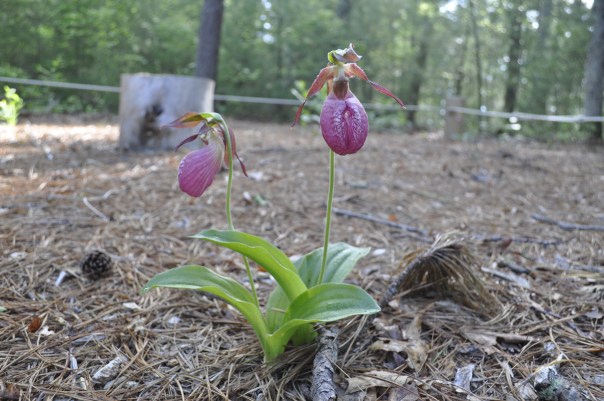
A pair of Pink Lady Slipper Orchids rest unperturbed by a challenge course obstacle

The nodding bell flower of the a-chlorophyllic parasitic Indian Pipe plant is delicate and lacy, but easily overlooked
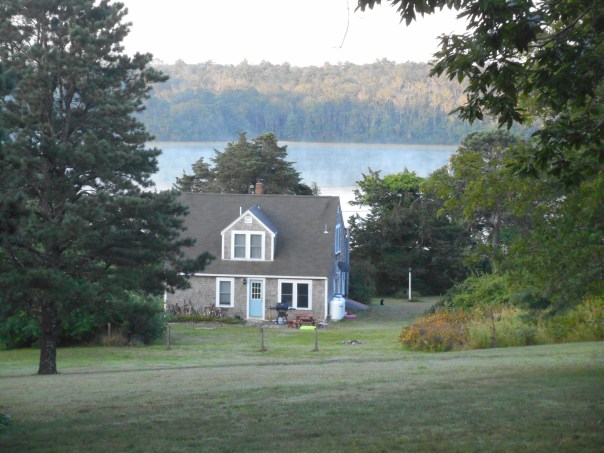
Reflecting its gaze on Triangle Pond, the Jones Homestead adds a touch of New England charm, dating to the pre-camp days when this area was farmland
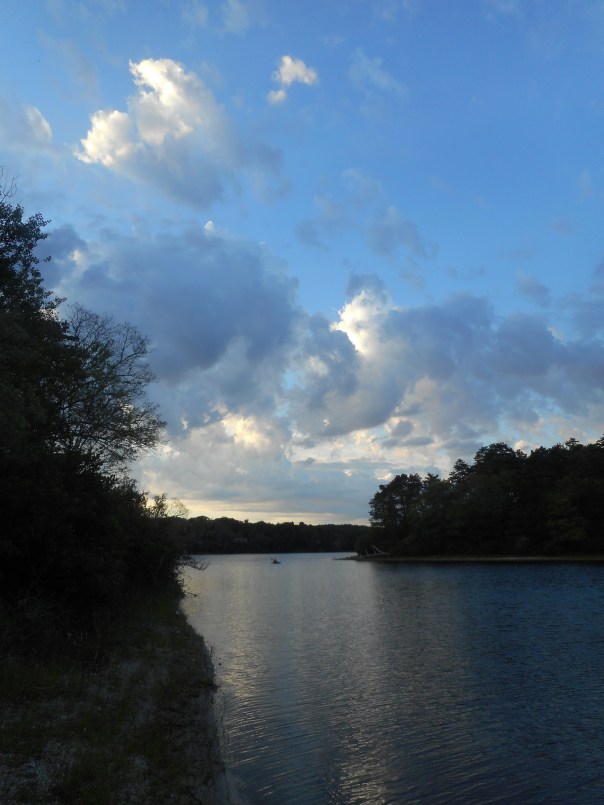
The approaching sunset on the Spectacle Pond waterfront issues forth a compliment of contrasts

Are There Any Hipster Children Out There?

After spending a summer leading adventure camp trips for teens, I have a perplexing question: are there any hipster children out there?
Being immersed in the experience of a camp counselor for teenagers was an ethnographical experiment. What exactly, constitutes the life and thoughts of these strange creatures, the standard American teenager? My observations led me to an archetypical picture of what makes the average teenager tick; I found a thread of common interests and mannerisms highly influenced by mainstream popular culture. And then I began to think further: was I like that as a teenager? Though I’d like to look back and think that I was unique in my youth, that I was a fiercely independent thinker, I wonder if perhaps this was not the case. Does hipsterdom—that blatant and intentional disdain for all things considered mainstream—emerge later than childhood? And thus, is the dominant teenage culture not a choice of the teenager themselves, but rather a product of the consumerist culture they are bombarded with?
I’ve been pondering over the similarity of certain interests for the teen-aged demographic to which I’ve born witness. With the vast amount of driving campers around which I was required to do this summer, I acquired keen insights into their musical tastes. The music that is sure to please is easy to find; the campers all know the frequency and call letters by heart. The sure crowd-pleasers, the jams that get them all pumped up are the American Top 40 songs on the local pop station. AT40 songs are absolute earworms. Not only are those songs engineered to get stuck in your head and stay there, radio stations will play the same six songs at least once an hour, every hour to ensure that they do. Fortunately, just to keep things fresh every couple months, the old songs will be replaced by a batch of new, similar-enough sounding songs that will be all the craze for the next few months. For me to save my own sanity while driving at camp, I sometimes tried to introduce my underground indie jams from the local community radio stations. Vetoed right away—always. If music is just not similar enough to what they know already, they seem quickly repulsed by the musical difference.
And what about the shopping interests of teenagers? They are fascinated by chain stores and name brands. Driving, as we often do, down the busy suburban commercial strips, the kids will look out the windows with excitement as they shout out the chain-stores they see flying past in the Big-Box landscape. McDonalds, Taco Bell, Dunkin’ Donuts, 7-11, Cumberland Farms. They salivate at the chance to go to those stores and buy their products. Even though the campers haven’t been to this particular location before, they know nonetheless what every store on this commercial strip will offer. The cultural homogeneity of chain-retail stores leads to a predictability about the products each store sells. These teens know what they want—and not only are they entertained by the thought of visiting a chain-store to get it, they are in fact motivated at the chance to spend their money on it. And mostly what they buy is just junk food.
And then there’s the speculation that kids often offer about what profession they would like to do as adults. The teens I was with did have high aspirations; they talked of becoming doctors and lawyers and engineers when they grow up. But, they seldom noted that their motivation was a passion for the job duties or the desire to help others. Instead, the dominant motivation for these high-end jobs was to earn money—lots of it. They talked about how they want high-paying jobs so that they can afford to travel and to own nice things. I was disappointed by how seldom a teen would talk about desiring to enter a profession based on a sheer passion for it, no matter the pay. These teens are far from the hipster stereotype of following their dreams of doing what they love in a career path—even if the consequence for the hipsters is working for minimum wage at a coffee shop in spite of their fancy liberal arts degree.
Was I a hipster teenager? Even as a child, I was fiercely independent and more likely to do my own separate thing rather than follow the crowd. But did my tastes reflect my temperament at that age? Perhaps, but maturing is always a process of becoming. As I grew older, I began to develop some of the interests of hipsterdom: underground music, obscure foods, and a penchant to avoid commercialized mass-produced mainstream culture. Maybe I was a hipster child all along, but it only took a fair amount of time for this attribute to manifest itself in my behaviors.
To be fair to teenagers as a whole, there are a handful of teens who break the mold of the unquestioning follower of consumerist appetites and media-conceived notions of entertainment. There are those teens who loathe American Top 40, preferring instead classic rock or foreign instrumentals. There are teens who not only can pronounce the word ‘quinoa,’ but enjoy eating it as well. There were those teens who weren’t overjoyed at visiting a gas station convenience store to buy candy and soda. There was even a contingent of campers, I found, who were quite interested in learning more about my home-made sprouting jar and eating the ensuing vegetable sprouts. Actually, most of the teenagers at camp exhibited at least some form of cultural independence apart from the mainstream stereotype (albeit some more strongly than others).
But even for the masses of teens leading indistinguishable lives, there is some hope. At the very tip of Cape Cod, away from the influence of mainstream America lies a place distinct from the popular culture known as Provincetown. Though not even remotely a hipster destination, Provincetown is a place and economy that revels in its unique, off-the-cuff identity. During the summer, most trips at camp include a visit to Provincetown. Often it’s a highlight for the campers. In Provincetown, the conventional teens can revel for a spell in a town like no other they’ve been to. There are no big box chains here. Instead, the main Commercial Street becomes a narrow pedestrian mall flooded with people milling about the business district perusing the town’s counter-cultural offerings. Here you’ll find Hippie stores and stores of the Occult. Tucked around the corner is a musty used book store, a palm reader, and a costume shop. Street performers, drag queens, and artists freely roam the streets. Even though in Provincetown the kids will still go for the junk food, at least they’ll buy it from the quirky Donut Experiment or the exclusively pink cupcake store. Maybe in a place unique as Provincetown, that tiny part of us that gets excited by difference can start to peek through. Maybe, after all, there is a little hipster in all of us, even the teenagers.

Cast Away
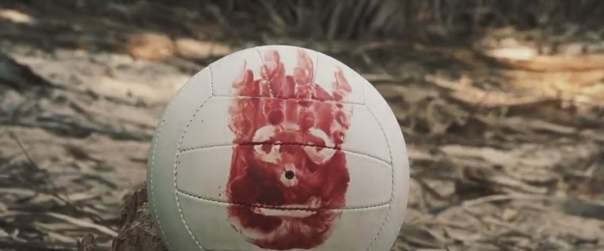
It all began with a quiet evening pontoon ride on a glassy pond.
*Crackle, Crackle*
Radio traffic breaks the silence.
This is Base Camp! Do you read? Do not return to Base Camp! I repeat, do not return!
The seven campers riding on the pontoon boat turn their heads in abrupt curiosity at the surprise emergency call.
A situation has arisen here…something has invaded camp…lurking in the woods…glowing green…
The campers become more perplexed at the emerging crisis.
I repeat, do not return to Base Camp! It is very dangerous here—ALIENS!—ahhhhhhhhhhhh!
*Crackle, Crackle*
I turn to the driver of the pontoon boat and give a knowing nod. “Since we shouldn’t return to camp, I can drop you off on the island in the pond,” he suggests. A moment later, all seven campers and their two intrepid leaders step off the beached pontoon onto the island carrying nothing with them. “I’m going to investigate this situation, and I’ll come back for you later,” says the driver as he pulls away, “I’ll be back shortly!” As the engine noise from the pontoon slowly fades away, we realize that we are now left alone on the island. Left alone to fend for ourselves and survive in isolation for the unforeseen future.
So starts the summer adventure trip known as ‘Castaways’ at YMCA Camp Burgess on Cape Cod. The campers who sign up for this trip come knowing that they would be spending time surviving on a ‘deserted’ island sandwiched between two very active summer camps. They bring their sleeping pads and their mess kits and they mentally prepare to spend a week ‘roughing it’ in the wild. But—they weren’t prepared for all the surprises and pranks that we trip leaders would pull on them.
To be fair, staging an alien invasion on camp as a premise to get the campers onto the island early is a pretty farfetched idea. But, the bigger surprise was that none of the campers knew they would be getting stranded on the island that night. Leading up to the trip, all the campers were told was that they would be spending their first night at Base Camp back at Burgess, heading to the island on their second day. Even once they arrive at Base Camp, they are shown the platform tent where they will be ‘staying’ their first night. But then the surprise occurs: we convince them to go on an evening pontoon ride as a pre-island team-building activity, and next thing they know they are dropped off on the island. The trip has begun.
“Are you serious right now?” asks a camper freshly on the island. “Where even is our stuff?”
Good question, kid. Now go search the island.
~~~
Earlier in the afternoon, before the boat ride, we trip leaders held a brief meeting with the new castaway arrivals to address an unexpected situation at camp. A problem had arisen, we told them. The fire inspector had stopped by camp this afternoon, we said. The platform tent assigned to the Castaways was deemed structurally unsafe. We’ll have to send you all to an empty cabin somewhere else on camp tonight. Better pack your bags, kids. Sorry about the tent…not!
Little did they know, but the fire inspector story was just a hoax. While the campers were out on the boat, other camp staff had secretly nabbed their packed bags and transported them undetected to the island.
~~~
Back on the island, the search for supplies takes full effect. Pinkham Island, as it is formally known, is not a large tract of land to search, though it offers many good hiding places. An ovular shape approximately 500 feet long by 200 feet wide, Pinkham Island is a sandy forested plateau rimmed entirely by a rocky beach. A few clearings exist for campsites, otherwise the island is primitive. It is barely an island, too. Camp, back on the mainland, lies only 30 feet away, a simple wade through ankle deep water. But the campers don’t know this about Pinkham Island. And right now, they are too pre-occupied with their own survival in the waning twilight. The island is scoured, first haphazardly, then systematically. Supplies are found one by one: coolers full of food, tents hidden in the bushes, military surplus ammo cans filled with coveted essentials. The campers all eventually find that even their own bags have mysteriously appeared on the island.
By now we have spent only a few hours on the island. Our tents are set up and we have settled in to stay a spell. An abundantly prepared camper has brought a flint and steel and is busy trying to light a fire, unsuccessfully. The nine of us gather around the dull campfire circle to discuss what we know about our situation: aliens have invaded camp; the island is the only safe spot left; the U.S. government is keeping us safe and provisioned while they battle the alien menaces; we must use our own wits to stay safe and survive.
Goodnight, kids.
~~~
The shimmering morning sunlight wakes everyone up early the following morning. They don’t know it’s earlier than six am—we leaders took all of their watches before the trip. Everyone has made it through their first night. The Castaways now mill about the campsite assessing their situation. More feeble attempts at lighting a fire are made before the campers give up in frustration. I was hoping for a hot breakfast, I tell them, but unfortunately there is no fire. Sorry kids. I reach into the food cooler and pull out some hard dry bagels for breakfast. The look of disappointment is priceless.
After the first morning’s ‘disappointment breakfast’, we commence our first challenge on the island. A fire competition—Burn the Twine. The Castaways are divided into three teams. Which team can start a fire with a handful of matches and burn through their suspended twine first? The competition will reveal the victors. Though the campers know that a desirable reward is on the line, little do they know that the winners and losers also get assigned to different island chores. Losers of Burn the Twine—well, they get to carry the groover (our much maligned industrial-strength porta-potty) off the island.
After Burn the Twine, the Castaways have completed their fire challenge and have now learned about the principles of making and sustaining a fire. All the meals from now on will be hot, cooked, and delicious. More challenges await the campers in the following days: tree identification, knot tying, raft prototype building, tribal dancing, scat modeling, Leave No Trace ethics. With each challenge completed, the Castaways learn more about surviving in the backcountry with limited resources. Life on the island keeps getting more luxurious too. With each successfully completed challenge comes a new reward: playing cards, Frisbees, ice cubes, lemonade mix, a hammock, a radio. Life is getting pretty good. We could stay out here for a while…
All the while off the island, the war between the alien invaders and the U.S. Government has been raging on. The battles become especially more pronounced at night, with colorful armaments exploding over the horizon. The climax came on our third night on the island, the night of July 4, when the bombing campaign reached its zenith. Military planes flying low overhead to nearby Otis Air Force Base added to the plausibility for the extraterrestrial scenario. And even though hundreds of people can be seen from the island, it is not safe to approach the others. Their minds have been taken over by the alien invaders, brainwashed into being slaves to their conquerors.
The morning after the epic battle of July 4, we receive no new supply drops from the government. Things seem quiet around camp—too quiet. A spattering of extraterrestrial goo is found around camp. Wait! Does the goo form a trail? Follow it, kids. Where does it lead? At the end of the goo trail is a clutch of glowing green alien eggs. Looks like the invaders are closing in on our whereabouts. Better eat those eggs for breakfast before they hatch…
With our faith in the success of the U.S. Government waning, we decide to take matters into our own hands. Clearly, judging from the eggs, the aliens know where we are. We can’t expect the island to be a sanctuary any longer. We make a plan to build a raft to escape the island. In a feat of unity, the seven stranded Castaways put aside their competitive differences in constructing a raft to hold them all on their escape from the island (in a foreboding omen, however, the raft is held together with nothing but nooses—also lesson for me, if you show a group of young teenage boys a dozen useful knots, the only one they will remember how to tie is the noose). Raft complete! Ready for imminent departure!
Awaiting any further communication from the U.S. Government, we retreat back to our central campfire to enjoy a hearty meal and some group bonding time around the fire. When the daylight fades, I introduce one of my favorite nighttime camp games to the group—Body Body. The premise of the game is that there is a group of townspeople and a few clandestine mafia whose goal is to secretly ‘kill’ the townspeople off without getting caught. The game involves trodding the now-familiar paths on the island in the dark, trying to detect which players are the mafia without getting killed yourself. Round after round of Body Body is played, and the campers get absolutely into it. They feel confident trouncing around the darkened paths and hiding in the bushes in ambush. Nothing scary is going to get them on the island, right?
It’s already late at night, but we gather around the radiant embers of the dying campfire to start yet another round of Body Body. But then, an unexpected rustle in the bushes. Calm down kids, we leaders reassure them, it’s probably just a raccoon in the brush. Let’s keep playing our game. But—more rustles follow. Could the aliens be lurking in the shadows for us, the campers begin to wonder silently. I approach the suspect bushes and shine my flashlight. Absolutely nothing out of the ordinary. You kids, your imaginations are running wild. But then, spooky music arises from the bushes. And unexpectedly, more quick rustling behind them. The seven boys huddle in a tight circle, sticking close to the fire and to each other. Even the bravest in the group is biting his lower lip in a nervous fashion. More rustling and running figures emanate forth from the bushes. The alien invaders are here! A foreign voice cries out from the shrubbery “You have twelve hours to leave the island or you’ll meet your demise!”
The rustling disappears and the eerie music fades. The once joyful campers are left in mortal fear of their impending doom. In the aftermath of the alien scare, the campers try to decide what to do next. One camper mistakenly heard the dark figure say that they have two, not twelve, hours to leave the island. All seven Castaways then eventually agree that this was the warning that was given. No time to waste now…in the dark several campers start packing up their belongings. They are ready for an immediate departure. For as much joking around that they had earlier about aliens, suddenly this is no laughing matter! Eventually the frenzy that arose during our arranged ‘alien scare’ settles down. The Castaways make a plan to deal with the invaders. They will take shifts to watch for when the aliens come back for us. Some will sleep, while the others will stand guard. Around 12:30 am the call comes to switch shifts. A tired sleep begins to fall upon all the campers. Eventually they all fall into a restful slumber, unconcerned about any alien invaders.
The morning after the alien scare, our fifth day on the island, we conclude that we have lost all hopes for our salvation. The government has been defeated, and we are on our own for our survival. In the clarity of the morning sunlight, we pack up our camp and cook our final breakfast together—fittingly, alien-green pancakes—over the campfire. We then bring our most valuable supplies to our makeshift raft which we will use to escape. Will the raft float? Will we make it across? The mainland lies two-hundred feet away through deep water from this end of the island—but here is our only shot at survival. While we make our final preparations for leaving our island home, a visitor has slowly been creeping up in the bushes behind us. Dressed in all green, our alien visitor from last night has returned! He pops out of the bushes to jump-scare the campers. In the daylight, the Castaways can tell it’s just another camp counselor dressed up, but they happily play along with the fright. They run laughing and screaming back to the raft and clamber on. The raft sinks and falls apart under their weight, but they keep swimming to reach the mainland. They have made it off the island at last, learning and having fun along the way. Another Castaways trip in the books.
Good job, kids.
 In All Directions