Category Archives: The Future

Go Find Yourself
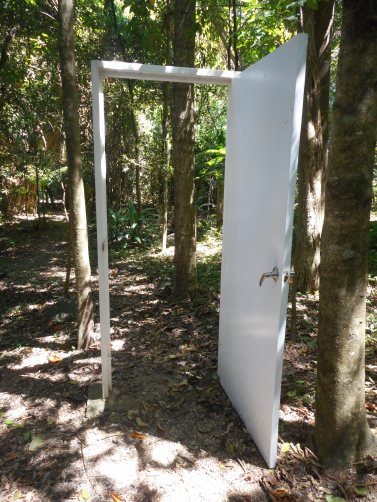
My travels in Australia could have been cast as the prototypical coming-of-age journey: a young man goes to a far off land alone to find himself.
But I didn’t go to Australia to find myself. I knew too much of myself already. Instead, venturing to Australia was more an exercise in trying to lose myself—to get out of the person who I knew too well and to try a different lifestyle for a change. Australia would be a place I could be free to experiment with identity.
Young people finding their identity is perhaps the defining mark in the transition from childhood to adulthood. As developmental psychologist Erik Erikson would describe it, the primary existential question of emerging adulthood (Stage 5) is that of Identity versus Role Confusion. Classically portrayed as the angsty teenagers’ struggle for self, this stage of psychosocial development often lasts into young adulthood, ending when the individuals’ personal identity becomes fairly consistent for the remainder of life. Though the age individuals go through this stage varies, the greater struggles of Erikson’s Stage 5 will typically be resolved around my age, sometime in the 20’s.
Thus, going to Australia didn’t necessary teach me who I was; more so it reaffirmed who I was already. As a result, I had inherently less identity formation to undergo, and was faced instead with a related identity struggle—figuring out how to live the rest of my life with this person I’ve grown to be.
In my challenges with my identity, there are things I know about myself that I struggle with accepting. There are some things I wish I could be just a little bit different—I’m terribly shy and introverted; spontaneity is quite a ways out of my comfort zone; I tend to take everyday matters way too seriously, etc. The list could go on about things I believe society expects me to be, but that I feel I just don’t measure up to.
Travelling to Australia, I held the assumption that going to an exotic country where no one had any pre-conceived notions about me would allow me to branch out and escape the confines of my identity—in particular my temperament and personality. For once I just wanted to let loose, be spontaneous, hang out, party, and disregard the consequences. I also thought I’d play with some career roles by trying out jobs I’d likely never do in the States—fast food drone, a sociable waiter, the hospitality industry. I’d also grow out my hair one more time before I had to permanently adopt a well-groomed hairstyle for the remainder of my professional life.
Alas, I didn’t find myself becoming the wild, long-haired, care-free holiday-maker I had envisioned before my trip. Instead, my standard temperament took the reins. In Australia I struggled to be outgoing and to meet new people; I rarely was spontaneous and light-hearted enough to party in spite of the consequences; I never found a job in the service industry; and I never grew my hair out before getting fed up with its wild antics.
In the end, I found that I just couldn’t lose myself in Australia, though I put in a genuine effort to try out different roles for a change. Instead, my reliable temperament shone through even in my new surroundings. Like Socrates’ famous mandate I just couldn’t help but to “know thyself” even Down Under.
Moving forward, my challenge is to accept myself for who I know I am instead of thinking that a different persona is more desirable or acceptable. How can I make the best use of the character I’ve developed? What role do I fit into in adult life? Instead of seeing them as weaknesses, how can some things about me that I’m uneasy about be used as assets?
Going to Australia may have been the final throes of my greater struggles in Erikson’s stage 5. Sensing that I was nearing a very stable sense of self, I felt the necessity to try on different roles while I still had the freedom to experiment. For the most part, though, my personal character has cemented, deepened in part by the challenges I presented myself in Australia. Some conflicts of Stage 5 still remain, namely those of finding a career path and determining my role in the adult world. But on the whole, the person who I am today is the person I have found and have chosen for myself. For all its strengths and seeming inadequacies, I’m happy for that person.

The Graduate
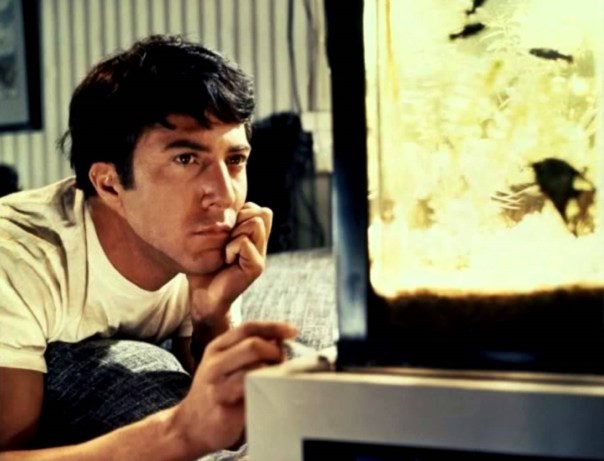
About this time last year I graduated from the University of Idaho with a masters degree. Being mentally and emotionally drained from formal study, I was ready to leave the cloistered realm of academia and explore the greater world on my own terms. So excited was I to get a jump start on my informal education that I left exam week early and skipped my commencement ceremony in favor of a kayak trip on the Columbia River.
Now that it’s graduation season again, perhaps I should be granted another diploma. Conceivably it could be from the University of Wanderlust. It wasn’t an accredited university. It had no designated faculty, and there were no required courses or class assignments. Tuition was also pretty inexpensive (although room and board could be costly at times). Although there were tests along the way, the entire grading system was based on pass/fail.
Yes, now that I’ve officially ended my coursework of travels, I’d say it’s like I’m a freshly-minted grad once again. My degree from the University of Wanderlust ended up being a year-long program (or else I guess I just graduated early), and I was happy to build my own curriculum too. First I spent a semester in the American West, road-tripping on a survey course of National Parks and cultural highlights. Then, I spent my second semester in Australia, taking classes in fruit-picking and van culture. From this I’ve earned a diploma full of different life experiences at an expedited rate.
And what’s more, my diploma from the University of Wanderlust focused on personal change as much as it did about learning factual knowledge. Though I enjoyed learning a great deal about many of the spectacular places in the United States as well as learning about the way of life in a foreign land, what I had set out to gain through my latest degree was deeper—a more thorough understanding of my own personal growth and moral development. My masters degree at the University of Idaho, though it challenged my intellect, lacked much of the personal growth I yearn for in education. What I needed to compensate for this lack was a challenge to develop my character and to gain a different perspective on the world.
Unlike a typical college education, though, my self-designed degree focused more on the realm of the practical rather than the theoretical. Throughout my travels, challenges were applied and consequences were real. Every event was viewed with the mindset of an opportunity to learn. Daily life became my homework assignments and the people I met along the way were became my professors.
As a recent grad of the University of Wanderlust, I feel fresh and ready to pursue a career path. Admittedly, I still do feel a little bit of the aimlessness and uncertainty of recent grad Benjamin Braddock from Mike Nichols’s film The Graduate. But on the whole, my diploma of travel in the real world has provided the necessary transition from the culture of the academic world to the culture of the working world.
Many of my lessons learned from the University of Wanderlust still need formalizing into words. But how does one succinctly sum up a year of travels? Fortunately for me (or maybe not!) I never assigned myself a term paper.

A 25 Year-Old’s Retirement
Travelling around Australia in a van, I inevitably run into a different demographic of traveler doing basically the same things I’m doing. This demographic can be described as the older, retired lot who also live out of vans or motor homes and spend their time driving around and living like tourists. For some people, this is their dream lifestyle. They’ve worked hard all their lives to afford a retirement full of travel and leisure. Retirement is their final treat where they can enjoy the fruits of their labours free from the burden of work and outside obligation.
Perhaps retirement is wasted on the old. Wouldn’t it be better to travel when you’re still young and have the energy to see things? Wouldn’t travelling prove more fruitful if you still have the bulk of life ahead of you to be influenced by what you learn whilst travelling? For these reasons, I decided to take my retirement early. But instead of taking a retirement of pleasure and leisure, I am taking a retirement of travelling and learning. I wanted to ‘retire’ while I am still young and flexible, while my identity is still malleable enough to shape the person who I am becoming. If a great deal can be learned by travel, then why hold off those lessons until most of one’s life has passed?
But, another reason why I decided to retire early and to travel now is that I have a gut instinct that I will not be as inclined to travel later on in my life. Instead of always being ready to move on, I have a tendency to linger at a place that’s become familiar to me. Eventually, in the years to come, I sense that I will settle down into a place and a community where I can let my roots grow. Once I’ve settled into such a community, I won’t have the desire to journey as extensively as I am doing now. Of course travel will always remain a way to re-invigorate myself in day-to-day matters, but, I strongly suspect, my future will not be one where I continue to live out of a vehicle on a long ambling sojourn. Consequently, I feel I ought to be travelling now in my youth, while the wanderlust still churns strong inside me. In my old age, though, I project I’d like to live in one place. Life as a continual transient on the road will not be the life for me. Some people may also chose to retire in a different location from where they’ve worked their careers. Again, not for me. Once I find my community, I won’t leave it for a leisurely retirement elsewhere.
Yet another reason why I’ve taken an early retirement is that I’m not sure if I’ll be the type of person who will even want to retire. Inevitably, I feel very impassioned about the work that I do, and right now I’m on an extended quest searching for my life’s vocation. When I do ultimately engage in a line of work that I am passionate about, I doubt I’ll have the desire to leave it just because I reach a mandatory age. Instead, I will follow my vocation and continue to work towards the betterment of society and my community through my career. Life takes a lifelong commitment—and I’m not one to bow out for an early retirement. When thinking about the idea of old-age retirement, I am greatly motivated by stories of people who have lived their passions to the fullest extent of their lives. One story I find particularly inspiring is that of Carl Sharsmith, who had a 60-year long career as an interpretive ranger in Yosemite National Park, becoming the oldest active NPS ranger upon his eventual retirement at age 90, one year before his death. Some passionate people like Sharsmith just can’t be stopped, and I hope to be one of them.
These are a few of the reasons why I decided to take my retirement early. My gap year in Australia is not just a period of leisure and an attempt to postpone a career—it is an investment in the person I will be in the future. Soon enough, necessity will dictate an end to my early retirement and will see my entering of the workforce. But I look forward to this as well, like a person who just can’t stay away from a vocation which he loves.
Featured Image credit goes to the documentary This is Nowhere, which provides a perspective on the lives of nearly 3 million Americans who permanently live in motorhomes and camp in Wal*Mart parking lots

A Working Request
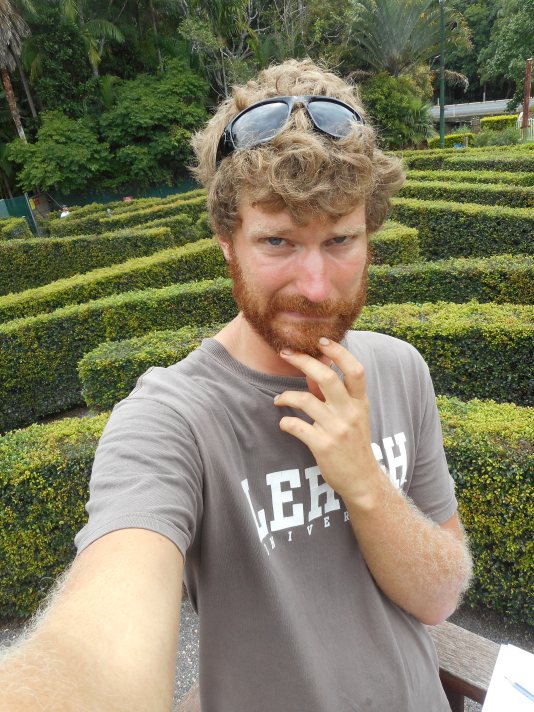
Sometimes searching for employment feels like being lost in a maze
Dear Future Employer,
I know my time of long-term future employment is still a ways off, but I’ve been thinking a lot about occupations lately. That’s probably no surprise, seeing how in Australia I’m always on the lookout for the next job. And, even when I have found a job here, they’ve lasted only a few weeks—so it shouldn’t be a surprise that I’m constantly on the job search. After all, I do need some means of paying my living expenses and saving up for future travel.
Future Employer, I look forward to the day when we can form a mutually beneficial team, where you benefit from my skills and I benefit from the position. I’m growing tired of the unceasing job search in Australia, and I hope our future relationship will last a bit longer than a few weeks. How much longer our working relationship should last, I can’t say at this point—it could be months or it could be years. It just depends on how well we get along. But, my Future Employer, when I do return to the States and start working for you, here’s a few things I want you to know.
Future Employer, please know that I do not work for economic reasons alone. Though western society may be set up in a way that I need money to support myself, please note that a high income is not my employment objective. If you are offering a position that is not something I want to do, there is no way you could pay me enough to do it for long. I’d rather do something I love as my occupation, even if that means living at just a little lower economic status.
Also, Future Employer, when you do finally employ me you will find that I throw my all into my work. Some might say I’m a bit of a workaholic, though that’s not quite the way to describe it. Rather, my daily occupation forms a huge part of my identity; it was when I was a student and has been in all the various jobs I’ve worked. I find that it’s difficult to separate who I am from the work that I do. Thus, long-term employment is not a decision I take lightly—my future profession must be a reflection of the beliefs and values that I hold dear. So, Future Employer, I’m not just looking for a job. I’m looking for a calling. I’m seeking to use my occupation as a means to make a real difference in the world. In the words of my Alma mater, I’m in search of my vocation—the place where my deep passion meets the world’s needs.
So, my Future Employer, I’ve come up with a list of ‘Working Demands’. If you can’t meet these demands, I’m afraid I won’t be happy working for you:
- Allow me to take pride in the work I do for the sake of the job. Nothing in a job cuts me down more than being explicitly told to cut corners or to do shoddy work for the sake of earning a dollar.
- Respect my time, efforts, and contributions. I am not your commodity used to earn you a profit. I am a human worthy of dignity and respect.
- Treat my employment as an investment, not a liability. As my employer, be my coach to improve my performance, not my overlord to punish me for mistakes.
- Promote a good cultural environment among the workforce, such that we are not just co-workers but members of a team working towards a vision. As a bonus, I wouldn’t mind getting to know my co-workers well enough personally to even spend time outside the workplace with them recreationally.
- Let me try out my own ideas to promote innovation, and give me the flexibility to try and fail sometimes, because making mistakes is all part of the learning process.
- Allow me time to work on my individual ideas, but also have me work in a mutual and collaborative team environment.
- Keep me mentally stimulated. Provide tasks that keep me learning and growing.
- Provide me with a variety of tasks in the workplace, so daily assignments are invigorating instead of monotonous and dull.
- Give me flexibility. The strict pattern of 9 to 5, Monday to Friday, and wearing business casual has never really appealed to me.
Someday we will find each other, Future Employer. If you offer to meet my working demands, you will find me a strong and passionate worker.
Yours Truly,
Tyler M. Bleeker
 In All Directions