Blog Archives

Te Araroa Packing List
.
Let me confess that I am not an ultralight backpacker. Or that I even concern myself much with the weight I carry in my pack. When on a camping trip, I like having all the various comforts and amenities along with me, and no matter how heavy my pack is I still find a way to carry it. My tendency to overpack is not helped by owning a 100-liter pack that, no matter the length of the trip, I somehow always find a way to stuff full.
Ultralight backpackers, on the other hand, become obsessed with ounces. Experienced ultralighters can get the base weight of their gear down to 15 pounds or less. They find myriad creative ways to reduce weight, like cutting off the handle of their toothbrush or using a tent-stake as an eating utensil instead of packing a spoon. Yuck! Personally, I don’t mind carrying the extra ounce to have a spoon that is solely reserved for eating.
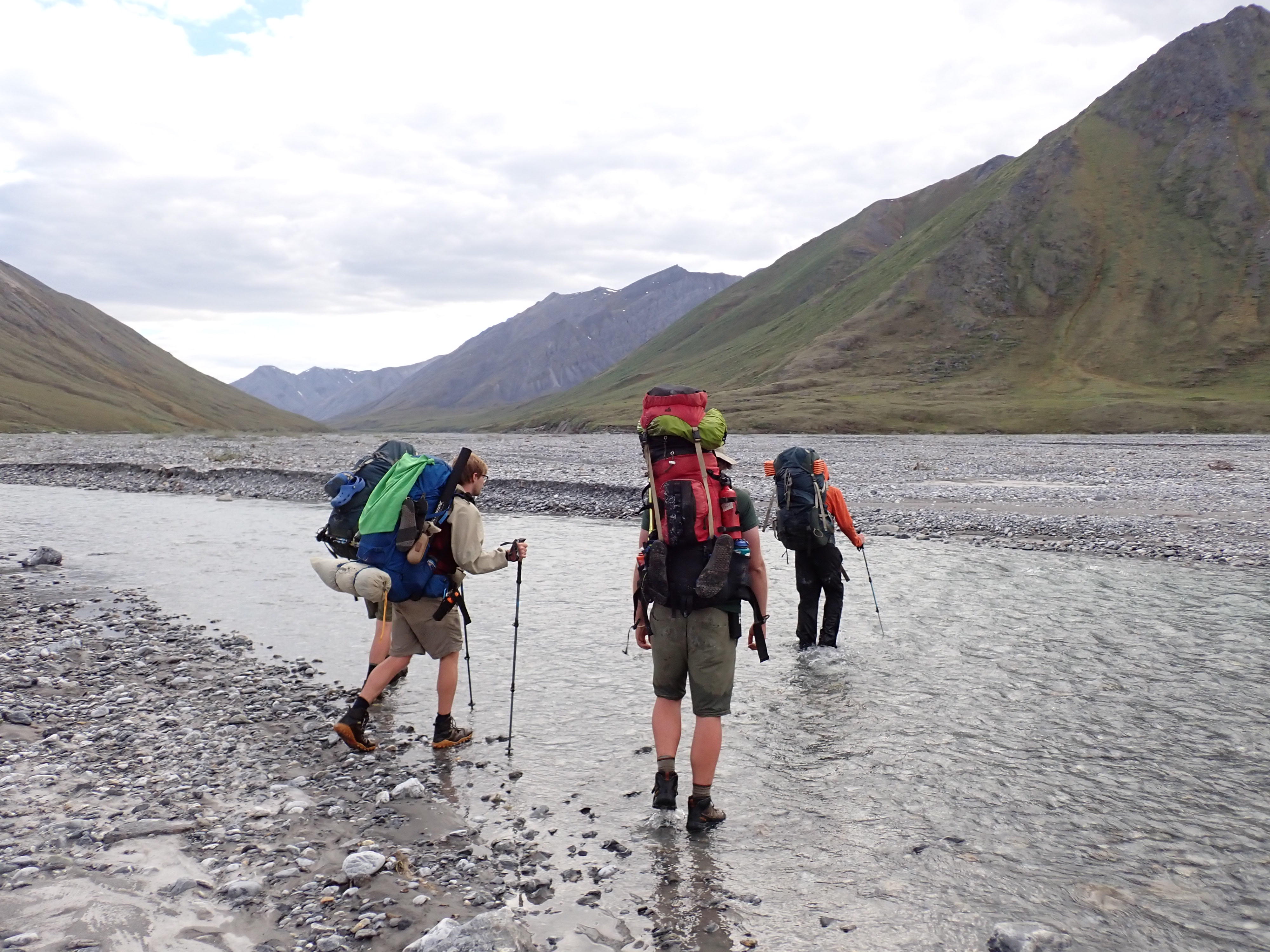
The bulk of my backpacking experience comes from working as a trail guide at YMCA Camp Menogyn, which, with its emphasis on extended backcountry expeditions for youth, is concerned more with carrying all the necessary gear for an expedition and is less concerned about how much all of it weighs. Menogyn is not an ultralighting outfit in any sense of the word. This past summer, I led the longest backpacking trip that Camp Menogyn offers for its participants, a 40-day excursion to Alaska’s Arctic National Wildlife Refuge (ANWR). My 100-liter pack’s base-weight was somewhere around 40 pounds. Add in shared group gear and provisions for two weeks at a time, and my pack could weigh as much as 70 to 80 pounds—or more! Aside from weigh-ins for our bush plane flight, we weren’t too concerned about how heavy our packs were. All we really knew was that they were heavy!
Backcountry camping Menogyn-style, we needed to carry all that we could envision needing for forty days in the wilderness—repair kit, first-aid kit, extra food rations. Gear breaks and needs to get fixed, the food resupply plane might not arrive on time due to weather, and we needed ample first-aid kit supplies for anything upwards of a grizzly bear attack. Backcountry camping is about carrying enough supplies and knowing how to use them to prepare for every eventuality. But of course, it’s not just all about the necessities either. My group carried, for our entertainment, the luxury of a frisbee and plenty of books as well. And no, none of us ripped apart and burned the pages of our books as we read them—not even David Foster Wallace’s 1,079-page tome Infinite Jest. My reading on this trip included a book about two authors/filmmakers who spent five months in the Canadian and Alaskan Arctic following caribou—though their packs weighed upwards of 100 pounds with camera gear and provisions, they still found the wherewithal to pack a George W. Bush doll so that President Bush could too see the Arctic (cue the video in the link to 3:45 to see the Bush doll’s cameo).
As I transition from an extended backcountry expedition in Alaska to a thru-hike of New Zealand’s Te Araroa trail, I’ll be encountering a very different style of backpacking than I’m used to and have been trained on. So different in fact, that I might as well be starting from scratch! Aside from a lot of the gear looking similar, not much of the practice of travel is the same.
Backcountry camping, like I am accustomed to, is about spending a significant portion of time in federally-designated wildernesses, or areas with little human influence. Thru-hikes, which include more famous trails such as the Appalachian Trail and the Pacific Crest Trail as well as Te Araroa, also pass through many wildlands—but include lots of contact with the developed world as well; in the case of Te Araroa, the trail passes directly through New Zealand’s two largest cities, cuts through miles of sheep pasture (it is New Zealand, after all), and is around 15 percent hiking on roadways.
Another large difference is that backcountry camping does not necessitate hiking a large number of miles each day. In ANWR, our group averaged just four miles of ‘progress’ each day towards our end point of the Dalton Highway. This relaxed schedule allowed us to be free to set out on day-hikes and wander more or less where our hearts desired within the Refuge. In fact, Arctic National Wildlife Refuge has no designated hiking trails. On Te Araroa, the objective will be to get from Point A—Cape Reinga, the northernmost tip of New Zealand’s North Island—to Point B—the city of Bluff, the southernmost tip of the South Island. I will be following closely the trail of Te Araroa the whole time—hopefully not head-down looking at my feet constantly, but looking about and enjoying the scenery. But ultimately follow the trail I will, and the daily goal will be to put on the miles to complete the trail in an ever-shrinking time window (my hiking partner Annemarie has a firm deadline to return to work at McMurdo Station, Antarctica, and I last-minute delayed my start on the trail by about two weeks when an opportunity popped up the night before my departure). With 2,000 miles to cover, and potentially only 3 ½ months to do it in, we could be faced with hiking an average of 19 miles a day. Woof!
Finally, the difference in the food. In ANWR, my trailmates and I carried so much food on our backs—up to 15-days’ worth—because we could only get resupplied only so often by bush plane. In order to carry that many meals, our food needed to be dehydrated, and all 40 days’ worth of food was packed well ahead of the trip itself. Given the amount of time that our dehydrated trail food spent sitting in thin plastic bags all squished together, it is no surprise that all our provisions tended to meld into the same generic trail-food taste. With thru-hiking, I do look at food as being an upside. While the South Island of New Zealand does have several long sections between towns, the number of miles we will cover each day will allow for more frequent resupplies of our provisions. And also the chance to eat at restaurants and fast food! Indeed, my perception of thru-hiker victuals is hiking all day long just to eat at the next McDonalds.
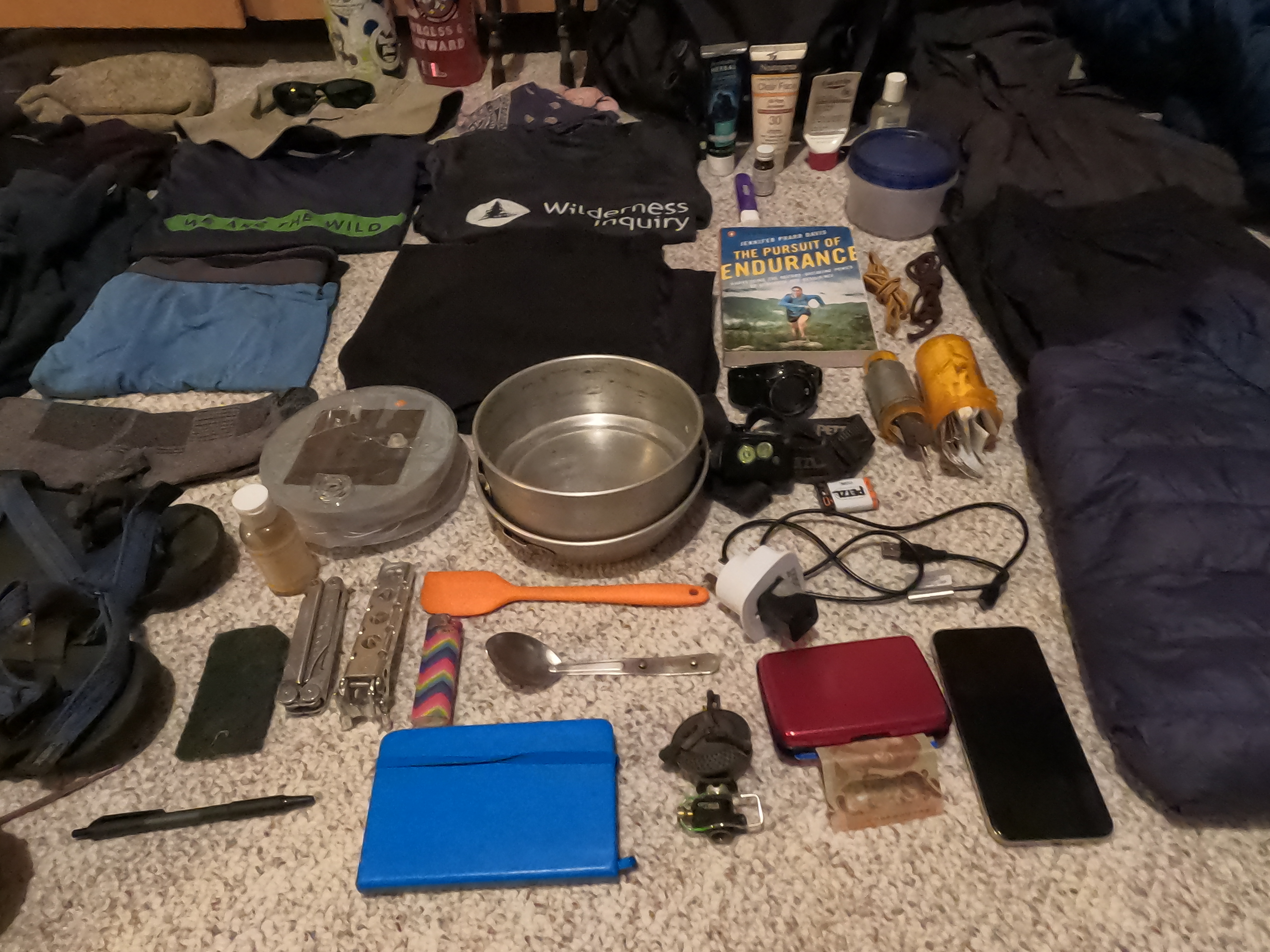
With all this in mind, here’s what I currently have planned to take on Te Araroa. I did myself a favor by downsizing to a 65-liter pack so that I can’t stuff it too full. Currently I have my base weight down to just under 30 pounds. How much of this stuff I will still be carrying at the end of the trail will be a guessing-game over the next 2,000 miles. I included brand names and trade names just to be specific about the gear I have, but recommend finding whatever works best for you, whether brand name or not. I myself have little brand loyalty and have amassed my outdoor gear collection via Craigslist, the REI® Garage Sale™, and discount sections at outdoor gear stores.
.

.
Backpacking and Sleeping Gear
- Osprey® Rook™ 65-Liter Backpack
- Mountainsmith® trekking poles
- REI® Zephyr™ 25⁰ synthetic sleeping bag
- Sea to Summit® Thermolite™ sleeping bag liner (+10⁰)
- Nemo® Tensor™ inflatable sleeping pad
- The North Face® Asylum Bivy™ single person tent
Clothes
- Hiking Clothes
- 1 sunhat1 pair sunglasses1 synthetic shirt1 Original Bug Shirt Company® bug shirt1 pair synthetic underwear1 pair trail running shorts1 pair synthetic socks1 pair La Sportiva® Bushide™ trail running shoes1 cotton handkerchief1 rain jacket
- 1 pair rainpants
- Non-hiking clothes
- 1 synthetic shirt1 lightweight fleece1 medium weight fleece1 puffy jacket1 pair synthetic underwear1 pair synthetic convertible pants/shorts1 cotton handkerchief1 pair lightweight gloves1 beanie1 pair Xero® sandals1 pack-towel
- 1 pair synthetic socks
.
.
Cook-Kit
- Optimus® Crux™ stove with case (uses isobutane/propane fuel available in New Zealand)
- 1 2-liter aluminum cookpot
- 1 potgrips
- 1 spoon
- 1 rubber spatula
- 1 Leatherman® multi-tool
- 1 plastic tupperware
- 1 lighter
- 1 small bottle Dr. Bronner’s® biodegradable soap
- 1 small green Scotch-Brite™ pad
- 1 bottle Potable Aqua® iodine tablets (50-count)
- 1 stuff-sack for carrying food
- 2 32-oz Nalgene® water bottles
Toiletries
- Small tube of toothpaste
- 1 travel toothbrush
- Small tube of sunscreen
- Small tube of hand lotion
- Small bottle of hand sanitizer
- 1 small first-aid kit in an old pill bottle
- Moleskin®Assorted small bandages1 roll athletic tapeAnti-biotic ointmentDiotame anti-diarrheal tabletsIbuprofenHydrocortisone creamSmall and large nail clippers
- Tweezers
Electronics
- Petzl® Actik™ headlamp with rechargeable battery
- Luci® Base™ solar charging lantern
- New Zealand wall outlet adapter
- American charging block
- Charging cord compatible for all electronics
- Smartphone (to use for photos, staying in contact, and navigation apps for the Te Araroa)
- Wristwatch
Extras
- 1 Repair Kit (fitting inside old pill bottle)
- Gear repair tapeInflatable sleeping pad patchesThin sewing threadThick waxed sewing threadAssorted sewing needlesSafety pinsZip tiesDuct tape wrapped around pill bottle
- 2 spare shoelaces
- Journal
- Pen
- Book (Jennifer Pharr Davis’s The Pursuit of Endurance. Why not start off with a book on running the Appalachian Trail?)
- Aluminum wallet with ID, New Zealand cash, and credit cards
.
Happy Trails!
.
.

Chasing Light

It seems I’ve been chasing light lately. First an Austral Summer below the Antarctic Circle. Then a Boreal summer above the Arctic circle. In a few day’s time, shortly after the autumnal equinox has ushered in fall to the northern hemisphere, I will board a plane and fly back to the southern hemisphere for the start of spring. I seem to have become a season hopper.
With three summers in a row without a winter season in between, you’d be forgiven if you thought I was chasing warmth and sunshine instead of chasing daylight. Though astronomically speaking, the seasons have been summer, traditional ‘summer’ weather has been neither what I was seeking or have experienced. Last December I spent the solstice in Antarctica, though even the peak of summer there felt climactically akin to my brethren at home in the Midwest. This June, I was in northern Alaska for the solstice. Yes, temperatures could rise and be unbearable under the full, circling, blazing sun—but it could also become cloudy and reach temperatures within the range of snowfall. Indeed, though the daylight has indicated summertime, these summer seasons haven’t always seemed particularly ‘summery.’
And here I go again, back to New Zealand, back to the southern hemisphere, and back into another summer season. It wasn’t by design that this happened—circumstances and the development of life decisions just produced this unintended result. While working in Antarctica last October through February, I met someone who convinced me to join her on a thru-hike on New Zealand’s Te Araroa trail. So, while the days are short and the snow falls in the northern hemisphere, I will be on the other side of the globe chasing the warmth and summer season as we hike the island together. As we follow the trail from north to south, we will be reaching higher and higher latitudes where in summer the days become longer and the nights are short.
In the temperate mid-latitudes where New Zealand lies, the distinction between periods of night and day are pronounced, but not extreme. But life, as well as the landscape, reaches towards the extreme the more one goes poleward. And beyond the Arctic and Antarctic circles, the land goes from 24-hour sunlight in the summer to 24-hour darkness in the winter. The polar regions are places of extreme seasonal differences. The summer season knows not the winter season, and the transition between the two is abrupt with only truncated springs and falls. From the sun circling overhead continually in the summer, there is only a short transition until the suns sets and never peaks above the horizon in winter.
I have seen firsthand the way the sun wanders aimlessly around the polar summer sky, circumambulating. At McMurdo Station, Antarctica, 77.5 degrees south, I spent 118 days without a sunset. When it finally did occur, the first sunset of the fall was a momentous occasion. The residents of McMurdo piled outside to watch as their faithful sun companion dipped briefly below the horizon, only to rise less than an hour later. And though the sun had officially set, it was far from night, and would be for quite some time. In the beginning of fall, the sun stays so close to the horizon that it remains civil twilight for hours after sunset. Not until a month and a half after the first sunset of the fall does McMurdo experience its first true minutes of night.

With traditional distinctions between day and night becoming muddled at the poles, day and night become somewhat irrelevant. How is one to tell the passage of time when one cannot tell when one day slips into the next? In summer, the sky remains constantly lit. Day rolled into night, but the night seemed just like the day.
In Antarctica, during the summer season, I ended up working the night shift at McMurdo Station. Though the 24-hour clock that the research station ran on considered the shift to be ‘nighttime’, there was no darkness. The only indicator of night was that the throngs of researchers and science support staff hanging out in the galley would slowly subside; there would be a few hours of peaceful quiet while the station slept, until folks began to roll into the galley for coffee and breakfast at the start of another workday. Meanwhile, in those quiet hours in the wee of the morning, the sun was at its lowest angle on the horizon, sending in radiant beams of light through the bank of galley windows—a middle of the night golden hour.
I had no problem adjusting to working the night shift after spending my first few weeks on station as a daytime worker—the sun was as bright as always, and I did not feel like I was sleeping away and wasting daylight as I had felt when I worked overnights for big-box retail. Inside my windowless McMurdo dorm room, the lights were always off. When I needed nighttime, I could retreat to my room and sleep soundly out of the sun. But were I to choose to go out and play instead, the sunlight would be my constant companion.
I had more experience living under the midnight sun this summer, as I led a 50-day backpacking trip north of the Arctic Circle to Alaska’s Arctic National Wildlife Refuge. Our latitude was not quite as high as McMurdo—only at 69 degrees latitude—thus the extremes of sunlight were not as pronounced. But what this trip to Alaska lacked in sheer latitude, it made up for in intensity of experience. Gone were the modern conveniences of McMurdo Station. There was no longer any indoors to hide in, no eternally dark dorm room or dimly-lit dark bar to retreat to. Instead, we were out in the backcountry with no more than we could carry upon our backs. Our only shelter was a thin-walled tent, and the daylight filtered right in. We either made friends with our eyemasks, or we learned to sleep in the light. Once again, the time of day became irrelevant—there was no hiding from the constant presence of the sun.
It took a number of days before I lost the nagging feeling that comes after looking at the late hour on my watch and feeling the pressure to get a hustle on to make camp before darkness falls. Throughout the duration of the trip, I kept tabs of the time on my watch—not out of necessity, but more out of a curiosity of how our circadian rhythms were adapting. Our days slowly dragged out to be longer, as we stayed up later enjoying each other’s company and slept in longer the following mornings. Thus, we ended up being awake through the darkest hours of the day, and even towards the end of the trip after the sun had been setting below the horizon, the light remained with us. Even in the depth of night on our last day in the Wildlife Refuge, it remained light enough in the tent to read a book.
In spite of the mounting fatigue from daylight that comes with constant exposure to lightness, I appreciated the daylight as a benign and amiable companion in a remote and unfamiliar terrain. Here we were, traveling for weeks in the Arctic National Wildlife Refuge, where wolves and grizzly bears roam wild. The signs of these animals were all over—tracks, scat, kill-sites. But the daylight made the wilderness seem friendlier. All told, we saw six wolves and seven grizzly bears on the trip. Seeing the bears and watching their natural disinterested movements in the daylight provided much more psychological comfort for us than wondering if out in the darkness somewhere was a bear lurking just outside the tent.
At about the same time on the trip that I began to miss the creature comforts of home—dry feet and doorways instead of tent zippers—I also began to miss the darkness. Aside from being able to sleep better in the darkness, I began to miss darkness not for darkness itself, but for what it brings to us. The constant daylight drowns out the stars all polar summer long. I’m constantly reminded that people forget this, as I am asked quite often if I saw great stars or aurora. Unfortunately, I was able to see neither stars nor aurora, much to the disappointment of my star-gazing self. And too, having the darkness creep in at the end of the day provides a natural daily cycle of gathering in your shelter for rest. Darkness too, lends itself to gathering around a campfire for light and warmth. Though we did have a campfire on the riverbank one night in Alaska, the magic of the fire just wasn’t the same in the light hours.
As much as I began to miss the darkness, when it finally did come, it felt uncomfortable and foreign. Towards the end of our trip, the nights had been gradually growing dimmer. But right after leaving the Wildlife Refuge, we caught a shuttle ride to Fairbanks, which sits below the Arctic Circle. Darkness descended upon us as we camped in Fairbanks that night. For the first time in nearly two months, it was no longer light enough outside to walk around without a headlamp. The feeling was unfamiliar. Suddenly all the scary feelings of darkness came rushing back in that gut-wrenching primordial fear of the unknown. My how easy it is to forget what darkness is like!
This coming summer, the distinction between day and night will not be as pronounced as I hike the Te Araroa as it was when I spent time closer to the poles. The mid-latitudes will provide a kinder balance of light and darkness each day. Nevertheless, as fall and winter begin to descend on the northern hemisphere, I will once again be off chasing light.
 In All Directions