Monthly Archives: May 2016

Go Find Yourself
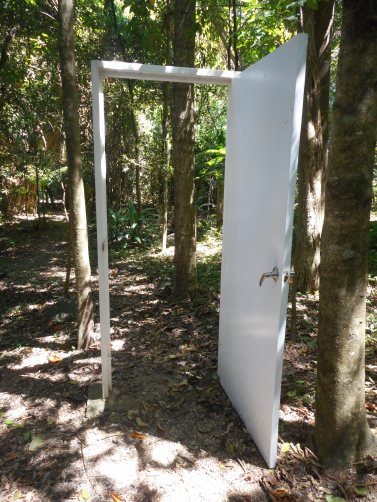
My travels in Australia could have been cast as the prototypical coming-of-age journey: a young man goes to a far off land alone to find himself.
But I didn’t go to Australia to find myself. I knew too much of myself already. Instead, venturing to Australia was more an exercise in trying to lose myself—to get out of the person who I knew too well and to try a different lifestyle for a change. Australia would be a place I could be free to experiment with identity.
Young people finding their identity is perhaps the defining mark in the transition from childhood to adulthood. As developmental psychologist Erik Erikson would describe it, the primary existential question of emerging adulthood (Stage 5) is that of Identity versus Role Confusion. Classically portrayed as the angsty teenagers’ struggle for self, this stage of psychosocial development often lasts into young adulthood, ending when the individuals’ personal identity becomes fairly consistent for the remainder of life. Though the age individuals go through this stage varies, the greater struggles of Erikson’s Stage 5 will typically be resolved around my age, sometime in the 20’s.
Thus, going to Australia didn’t necessary teach me who I was; more so it reaffirmed who I was already. As a result, I had inherently less identity formation to undergo, and was faced instead with a related identity struggle—figuring out how to live the rest of my life with this person I’ve grown to be.
In my challenges with my identity, there are things I know about myself that I struggle with accepting. There are some things I wish I could be just a little bit different—I’m terribly shy and introverted; spontaneity is quite a ways out of my comfort zone; I tend to take everyday matters way too seriously, etc. The list could go on about things I believe society expects me to be, but that I feel I just don’t measure up to.
Travelling to Australia, I held the assumption that going to an exotic country where no one had any pre-conceived notions about me would allow me to branch out and escape the confines of my identity—in particular my temperament and personality. For once I just wanted to let loose, be spontaneous, hang out, party, and disregard the consequences. I also thought I’d play with some career roles by trying out jobs I’d likely never do in the States—fast food drone, a sociable waiter, the hospitality industry. I’d also grow out my hair one more time before I had to permanently adopt a well-groomed hairstyle for the remainder of my professional life.
Alas, I didn’t find myself becoming the wild, long-haired, care-free holiday-maker I had envisioned before my trip. Instead, my standard temperament took the reins. In Australia I struggled to be outgoing and to meet new people; I rarely was spontaneous and light-hearted enough to party in spite of the consequences; I never found a job in the service industry; and I never grew my hair out before getting fed up with its wild antics.
In the end, I found that I just couldn’t lose myself in Australia, though I put in a genuine effort to try out different roles for a change. Instead, my reliable temperament shone through even in my new surroundings. Like Socrates’ famous mandate I just couldn’t help but to “know thyself” even Down Under.
Moving forward, my challenge is to accept myself for who I know I am instead of thinking that a different persona is more desirable or acceptable. How can I make the best use of the character I’ve developed? What role do I fit into in adult life? Instead of seeing them as weaknesses, how can some things about me that I’m uneasy about be used as assets?
Going to Australia may have been the final throes of my greater struggles in Erikson’s stage 5. Sensing that I was nearing a very stable sense of self, I felt the necessity to try on different roles while I still had the freedom to experiment. For the most part, though, my personal character has cemented, deepened in part by the challenges I presented myself in Australia. Some conflicts of Stage 5 still remain, namely those of finding a career path and determining my role in the adult world. But on the whole, the person who I am today is the person I have found and have chosen for myself. For all its strengths and seeming inadequacies, I’m happy for that person.

The Graduate
About this time last year I graduated from the University of Idaho with a masters degree. Being mentally and emotionally drained from formal study, I was ready to leave the cloistered realm of academia and explore the greater world on my own terms. So excited was I to get a jump start on my informal education that I left exam week early and skipped my commencement ceremony in favor of a kayak trip on the Columbia River.
Now that it’s graduation season again, perhaps I should be granted another diploma. Conceivably it could be from the University of Wanderlust. It wasn’t an accredited university. It had no designated faculty, and there were no required courses or class assignments. Tuition was also pretty inexpensive (although room and board could be costly at times). Although there were tests along the way, the entire grading system was based on pass/fail.
Yes, now that I’ve officially ended my coursework of travels, I’d say it’s like I’m a freshly-minted grad once again. My degree from the University of Wanderlust ended up being a year-long program (or else I guess I just graduated early), and I was happy to build my own curriculum too. First I spent a semester in the American West, road-tripping on a survey course of National Parks and cultural highlights. Then, I spent my second semester in Australia, taking classes in fruit-picking and van culture. From this I’ve earned a diploma full of different life experiences at an expedited rate.
And what’s more, my diploma from the University of Wanderlust focused on personal change as much as it did about learning factual knowledge. Though I enjoyed learning a great deal about many of the spectacular places in the United States as well as learning about the way of life in a foreign land, what I had set out to gain through my latest degree was deeper—a more thorough understanding of my own personal growth and moral development. My masters degree at the University of Idaho, though it challenged my intellect, lacked much of the personal growth I yearn for in education. What I needed to compensate for this lack was a challenge to develop my character and to gain a different perspective on the world.
Unlike a typical college education, though, my self-designed degree focused more on the realm of the practical rather than the theoretical. Throughout my travels, challenges were applied and consequences were real. Every event was viewed with the mindset of an opportunity to learn. Daily life became my homework assignments and the people I met along the way were became my professors.
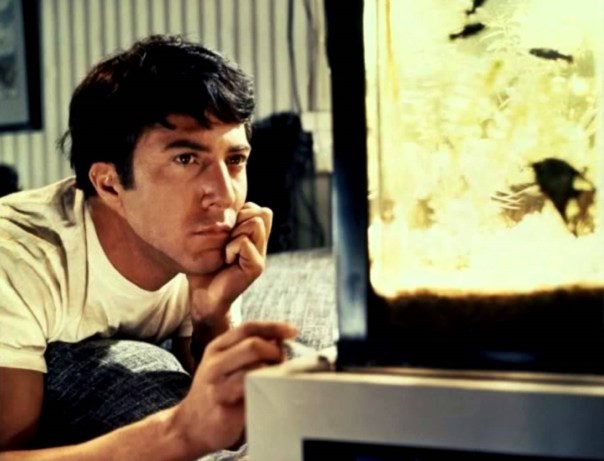
As a recent grad of the University of Wanderlust, I feel fresh and ready to pursue a career path. Admittedly, I still do feel a little bit of the aimlessness and uncertainty of recent grad Benjamin Braddock from Mike Nichols’s film The Graduate. But on the whole, my diploma of travel in the real world has provided the necessary transition from the culture of the academic world to the culture of the working world.
Many of my lessons learned from the University of Wanderlust still need formalizing into words. But how does one succinctly sum up a year of travels? Fortunately for me (or maybe not!) I never assigned myself a term paper.

Leaving (Many) Stones Unturned
This is my first blog post back in the United States. Yes, that means my Australian adventure has ended. What I initially intended to be a year or more of work and holiday in Australia concluded after spending a comparatively short 187 days in the country.
In an earlier blog post, I summarized an outline of the itinerary I had conceived for Australia. It was an ambitious plan for sure—my goal was to drive around the whole country and experience all the best that Australia had to offer. Seeing how this trip would be my only working holiday visa in Australia (and in all probability my only visit Down Under), I wanted to make the most of it. With the naïve idea that I’d be able to see everything worth seeing in Australia, I calculated a very thorough travel schedule so that I wouldn’t have to bother coming back to the country. After all, it was a long 15 hour flight from Los Angeles to Sydney just to get to Australia. Below is a map of what I originally envisioned for my year+ Down Under:

Needless to say, things didn’t work out very much as planned. Good, equitable work was difficult to find; shady fruit picking contractors swindled me out of a good chunk of my meager earnings; and my campervan experienced breakdown after breakdown. The accumulation of adverse experiences in Australia eventually led me to abandon the working holiday dream altogether. Though fate didn’t seem to be on my side, I don’t regret the journey at all and felt like I learned many invaluable lessons that I couldn’t have learned otherwise. Practically, though, as a major consequence of the essential unpredictability of eking out an existence in a foreign land, my idealized Australian itinerary changed drastically. Here is a summary map of where I actually traveled:
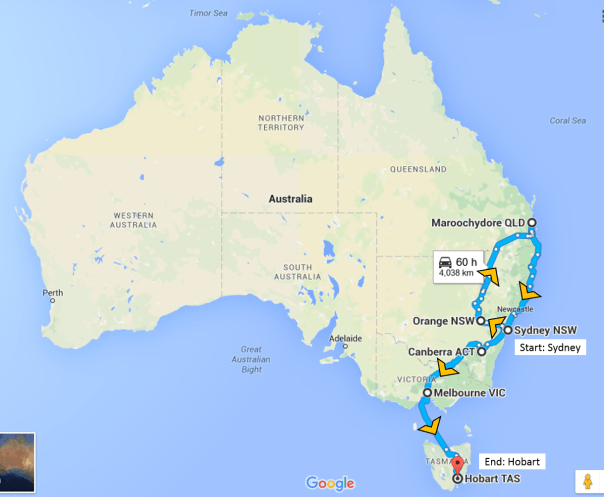
Probably the most noticeable difference between my idealized itinerary and my actual itinerary is the extent of the travels. Though I put over 15,000km on my campervan, I still only covered a fraction of the Australian continent. Major destinations like Queensland’s tropical north and the Outback’s red center were never reached. Travels to Western Australia and the Northern Territory were scrapped from the plan entirely.
Though I am disappointed at not being able to see such remarkable places, I’m not distraught over the lost opportunity. In conversations about my Australian trip, people often remarked that my journey was a ‘once-in-a-lifetime opportunity’. And, while making my plans for Australia, I took that sentiment to heart. I preconceivingly figured that I would never travel to Australia again—that this particular Australian trip would be my only chance to see places of world heritage value like the Great Barrier Reef or the Outback. Thus, I wanted to make sure I uncovered every stone Australia had to offer, so I could forever check the continent off my bucket list.
Abrasive reality—and sheer practicality—saw through my meager attempt to see everything in Australia. It is an impossibility to overturn every stone and leave nothing new to see in a country. Even if someone were to visit every square meter of a place, they would still have more to discover in the nooks and crannies. Such a person would still need to see the same things again, but from a different angle. Such a person would still need to spend more time in the country just to understand how the incessant elements of time and change affect a place. Fully seeing everything a country has to offer as a visitor is an absurd notion indeed.
As it so happened, I left many stones unturned in Australia. Though I wish I could have stayed longer and traveled more, I’m happy to say that I still have many reasons to go back to Australia in the future. Though I have no definite plans to revisit, I can see scenarios of returning soon to my much favored Hobart town for graduate school, or of returning only after many decades have passed as a grey-haired tourist. It’s also quite possible that I may never return to Australia again. But one things for sure: I never want to think of my stay in Australia as only a ‘once-in-a-lifetime’ opportunity.
 In All Directions