Monthly Archives: May 2018
Fun with Time-Lapse #2
Second batch of time-lapse videos. Enjoy!
____________________________________________________________________________________________
Sunrise at Norway House Cabin, Camp Widjiwagan, Ely Minnesota. March 2018.
Clouds along the Lake Superior shoreline, Gooseberry Falls State Park, Minnesota. May 2018.
Circumpolar star trails with tree in focus in foreground, stars out of focus. Video fades to white as night turns into dawn. Ely, Minnesota. April 2018.
Northern Lights dancing near Ely, Minnesota. April 2018.
Flowing water in mud puddle from spring meltwater. Ely, Minnesota. March 2018.
Calgary, Alberta skyline transitioning from dawn to morning. April 2018.
Calgary, Alberta city skyline at night. April 2018.
Traffic on Calgary’s Reconciliation Bridge. April 2018.
Another angle of the Reconciliation Bridge crossing the Bow River. April 2018.

Travel Fast, Travel Far

“If you want to go fast, go alone. If you want to go far, go together” —Traditional Proverb
It used to be that when I read this old adage, I would favor and emphasize the going fast part of it. Though it may appear otherwise, the proverb doesn’t really offer up going fast and going far as two equal options to be chosen from; in the context it is most often used, there is an open bias towards uplifting as correct the latter as opposed to the former. But the choice is included in the proverb nonetheless, and fair being fair, one could, like me, focus on the benefits of going fast alone versus going far with others.
Most often I think of this proverb in its relation to travel. More specifically, recreational travel. My travel history is one of mostly solo ventures. I used to prefer it this way. I valued the independence of making my own choices. I valued the efficiency of being the only person to coordinate. I didn’t like having other people around to be forced to compromise with, as that might have infringed upon my personal travel desires. In that old perspective, traveling with other people either slowed me down unnecessarily, or forced me to participate in things which I didn’t really care about.
Even though I did favor the ‘fast’ side of the adage, I was never really a fast traveler on my own accord. At least in regards to speed. On my own personal trips, I usually, and predictably, fell further and further behind schedule. I like to take my time, though out of thoroughness and not out of leisure. Thus, I realized that I am a bit slower taking in the places I travel to, but I prefer the relaxed pace nonetheless. When traveling alone, I had the freedom to take all the time in the world to visit a place and not feel pressured to leave earlier because the people I was with got bored and wanted to move on (very true for visiting museums with me). Maybe the proverb should be changed to “if you want to go thoroughly, go alone.”
As a result of these preferences, I took many long trips by myself attempting to see it all, and to see it all thoroughly. I wanted the freedom and independence of travel to be able to follow my own whims instead of making compromises with the desires of other people. My little solo travels gradually got longer and longer until they culminated in my six months spent dirtbagging down under. Australia was a solo venture, and even though in Australian backpacking culture solo travelers frequently coalesce together, the longest time I ever traveled with someone was four days. And I was glad to be rid of him by the time we parted.
But during that time in Australia, my outlook on long solo travels began to change. On the whole, because I was traveling primarily by myself, I don’t think I got as much out of the entire Australian experience as I could, or even should, have. Sure, I did end up seeing more places than the average Aussie backpacker. But in reality, that additional travel looked similar to this: drive alone to a cool place on the map; get out of the van; walk around said cool place; think about all the cool stuff you could be doing in said cool place; do nothing because you have no one to do cool stuff with; repeat. In addition, I just eventually reached a mental space where I began to feel a little bored of keeping myself company all the time.
I began to realize that my preferred style of travel—solo—may have been leaving me short of the deeper gains of journeying. The going ‘far’ part. Reflecting on the most memorable trips I’ve ever taken, I realize that all of them were with people. And on my solo travels, encounters with other people—you know, those really-inefficient, freedom-compromising, dissimilar-interest kind of other people—were usually the most memorable moments.
But it is still hard to deny the benefits of traveling alone—speed and efficiency. I mean, much of my solo travels have been done simply because making solo travel plans is so quick and easy. On solo travels, you only have to consult with yourself. And you don’t have to see if your schedules align with other peoples’, or check in about travel styles or activity preferences. For solo travel you don’t have to wait to find other people to join you either. Seriously, I feel like half the stuff I’ve done in my life I wouldn’t have gotten to do if I had been waiting for people to join me. So, in some respects I have done a great amount of solo traveling and exploring simply because it is so efficient. But, the most memorable trips have always been with people when the inefficiencies and mishaps abound.
Traveling with others, as I’ve found, is a much richer experience. Since other people are just different from you, naturally, they will bring you to unexpected places and force you to do things that you wouldn’t have otherwise chosen for yourself. And, surprisingly, you will appreciate it. For the diversity. For the different perspective. For the opportunity to try something new. Because, traveling with other people is a surefire way to get exposed to a lot more cool stuff than you would have found on your own. Not to mention, you’ll have those memories and experiences to process and reflect on together.
With my increasing value on group travel, I’ve got a whole slew of upcoming adventures planned, all with people. A 300-mile bike trip along Lake Superior’s North Shore with a friend from college. A 700-mile canoe trip on the Green River with a spattering of friends and family along the way. And not to mention a whole summer of guiding canoe and backpack trips for summer campers.
When I think about my change in perspective concerning the different modes of travel, what often comes to mind is the scene near the culmination of the film Into the Wild, where Christopher McCandless sits emaciated and alone in his bus in the Alaskan bush, reflecting on his solo venture of surviving in the Alaskan wilds while coming to the sad realization that happiness is only real when shared, and that he will (SPOILER ALERT!) slowly starve to death by himself in an abandoned bus. It’s a true story with a heartbreaking ending about an idealistic young man who valued extreme independence in adventure a little too highly. And all at once but much too late young McCandless realized that real happiness lay with sharing the journey with others. Fortunately I’m not as extreme as McCandless. Some lessons I can learn second-hand.
So perhaps we should change the proverb. “If you want to see a lot of stuff thoroughly, travel alone. If you want to create a memorable and fulfilling experience, travel together.” But, that doesn’t quite roll off the tongue as easily.

Minnesota Passive-Aggressive
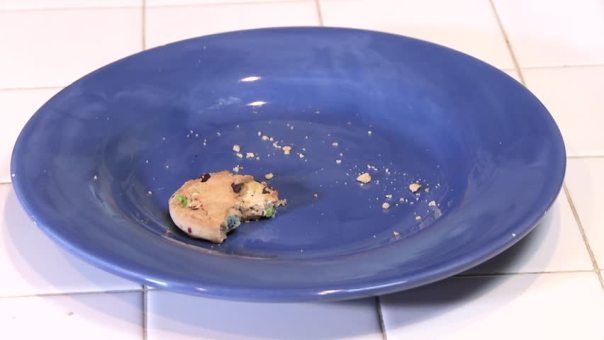
A Far Too Common Sight in Minnesota
There is a strangeness to these folks up here in Minnesota. They say Minnesotans are a special breed, marked by their behavior of being ‘Minnesota Nice’. Well, after doing my firsthand ethnographic research, Minnesota Nice is actually a very subtle way of being passive-aggressive. Minnesotans aren’t very keen on being physically aggressive, as it is. Instead, theirs is a subversively passive method of controlling your behavior with their outward niceness.
Imagine the common scenario of a plate of freshly baked chocolate chip cookies laying out on a tabletop for all to freely grab. At first, when the cookies are plentiful, folks wolf them down like oxygen. Then, as the cookies becomes scarcer, folks start taking the remaining cookies less frequently, until, of course, there is that lonely singular cookie left. That last remaining cookie will sit undisturbed for a while, until someone decides to do the world a favor by taking the last cookie and cleaning the whole mess up. That’s human nature. Except in Minnesota.
If that plate with the one remaining cookie were in Minnesota, Minnesota Niceness dictates that one must never take the last cookie (or the last of anything, for that matter). That final cookie will sit untouched, though lusted after, for perpetuity. That is, until some Minnesotan is brave enough (though always unseen) to initiate the Pandora’s Box of food division. The initiator will cut the final cookie in half, consume one half, and then leave the other half on the plate for an unknown future cookie consumer. The floodgates have then been opened. All the Minnesotans who have long been craving the taste of cookie in their mouth will stop by, cut the remaining fragment in half, eat one half and leave the other ever-decreasing portion. Minnesotans would continue this food division game ad infinitum, I’d theorize, until they start splitting cookie atoms. Thank goodness, for the Minnesotans sake, that there are some out-of-staters living surreptitiously in their midst. As a native Michigander, I grew up with zero qualms about taking the last cookie off the plate. In fact, finishing off a food item was often seen as performing a favor. Now living in Minnesota, my out-of-stateness is my justification to take the last of anything and finally put an end to all this food division tomfoolery. Though getting the last cookie is a huge benefit, it does mean that I’m always stuck with cleaning up the plate. This whole scenario causes me to wonder if Minnesotans are actually nice and are seeking to share with others, or if this is just their way of forcing other people to do the dishes.
Sharing a family meal with Minnesotans is also a foray into how Minnesota Nice can actually be a way to control the behavior of others. Imagine, again, the common dinner scenario where there is only one biscuit left in the bread bowl. By now you should understand that Minnesotans will never, ever, take the last of anything if no one is watching. But in a social setting, a Minnesotan is allowed to take the last of something if, and only if, the Minnesota Nice ritual is performed. Here’s how it goes:
Dinner guest who is eyeing the last biscuit for himself: “Does anyone else want the last biscuit?”
Everyone else at the table: “No, go ahead. It’s all yours,” (while silently whining to themselves ‘but I wanted the last biscuit!’).
The code of Minnesota Niceness prohibits anyone from grabbing the last biscuit outright. Instead, our dinner guest’s general inquiry about anyone else wanting the last biscuit is the very aggressive statement that, in fact, he intends to eat the last biscuit all by himself. In front of everyone else. Everyone else at the table must now politely insist that he indeed take the last biscuit. Not only has he eased his inherent Minnesota guilt about taking the last of something, he has also procured the blessing of all his table mates (though inside, all of his table mates are irritated at his aggressive move).
For someone to respond positively to the dinner guest’s inquiry by saying ‘yes, I would like the last biscuit’ would be a grievous violation of Minnesota Nice norms. Even if another diner had had an eye on the last biscuit too, they must now hold their tongue, for it is too late for them to stake their claim. They will inwardly seethe with rage at the diner who took the last biscuit while their face shows a smile and they pass the bread bowl over with a friendly “okie dokie, you betcha!”
This dinnertime ritual is done to appease the guilty consciousness of the Minnesotans who dare to take the last of anything. For, deep down inside of themselves, the Minnesotan knows that anything that they desire is also desired by someone else to a greater extent (but they don’t necessarily know who else, they just know that someone else is out there somewhere). To take the last of anything would be to deny that unknown someone of the thing which they highly desire. The Minnesotan feels inward guilt that by enjoying something themself, they are taking away such enjoyment from others. Thus, by going through the ritual of asking if anybody else wants that last item, the Minnesotan gains a positive affirmation (at least on the outside) that no one else is hurt by them taking the last thing.
If a Minnesotan becomes quite adept at this game, then the ritual can get quite domineering. They can dictate their wishes upon other people by simply being very outwardly nice. Now, I’m not blaming you for anything, and it’s not your fault, and I know you didn’t mean anything bad by doing it, you know, and I think you’re a good person, and maybe it was the circumstances, but it’s just that, you know, someone else may have wanted that last cookie, possibly.

 In All Directions