
A 25 Year-Old’s Retirement
Travelling around Australia in a van, I inevitably run into a different demographic of traveler doing basically the same things I’m doing. This demographic can be described as the older, retired lot who also live out of vans or motor homes and spend their time driving around and living like tourists. For some people, this is their dream lifestyle. They’ve worked hard all their lives to afford a retirement full of travel and leisure. Retirement is their final treat where they can enjoy the fruits of their labours free from the burden of work and outside obligation.
Perhaps retirement is wasted on the old. Wouldn’t it be better to travel when you’re still young and have the energy to see things? Wouldn’t travelling prove more fruitful if you still have the bulk of life ahead of you to be influenced by what you learn whilst travelling? For these reasons, I decided to take my retirement early. But instead of taking a retirement of pleasure and leisure, I am taking a retirement of travelling and learning. I wanted to ‘retire’ while I am still young and flexible, while my identity is still malleable enough to shape the person who I am becoming. If a great deal can be learned by travel, then why hold off those lessons until most of one’s life has passed?
But, another reason why I decided to retire early and to travel now is that I have a gut instinct that I will not be as inclined to travel later on in my life. Instead of always being ready to move on, I have a tendency to linger at a place that’s become familiar to me. Eventually, in the years to come, I sense that I will settle down into a place and a community where I can let my roots grow. Once I’ve settled into such a community, I won’t have the desire to journey as extensively as I am doing now. Of course travel will always remain a way to re-invigorate myself in day-to-day matters, but, I strongly suspect, my future will not be one where I continue to live out of a vehicle on a long ambling sojourn. Consequently, I feel I ought to be travelling now in my youth, while the wanderlust still churns strong inside me. In my old age, though, I project I’d like to live in one place. Life as a continual transient on the road will not be the life for me. Some people may also chose to retire in a different location from where they’ve worked their careers. Again, not for me. Once I find my community, I won’t leave it for a leisurely retirement elsewhere.
Yet another reason why I’ve taken an early retirement is that I’m not sure if I’ll be the type of person who will even want to retire. Inevitably, I feel very impassioned about the work that I do, and right now I’m on an extended quest searching for my life’s vocation. When I do ultimately engage in a line of work that I am passionate about, I doubt I’ll have the desire to leave it just because I reach a mandatory age. Instead, I will follow my vocation and continue to work towards the betterment of society and my community through my career. Life takes a lifelong commitment—and I’m not one to bow out for an early retirement. When thinking about the idea of old-age retirement, I am greatly motivated by stories of people who have lived their passions to the fullest extent of their lives. One story I find particularly inspiring is that of Carl Sharsmith, who had a 60-year long career as an interpretive ranger in Yosemite National Park, becoming the oldest active NPS ranger upon his eventual retirement at age 90, one year before his death. Some passionate people like Sharsmith just can’t be stopped, and I hope to be one of them.
These are a few of the reasons why I decided to take my retirement early. My gap year in Australia is not just a period of leisure and an attempt to postpone a career—it is an investment in the person I will be in the future. Soon enough, necessity will dictate an end to my early retirement and will see my entering of the workforce. But I look forward to this as well, like a person who just can’t stay away from a vocation which he loves.
Featured Image credit goes to the documentary This is Nowhere, which provides a perspective on the lives of nearly 3 million Americans who permanently live in motorhomes and camp in Wal*Mart parking lots

To Catch a Sunrise
I have a friend who grew up in Colorado. I listened with indignation one time as he described climbing mountains at midnight.
“But you can’t see anything!” I managed to sputter, expressing my contempt at the idea of hiking in the dark.
But, are all our experiences based upon sight alone? What else could be ‘seen’ in the dark when the ambient light grows dim?
The eye is truly an amazing organ, and sight is a sense unparalleled in constructing our world. Vision dominates the method of how we gain information about our world—by some estimates, over 80% of our information intake. As well, having sight is incredibly important to a hiker. Excuse the pun, but having vison helps a hiker see where they’re going. But with so much of our information intake dominated by our sense of sight, do we sometimes let other sensory input fall by the wayside?
With all my skepticism about the merits of a night hike, I recently commenced on a night hike of my own accord. My goal, of course, was still focused on vision—I was climbing the Tweed Range’s Mount Warning to catch some of the first rays of sun falling upon the Australian continent. After the initial chore of hiking a couple hours in complete darkness, I was expecting to be rewarded with a visual spectacle.
Strapping on my dim headlamp to serve as my guide, I was soon on my way. I stepped onto the trail and glanced about at the journey ahead. In the dusky glow of my headlamp, silhouettes of giant palms and tree ferns encircled me. Shadows danced about every time I swung my head. In the low levels of light, the foliage of the rainforest seemed ethereal, alive, almost magical. My standard sense of vision, I realized, was altered. Instead of seeing nothing, I was going to experience the world in a different light.
As I continued to climb in near darkness, I found my eyes drawn to any small source of light they could detect. In the absence of daylight, other sources of light make their presence known. Often I paused to gaze up at the stars, always shining, but obscured in the light of day. In the distance, I could see the twinkling glimmer of coastal towns, swaths of light in an otherwise dark world. Along trail cuts was the glow of bioluminescence—glowworms, hunting at night, producing their own light to attract unsuspecting insects. The bright light of daytime hides such treasures from us. It is the absence of daylight that draws our attention to them.
I found, too, that my other senses grew keener as my vision was reduced. I paid much more attention to sounds—the sound of the wind rustling through the leaves, the sound of a possum scurrying about. Smells were enhanced. I breathed in deeply the sultry tropical scents of the rainforest air. The humidity of the forest filled my nostrils and clung to my skin as I climbed in the night dew. Every brush of foliage against my arms came rightly to my attention. Things normally filtered out by my subconscious were now fully realized.
I summited Mount Warning in the dead of night, before any hints of lightness came over the horizon. I knew I’d have to wait for the expected visual show to arrive, but the show I experienced on my upward climb had made the whole trip already worthwhile. It turned out that a lack of sight had opened me up to many different avenues of experiencing the journey.
I stuck around to see the visual sunrise show. Waiting on the summit viewing platform for over two hours in the dark, my eyes became primed to see the subtle changes as the new day broke forth. I watched, riveted, as the sky slowly began to illuminate and go through its many moods and colors of dawn. At last the sun broke above the horizon, bathing the world in its fresh luminosity. I had successfully caught the sunrise. But that morning, I had caught so much more than just a sunrise.

Small Town Country Australia

A view down Wynard Street, the main commercial avenue in Tumut, New South Wales
I’ve been passing through a lot of small Australian towns lately. Ever since leaving the tourist haunts of the coast and travelling inland, I’ve been encountering a new Australian geography. Up through the Great Dividing Range mountains and onto the western plains, Australian towns get comfortably country.
From the New England Highway to the west side of the Snowy Mountains, I’ve passed through towns more familiar with the rumble of a livestock truck than to the stamp of tourist feet. Populations in these towns may reach from a few thousand to a few ten-thousand—not necessarily tiny by Australian standards. Regardless of their size, however, these towns may be the largest settlement for an hour in any direction—and thus these small country towns serve as regional centers of commerce. Along the backroads and byways of rural Australia, a traveller will be rewarded with the very appealing character of the Australian Country town.
My experience of country towns is based on one I’ve spent a fair amount of time in recently: Tumut, New South Wales. Tumut, like other country towns, lies amidst a landscape of grazing, field crops, orchards, and timberlands. Roughly halfway between the major metropolitan centers of Sydney and Melbourne, Tumut sits 30 minutes off the main highway—and is largely bypassed by the hubbub of interstate traffic. With a population of just over 6,000, Tumut is the principle settlement in Tumut-Shire, in addition to being the largest town for at least an hour’s drive. Though Tumut may be nestled in the scenic western foothills of Australia’s highest peaks, the Snowy Mountains, tourist traffic remains light here largely due to hilly terrain and narrow town access roads.
Small country Australian towns like Tumut share a distinct geographic feel. At the heart of these towns runs the main street, lined with the town’s oldest and most elaborate buildings. Wide brick sidewalks traverse either side of the main street with store-front balconies and branching European street trees providing shade from the blistering country sun. The most prominent buildings along the main street just might be the hotels—in Australia, hotels are the place you go to hang out and drink a beer. Even in the small town of Tumut, there are no fewer than six hotels along the main avenue of business: The Commercial, The Oriental, The Royal, The Star, The Woolpack, and The Wynard. Banks, shops, public buildings, and churches complete the line-up of edifices on the main street. Further out from the main street, historic brick and stucco houses speak of early city residents who had a great sense of pride and importance in the place where they lived.Though individual businesses may change through the years, the turn-of-the-century street façade remains strongly characteristic of the country town.

In Australia, you go have a drink at the hotel. Being common sights in country towns, hotels have a pub on the ground floor and accommodation upstairs. Large, sweeping verandas provide much needed shade from the Australian sun.

The School of Arts Building, built 1891. In small towns, the ‘School of Arts’ was established as both a repository of books and a community meeting hall–an early multi-purpose community building.

Elaborate churches add architectural character to the town’s built environment.

Turn-of-the-century brick and stucco house, with a characteristic tin roof.
Scattered around the business district and residential streets of the typical country town is ample parkland, which lends an appealing openness and naturalistic feeling to the rural development. These parks provide shade, recreational opportunities, and amenities to resident and visitor alike. As a visitor to a new town, I often form my quality assessment based on the town’s parkland and amenities—for example, public toilets and electric barbecues are very appreciated. Civic buildings such as libraries are another important public resource that attest to a quality of life in a town, in addition to being very helpful to the traveller.
The physical landscape—the built environment—is just one aspect that is characteristic of the Australian country town. The other aspect is the cultural landscape. Though I originally only planned to pass through Tumut on my search for employment elsewhere, I’ve ended up staying for a week now. Having found no job leads further afield, I returned to Tumut to come up with an alternative plan, and I have stayed because I enjoyed the aura of the city. I’ve found the people to be particularly friendly here, and more apt to start a conversation with the town’s new stranger. This is especially true while I’ve been sitting outside the library after hours bumming wifi for my job search. One local man came right up and joined me on the bench I was sitting on, talking to me as if we’d meet long before. He really only came to the library for some half-smoked cigarettes in the ash-tray, but he wanted to greet the stranger as well. He gave me some advice for my job search, and then informed me that in a town like this, everyone will know your business by the time you leave. I guess that’s all part of the small-town life.
My one week in Tumut has given me a good sense of the nature of the town, and may be a good indicator of the character of the other country towns I’ve passed through along the way. With little in the way of tourist traps in Tumut, I’ve been living like a local instead. Daily, downtown Tumut is a bustling locale—at the shops and bakeries by day, and at the hotels by night. I’ve nursed a beer at one of the hotels, listening to live music from a nearby bluegrass band. I’ve been shown the river float along the Tumut river where locals go to cool off on hot summer days. My van radio has been tuned to the local radio station playing golden oldies and old-time country music. I’ve eaten local produce fresh from the weekend outdoor market. I’ve even watched part of a high-school cricket match, and I’ve seen the civic pride of the Tumuters as a large group volunteered their Saturday to pick up rubbish in the riverside park. All these little things I’ve seen and done here in Tumut add to the congenial character of this small country town.
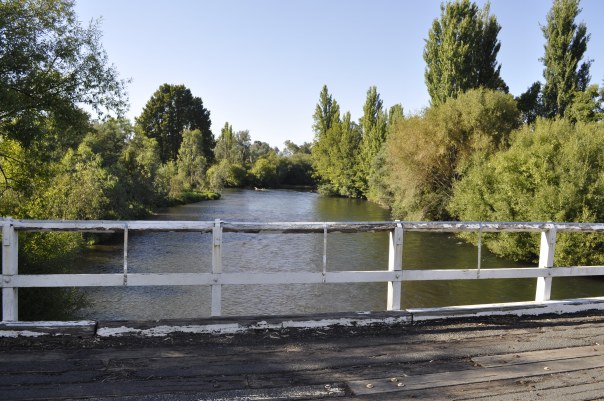
The Tumut River, as seen from the Old Town Bridge. The name Tumut is derived from an aboriginal word meaning ‘resting place by the river’. The river is a favourite local hangout.
It’s not that only small country towns have the kind of charm I’ve described—it’s that I find it easier to perceive in a small country town, where the bright lights of international corporate business and the McMansions of suburbia don’t obscure the local identity. Large towns, urban centers—these too have their unique geographies and contingent of dedicated citizens who make their homes resplendent with civic pride. These are the same people who pass the love of their city onto the wayward visitor.

A view of Tumut from the highest point in town, showing the foothills of the Snowy Mountains

A Working Request

Sometimes searching for employment feels like being lost in a maze
Dear Future Employer,
I know my time of long-term future employment is still a ways off, but I’ve been thinking a lot about occupations lately. That’s probably no surprise, seeing how in Australia I’m always on the lookout for the next job. And, even when I have found a job here, they’ve lasted only a few weeks—so it shouldn’t be a surprise that I’m constantly on the job search. After all, I do need some means of paying my living expenses and saving up for future travel.
Future Employer, I look forward to the day when we can form a mutually beneficial team, where you benefit from my skills and I benefit from the position. I’m growing tired of the unceasing job search in Australia, and I hope our future relationship will last a bit longer than a few weeks. How much longer our working relationship should last, I can’t say at this point—it could be months or it could be years. It just depends on how well we get along. But, my Future Employer, when I do return to the States and start working for you, here’s a few things I want you to know.
Future Employer, please know that I do not work for economic reasons alone. Though western society may be set up in a way that I need money to support myself, please note that a high income is not my employment objective. If you are offering a position that is not something I want to do, there is no way you could pay me enough to do it for long. I’d rather do something I love as my occupation, even if that means living at just a little lower economic status.
Also, Future Employer, when you do finally employ me you will find that I throw my all into my work. Some might say I’m a bit of a workaholic, though that’s not quite the way to describe it. Rather, my daily occupation forms a huge part of my identity; it was when I was a student and has been in all the various jobs I’ve worked. I find that it’s difficult to separate who I am from the work that I do. Thus, long-term employment is not a decision I take lightly—my future profession must be a reflection of the beliefs and values that I hold dear. So, Future Employer, I’m not just looking for a job. I’m looking for a calling. I’m seeking to use my occupation as a means to make a real difference in the world. In the words of my Alma mater, I’m in search of my vocation—the place where my deep passion meets the world’s needs.
So, my Future Employer, I’ve come up with a list of ‘Working Demands’. If you can’t meet these demands, I’m afraid I won’t be happy working for you:
- Allow me to take pride in the work I do for the sake of the job. Nothing in a job cuts me down more than being explicitly told to cut corners or to do shoddy work for the sake of earning a dollar.
- Respect my time, efforts, and contributions. I am not your commodity used to earn you a profit. I am a human worthy of dignity and respect.
- Treat my employment as an investment, not a liability. As my employer, be my coach to improve my performance, not my overlord to punish me for mistakes.
- Promote a good cultural environment among the workforce, such that we are not just co-workers but members of a team working towards a vision. As a bonus, I wouldn’t mind getting to know my co-workers well enough personally to even spend time outside the workplace with them recreationally.
- Let me try out my own ideas to promote innovation, and give me the flexibility to try and fail sometimes, because making mistakes is all part of the learning process.
- Allow me time to work on my individual ideas, but also have me work in a mutual and collaborative team environment.
- Keep me mentally stimulated. Provide tasks that keep me learning and growing.
- Provide me with a variety of tasks in the workplace, so daily assignments are invigorating instead of monotonous and dull.
- Give me flexibility. The strict pattern of 9 to 5, Monday to Friday, and wearing business casual has never really appealed to me.
Someday we will find each other, Future Employer. If you offer to meet my working demands, you will find me a strong and passionate worker.
Yours Truly,
Tyler M. Bleeker

A Picture of Efficiency

For compensation at Emperor’s Choice Lychee, I was paid an hourly rate rather than on a piece rate (i.e., payment according to the amount of fruit picked) like I was on the cherry farms. Though the physical tasks of picking lychee and cherries were not dissimilar, the method of compensation made a world of difference in terms of the work environment. I must admit that I enjoyed extremely getting paid a wage, for it guaranteed me a certain level of income no matter the circumstances of harvest. I’ll also add that the method of compensation made the lychee harvest an experience that will be hard to beat, and the cherry harvest an experience to be avoided.
The most immediate difference with getting paid an hourly wage is that the pace of work is quite a bit more stringent. Since my employer was obligated to compensate for every minute of his employees’ time, he needed to run a tight ship in order to keep his labour costs down. Thus, on our first day of work, each new employee got acquainted with the farmer’s employment philosophy; in his own words: “Guys, believe it or not, you’re not here to earn yourselves money. You’re here to make me a profit. And if you can’t do that, then we aren’t going to get along.” The farmer did make good on his promise—he would let go of underperforming workers at any point in the season. Thus, at Emperor’s Choice, you either worked efficiently or you needed to find somewhere else to work.
But it was never our employer’s goal to sack people. Rather, employees were a big investment for the farm since they are the workers who bring in all the fruit during harvest, leading to the farm’s annual profit. The job of harvest was to be done properly and correctly, to maximize yield and minimize fruit damage. At Emperor’s Choice, employing workers directly allowed the farmer maximum control over the performance of each harvester (this in opposition to piece work, where little to no training is given to new employees and workers are typically hired by contractors instead of farmers). As investments of the farmer, new workers were properly trained in all aspects of the harvest, and employee performance was monitored throughout the season. The goal of devoting such training to all variety of harvest tasks is to create a highly-skilled workforce who can achieve high performance with minimal supervision. The farmer also knows that creating a highly trained harvest team and compensating them fairly will lead to greater employee retention from season to season. Thus, a relationship develops between the employee and employer where the employer is more akin to a coach who aids in the development of the workers’ skill. The employee, then, is a player who gives their best performance season after season.
The result of our training and the stringent pace of work at Emperor’s Choice became a picture of efficiency. If you ever found yourself standing around for more than three seconds wondering what to do, you were wasting your time—and also your employer’s money. But this situation was mostly avoided, since us workers knew all the tasks that needed to be done at any given moment. Teamwork was most important in the packing shed, and it was also where our machine-like efficiency shone the brightest. The harvest workforce formed an economy of tasks based on proximity to a job or whoever needed a ‘micro-task’ (a job taking a few seconds, like emptying garbage bins or stacking picking crates) while they were waiting on something else. Thus all manner of tasks—large and small—were accomplished without too much thinking or too much being asked. In the packing shed, workers with more skill and experience were assigned to lead up different processes, but common workers could be switched to a different task at any moment. Thus, workers were coached to have the flexibility and adaptability to fit in any part of the packing process. Since employees were very interchangeable in tasks assigned, it was thus understood that no harvest task was worth more or less than any other task (though I very well hope that some of the experienced veterans were getting paid more than me!).
When we all worked together for lychee harvest, it was quite impressive. Daily, the team of harvesters would pick and process over four metric tonnes of fruit with minimal direction from the farmer. It was a mutually cooperating environment, where we were able to celebrate with each at the end of the season for picking over 88,000 kilograms of lychee together. Being compensated on the hourly rate, there was no cut-throat competition for fruit to boost your own pay during the season. Instead, we created a positive and supportive work environment as we worked towards our communal goal, one in which we were all able to take pride in the farm operation and output.
I greatly enjoyed the change of getting paid an hourly wage. Though the workplace environment was very enjoyable, one of the downsides was that I remained uncertain of my job security throughout the entire season. Though I gave my best effort, I continued to feel uncertain if I was performing well enough to continue to be retained—especially compared to the most proficient harvesters. Such fears were heightened midseason after one worker was terminated for sub-par performance. When your performance is being closely scrutinized for efficiency, you can never be too certain if you might be the next to be let go. In contrast, job security is quite different on a piece rate; as long as you put in some effort, you’ll be retained as an employee—after all, you only get paid for the fruit you actually pick. Thus, if you want a break, go ahead—but you won’t get paid for the time you sit around smoking and eating your sandwiches in the orchard. Working on a piece rate allows one to pick leisurely and with less worry about losing the job.
Though job security is more certain on a piece rate, the biggest downside is that employers don’t respect employees’ time as they would if an hourly wage was used. For labourers on an hourly wage, the employer’s finances are respected by doing their jobs efficiently to reduce the cost of labour. This respect is reciprocated by the employer, because the employer is responsible for compensating employees’ time. An employer can assign employees to menial tasks, but remains aware that he must still fully compensate. On the contrary, the time of piece work labourers can easily be abused by an employer, because such workers are compensated based on fruit picked instead of based on hours worked. For examples of this on the cherry farms, my crew was sometimes assigned to orchard ‘clean up’. We were tasked with going back over trees that had already been picked to collect any fruit that had been missed. We, of course, still got paid by how many cherries we picked—but the problem was that there were hardly any cherries left on the trees. This led to an abysmal sum of money earned after a day’s work. Additionally, on one cherry farm the farmer would add extra tasks to the contract crew’s assignment; for example, we would be permitted only to pick cherries on the tops of the trees or we had to split clusters of cherries into single stems. These additional tasks required more time and reduced the amount of fruit we could pick in a day, though the rate of pay per amount picked remained the same. However, the cherry farmer didn’t have to pay for that extra time expended by the workers. I was informed later that this was done as a strategic decision to reduce labour costs in the packing shed.
Working on a piece rate always has the allure of a big payout if you become an exceptionally proficient fruit worker. As for me, I’d rather have my time respected as a worker and take the hourly rate. This decision isn’t based entirely on economics either, but on the workplace experience as a whole.

Moving On…

Sunset over the Sunshine Coast city of Mooloolaba
Tonight I sit reflectively on the spit as the sun sets, watching the distant foreshore of the Sunshine Coast as darkness falls and the city lights come on. Tonight is my last night here. Tomorrow I will move on.
Lychee harvest ended today. We had a celebration cookout under the veranda with all the workers, celebrating the achievements our labour accomplished. Afterwards we began our goodbyes to the crew we have known for a few short but intense weeks. “See you around,” say some as they leave the farm. “See you in Stanthorpe,” or “See you Tumbarumba” say others, gaily announcing their next planned destination, as if we expected to run into one another again. Joining the trend, I dismissed myself to the crew with “catch you in Batlow!”
But as I watch the sun set over the hinterland mountains, I contemplate why it is that I am moving on already. I didn’t even plan to be out here tonight—I had planned to stay inland to prepare for my upcoming departure. But something innate drove me to the coast. I just had to be here for one last night.
I have only been on the Sunshine Coast for a mere 31 days—longer than a visitor, but far short of being a local. I’ve just begun to know this strip of coastline and the lifestyle it affords. For a while, this place was my home. Why, I wonder sometimes, must I constantly be moving on right when I begin to know a place?
Australia, of course, is a different situation for me. Here I have no opportunity for permanency. I am no more than a long-term visitor, with a definite end-date for my time. My transiency is based out of the necessity of economics, continually chasing employment to support my holiday further. With immediate job opportunities on the Sunshine Coast having dried up, the promise of bountiful harvest labour now beckons me elsewhere. And too, I’ve created a busy itinerary for myself to see as much of Australia as I can—the breadth of my travels could not be reached if I do not continually move on. My own disinclination to linger beyond planned has left me a drifting traveller.
But I look onwards as the gleaming lights come on the high-rises above the beaches of Mooloolaba and Maroochydore. I wonder if I’d have the courage to deny my pre-conceived itinerary and continue to stay somewhere—merely because I enjoy the place. Would I brave enough to stop my relentless pursuit of places unknown (and potentially better) because here I have found something I’ve enjoyed?
I come from the generation sometimes characterized as ‘The Young and the Restless’. We move around easily from place to place, seeking localities suitable to our young, sociable lifestyles. No place is stayed at for too long if there is something better to be found. Myself, I always seem to be moving on from the places I have known out of a vital curiosity—an instinct—that there is something new, different, better out there to find. I feel convinced that if I stay too long in one place, I might not discover something else that fits me better. But I question my own logic. I’m too afraid to lose the illusory opportunity of something more promising that lies just beyond the world of the familiar.
I am one of a generation of cropped roots. Transiency describes my lifestyle, but I wonder why I always must be moving on.

From Pick to Pack: The Process of Lychee Harvest
5:00 AM: Gathering
Shortly after 5 AM, the first harvesters on a crew of about 25 at Emperor’s Choice Lychee will begin to arrive at the farm, soon making their way to the large veranda at the center of the property where the day begins. The veranda is not only shelter from sun and rain; it is the central hub for the workers. Well before any lychees are actually picked, the harvesters will relax, banter with one another, have breakfast, or make a cup of hot tea provided by the farm owners. On the far wall of the veranda are hung several cross-stitched plaques embroidered with the names of lychee crews of seasons past. Some names recur year after year, and could even be called upon under the veranda this season. These plaques stand as a testament to the faithfulness of this crew, many who come back season after season.
On the tackboard in the veranda, above the timesheet, is posted the worker assignments for the day—which duty we must perform, which location in the orchard we’ll be harvesting, who we’ll be working with, and what type of ladder we’ll be using. Work begins promptly at 5:30 AM with nothing but a brief word from the farm owners to introduce the day. Before that moment occurs, we all ready ourselves by covering up with sunscreen or rain jackets, grabbing a pair of latex gloves to protect our hands from the rough fruit, and donning our heavy burlap picking bags. As 5:30 draws nears, we cross our fingers for good weather for the morning. Unlike other fruits, lychee harvest is not dependent on the weather—harvest will occur on days that are unseemly hot under a glaring sun, or on days in a drenching rain. When the fruit is ripe, it all needs to be harvested no matter the weather. This means that for a few short but intense weeks from late-January to early February, lychee harvest can occur any day and every day.

The Orchard Veranda, where workers gather to take a break
5:30 AM to 9:30 AM (approximate): Harvesting
The first four hours of the day are spent bringing the fruit in from the orchard. It’s best to do this early in the morning, mainly for two reasons: workers can get hot and fatigued in the beating Queensland sun, and the fruit picks easiest in the coolness of morning (cool being relative, since the Sunshine Coast really never does get ‘cool’, even overnight). When cool, the individual lychee will snap off crisply from its branch. This makes picking the fruit easier and it also reduces the likelihood of pulling the small stem off of the fruit. Fruit with pulled stems cannot be sent to market, resulting in a good piece of fruit being rendered unsellable.
During the morning harvest period, workers can be assigned to either one of two different harvest tasks: single picking or panicle picking. Single picking, as its name implies, means the lychee fruit is picked singly off the tree. This type of picking is best done from the ground or on a short ladder, where the fruit is in easy reach. Single-picked fruit is ready for grading and packing, and will provide for immediate processing work in the packing shed later in the day. The other type of picking is called panicle picking (panicle is a botanical term for how the fruit is clustered). Panicle pickers cut the fruiting branches directly off the tree to be brought back to the packing shed. Though it feels counterproductive to cut the fruiting branches off the tree, the bushy growth of the lychee trees allows them to recover and bear more fruit in future seasons. Panicle pickers will use tall ladders to go up to the tops of the trees and clip off all the fruit that the single pickers can’t reach, which makes getting all the hard-to-reach fruit off the trees very efficient. Although some markets will sell lychees on panicles, at Emperor’s Choice all fruit is packed and shipped as singles. Thus, fruit picked in panicles still needs to be ‘destalked’ before being ready for grading and packing. Depending on how big the fruit order of the day is to fill, morning harvest goes until somewhere between 9:00 and 9:30 AM.
9:30 AM to 10:00 AM: Smoko
Our first break of the day, half an hour in length, is known in Aussie slang as smoko: the smoke break. A siren will wail in the fields, signaling the pickers to head back to the veranda for a break before the packing work of the day begins. Taking a 30-minute break here affords the workers some rest, but it is also a strategic break for bringing in the rest of the fruit from the fields. During smoko, there is one last tractor pick-up in the orchard to collect the remainder of the fruit that has been harvested in the morning. The tractor will bring all crates of picked fruit to the packing shed, where they are stacked onto a pallet, sprayed down with water, and put into a cold room for storage.
10:30 AM to Noon: Packing
At 10:30 am, smoko is over. Getting back to work takes no directive from the farm owners. Rather, like a flock of birds, once one worker starts walking to the packing shed, the rest will follow en masse. The tackboard that detailed our picking assignments for the morning also details our packing assignments. Once at the packing shed, we report to our various duty stations to pack the day’s pick of fruit for market.
The first major step in packing is to get the panicle-picked fruit ready for grading by picking the individual fruits off the branches in a process known as ‘destalking’. A pallet of panicle-picked crates is taken from the cold room to the destalking station, where about half of the picking team is lined-up along two large troughs about one foot wide and twenty feet long. We grab a crate full of the cold, wet panicles and begin picking the fruit off the branch. The destalked fruit is thrown into the trough, while the stems are tossed into a rubbish bin for composting. The floor of the troughs, lined with rubber, slopes down at a gradual incline to an opening in the middle the size of a small crate. The individual fruits bounce and roll their way into the crate at the bottom of this opening and are moved on for the grading process (and it really is amusing to watch the lychees bounce their way down the trough, as if we were picking a bunch of pink golf balls off tree branches). Leaves, twigs, and other debris get stuck on the rubber mat and (usually) don’t fall it into the small crate of single fruits—this simple mechanical trough invention really does a wonder in separating the fruit from the debris.

Workers de-panicle the lychee fruit outside the packing shed. Lychee branches are stored in the blue crates. Once the fruit is picked off the branch, lychees are put into the trough where they roll down into an orange crate.
Once the fruit is destalked, it is ready to be graded and packed. At the near end of the grading table, full crates of individual fruit are loaded into a hopper, where a conveyer belt jostles the fruit around up an incline and onto the grading table itself at a constant rate. Any leaves or debris that happen to still be mixed in with the fruit is apt to fall through the small cracks between the conveyer belts or be picked out by hand, which leaves a crop of mostly clean fruit (though the fruits themselves are never actually washed). Under the bright lights of the grading table, the five ladies of the crew quickly inspect each piece of fruit as it passes by on the rapidly moving conveyor (and yes they are all ladies. Packing shed assignments were done in such a manner to reduce any heavy lifting required for female workers). Damaged, spotted, or doubled fruit is quickly thrown off the conveyer into a rubbish bin. Fruits that do not have flaws, but only happen to be off-color are put onto a different conveyer that leads to a different box. This different box is called ‘seconds’ and contains the fruit that is saleable, but not aesthetically appealing enough to fetch top dollar at a fresh fruit market.
The remaining fruits that have made the grade continue along the conveyer belt, falling into another hopper. From this hopper, the fruit makes its way 5-kilograms at a time onto another conveyer belt that drops the fruit into a medium-sized box designed for market. The box full of lychees then travels along yet another conveyer belt where it passes through the stages of receiving a plastic seal and being capped by a lid. The finished boxes of lychees are then loaded onto a pallet and stored in a cold room, awaiting a refrigerated truck to take them to market. In total, the entire process a single lychee will go through, from being loaded into the initial hopper to being placed into a market-ready box, takes approximately ten minutes.

Inside the packing shed. Orange crates full of individual lychees are loaded into a hopper, where a conveyor belt takes them to the grading table. Towards the back of the packing line, a stack of black boxes wait to be filled with fruit.
Noon to 12:30 PM: Lunch
A half hour break for lunch, nothing more. Lunchtime may vary depending on the rate and amount of packing work to be done. The ladies on the grading table are generally faster than the destalkers, and will sort through all of the single fruit faster than panicle fruit can be destalked. Once the grading ladies catch up to the destalkers, they will hop on to the destalking troughs and help destalk the fruit in order to speed up the process. When this happens, lunch is usually called for. After lunch the grading ladies will continue to destalk until enough fruit is ready for grading such that by the time they finish sorting their crates of single fruit, all remaining panicle fruit will have been destalked and made ready for packing. In this way, the daily tasks in the packing shed are structured such that all workers will finish within 15 minutes of one another, if the timing is calculated right.
1:00 PM to 3:00 PM: Done!
The amount of hours we work in a day varies depending on how much fruit we need to pick and pack, a typical day being 4,000+ metric tonnes of lychees sent to market. But, we always have an early afternoon finish. This harvest schedule allows plenty of time in the afternoon to hit the beach after a hard day of work!

Left to Rot in the Fields


According to the Food and Agriculture Organization of the United Nations, approximately one-third of all food produced globally for human consumption is wasted (about 1.3 billion tonnes). Additionally, approximately 45% of fruit and vegetable crops grown annually get wasted. Such food waste occurs on all levels of the food system, from the farmer, to the harvester, to the processer, to the retailer, and finally to the consumer. Different reasons for food wastage occur at each different level in the food system (and I encourage you to explore some of these reasons in the UN FAO report’s key findings). Among the many reasons for food wastage is the large scale economics of modern agriculture—in other words, in developed nations such as the United States and Australia, large quantities of crops need to be efficiently processed in order to fit the mechanized and standardized rigor of the industrial food system. With a food system as large and agglomerated as it is, business decisions tend to happen on a large scale for economic reasons. A great quantity of food, thus, is liable to fall through the cracks and add to the overall waste in the food system. Though my knowledge is still rudimentary, my recent experiences as a harvester on cherry and lychee farms have given me a bit of insight into how much food gets wasted on the agricultural side of the food system. This has also led me to speculate on ways to reduce food waste and divert some instead to better uses.
As I mentioned before in an earlier blog post, “Life is (not) Always a Bowl of Cherries”, the fruit at one cherry farm I was picking at suffered extensive damage from steady rain during the harvest season. The primary rain damage entailed split tops where the cherries swelled to the point where the skin burst, and a blue mold was growing on some dense clusters of damaged cherries as well. Cherries with this type of damage are unfit for commercial markets. The delicate skin of the cherry is the fruit’s protective barrier to the agents of the outside world. Once compromised, the cherries will only remain edible for a few more days. However, from my estimate after continuing to pick at the farm, less than one quarter of cherries had been affected by any sort of damage at all—the rest of the cherries survived intact and were suitable for market. Yet, the fruit packer which was buying the cherries from the farm as a bulk commodity decided that there was not a high enough percentage of good fruit to continue to buy the farm’s fruit at the agreed upon rate. Resultingly, although most of the fruit on the trees was still marketable, all of the fruit remaining on the trees was sentenced to rot in the orchard. One large-scale economic move by a large-scale fruit packer resulted in a waste of tonnes of cherries—all because it wasn’t economically efficient to sort the good fruit from the bad.
As word at the farm got spread amoung the orchard rows that that picking operations were to cease immediately because the farm had suddenly lost the buyer for its fruit, I started picking cherries directly into my backpack to take home with me. If the fruit was not destined to be sold at market, I at least wanted to put it to good use (i.e., eating it myself). So I took the good fruit along with the bad. I for one am not fussy if a cherry has a split top, and I’m not too proud to cut a bad spot out of a cherry before eating it (but I also have a long history of salvaging food out of dumpsters too). After all, blemished fruit is still perfectly edible if the blemish is small and easily excisable. My backpack full of cherries allowed me to at least reduce some food wastage by vastly reducing the scale of the economic decisions being made–to the scale ranging my bag of cherries to my mouth. The economy was whether I thought it worthwhile to eat each individual cherry or not. At this scale, I was able to examine every cherry I consumed for its merit, rather than dismissing the crop wholesale—the good fruit with the bad.
Rain damage is not the only thing that will make a cherry unacceptable for market. If a cherry is picked without its stem, that cherry most likely cannot be sold. Again, the skin is the cherry’s protective layer to the outside world, and if the stem is removed an entryway for decay is created. Though the fruit itself is every bit the same, stemless cherries differ in that they do not stay fresh as long as cherries with stems. For this reason, cherry pickers are chastised above all else about picking cherries off of their stems (but as some level of food waste is inevitable, knocking a few cherries off of their stems is essentially unavoidable). At one export farm I picked at, I was greatly perturbed when I saw a supervisor sifting through my lugs of cherries and throwing the stemless ones on the ground. Those were big, beautiful cherries thrown dispassionately into the mud. After seeing this, I felt personally convicted to eat every cherry that popped off its stem, just so those cherries wouldn’t face a similar wasteful fate. My mission in this manner proved utterly impossible, as one person himself cannot eliminate food waste. But I just couldn’t help but wonder: so many of the local cherries sold in the supermarket were without stems. Could it be that stemless cherries will stay fresh long enough to make it into the local markets but are only unfit for export?
In comparison to cherries, the lychee farm I picked at operated on a smaller scale. The farm itself was a few hundred acres and differed most notably in terms of packing operations: all lychees harvested were packed on-site rather than shipping the ungraded fruit to a large packhouse. By operating this way, the lychee farm significantly reduced the scope of the harvesting and processing stages of the food system. Amoung my responsibilities as a harvest labourer on the lychee farm, I assisted with the packing of the fruit. This allowed me to see how the freshly harvested crop gets graded and prepared for export. Unlike cherries which are graded and sorted completely by a machine, lychees on my farm were graded entirely by hand. Each piece of fruit has to make its way past six sets of eyes and hands on its journey to a 5-kilogram box for export. Not every lychee picked in the orchard makes it into a box, however, and the graders are quick to toss out any piece of fruit that is not up to export standards. Some fruits are rejected because they have been damaged, such as broken skin or insect holes. Yet, other fruits are rejected because of cosmetic reasons—some spotting, just a bit off-color, ‘doubled’ fruit, etc. The greater part of these lychee rejects are still perfectly edible, and at the end of the day the lychee workers can take home as many of the reject lychees as desired. Not all of the reject fruit will be taken home though, and the rest gets thrown into the compost pile. Still the amount of fruit thrown out is smaller than a garbage bin full, and that’s not a bad quantity for a farm that processes more than 4 tonnes of lychees per day. Having each fruit examined by hand can reduce the amount of fruit wasted, and packing the fruit in the location where it is picked also reduces the amount of fruit damaged in the process of transportation.
When I lived in Moscow, Idaho, I volunteered for a local food bank non-profit called Backyard Harvest. This charity, with its local scope and volunteer power, worked on a much smaller economic scale than commercial food producers. Backyard Harvest collected excess food grown by area residents and redistributed that produce to local citizens in need of food security. I spent many hours in small backyard orchards gleaning fruit off of trees and sorting out the bad produce from that which was perfectly edible. Large food conglomerates wouldn’t even bother going through such lengths to deal with such small quantities of food. But with the power of volunteers, we were able to reduce food waste and provide healthy produce to people as well.
Non-profit organizations such as Backyard Harvest rely on the goodwill of volunteers to stem food waste and combat food insecurity. But lots of opportunity for commercial enterprise exists within the cracks of the current food system as well. Thinking again to the cherry farm I was at when the call to cease picking operations was heralded, my labour contractor Damien hatched up a plan to profit off of the massive waste. If the big fruit packer didn’t want to buy the fruit, then the small operation of Damien and his harvest crew would become economically appealing. Damien would offer the farm a modest price to take a few hundred kilograms off their hands (after all, getting some money for the fruit would be better than getting no money at all) and have his harvest crew hand-sort the good and bad cherries in the field. We would have driven the cherries from the Australian countryside into the bustling market of Sydney, and sold cherries at Bondi Beach over New Years. This hypothetical enterprise would have been a self-contained business operation, where we would have picked, packed, transported, and sold the cherries ourselves. All operations would have been handled locally and on a small scale by a few workers with the will and willpower to make something viable off of something wasteful. (As an aside, this business idea of Damien’s was never attempted).
If agricultural business ventures aren’t too large, then they can afford to sort through things at smaller scales. As a result, less food is bound to get wasted. This sounds like a good idea to me.
Learn more about the United Nations Food and Agriculture Organization’s findings on food waste here.
This is a Lychee
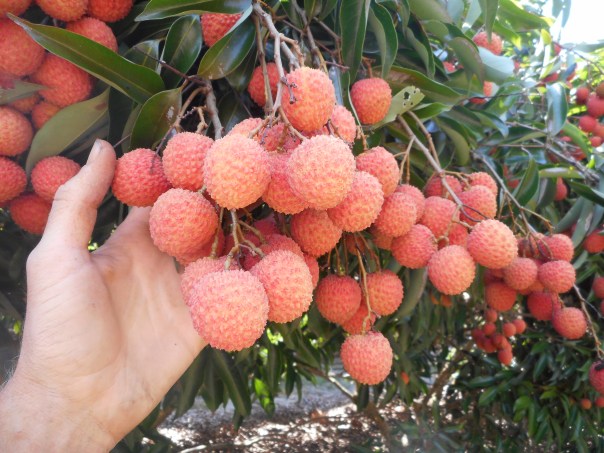
No, strawberries don’t grow on trees.
And no, oddly-shaped golf balls don’t grow on trees either.
This is a fruit—and probably an unfamiliar one to most my readers. It’s a Lychee (pronounced “Lie-Chee” in Australia rather than “Lee-Chee” as in the United States). This fruit will be both on my mind and in my hands for the next month during the harvest season.
The lychee is a tropical to subtropical fruit native to southern China. Records in China indicate that the fruit has been cultivated as far back as 2000 BC. The fruit was a favourite delicacy in some Imperial Courts, and, in the case of one 1st century emperor, a special ‘pony express’ was set up at great cost to transport the fresh fruit to the court from the south. It is thus fitting that the farm I now work is called Emperor’s Choice Lychees.
With its sub-tropical climate, year-round growing season, bountiful sunshine, and ample rainfall, the lychee is fit to grow in Queensland, Australia as well. The fruit is grown on trees—or more properly, shrubby trees that reach about 20 feet tall. In January, the fruit becomes ready for harvest, turning pinkish-red in an attractive contrast to the glossy dark-green foliage. The plentiful fruit is borne on clustered branch-tips known as panicles. During lychee harvest, workers will either pick the fruit off the tree singly, or cut the panicles directly of the tree. The lychee tree branches are also dense and flexible enough to support a 16-foot bow ladder propped directly on the branches to reach the highest fruit.

A hedge-row of trees in the lychee orchard
As a native and popular Chinese fruit, it makes sense that the farm I work for exports their entire crop to China. Though I’ve seen lychees for sale in Australian supermarkets, the fruit hasn’t seemed to have broken into mainstream US grocery stores yet. In the States, the most reliable place to find the fruit are the Chinatown markets. In fact, New York City’s Chinatown was the source of my first introduction to lychees. Nearly five years ago, when was I interning for a summer in suburban New York, one of my fellow interns (partly of Chinese descent) would bring back curious Chinese fruit from Chinatown for the other interns to sample. One time the fruit to try was lychees. From my first mouthful of the juicy sweet fruit, I was hooked. Of course I would jump at the opportunity to harvest lychees for a season when the possibility would come up in Australia.
Me happily harvesting some lychees
Lychees imported into the States from overseas markets do taste good—but they pale in comparison to the taste of a lychee plucked off the branch only minutes beforehand. The fruit itself comes pre-packaged in its own tough, pinkish-red inedible skin, which is covered in coarse bumps and rough to the touch (also making for tender hands for the harvester). Pierce through the protective skin with a fingernail and peel away the top half of the skin to reveal the gelatinous, translucent white-hued fruit inside (and make sure you don’t eat any of the skin. If you do accidentally, then you’ll get a fleeting taste of potpourri before your mouth becomes astringently bitter). With the top half of the skin peeled away, squeeze the bottom of the fruit to pop the entire morsel into your mouth. This is quite easy to do, as the fruit itself is not attached to the skin except for at the base of the seed. Now, enjoy your lychee. You’ll find the fruit to be sugary-sweet and juicy, with a taste that can be best described as a natural version of artificial ‘blue-raspberry’ flavour. Using your tongue, work the lychee around your mouth to separate the flesh from the glossy brown seed the size and shape of an almond. Spit the seed out and admire its sheen. Now it’s time to enjoy your next lychee!
Next time you’re in the supermarket, try and look for the exotic little fruit called a lychee. And if you can’t find it, a trip to the nearest Chinatown street market may be in order.
Breaking Down in Australia
“I hope this old train breaks down
Then I could take a walk around
and see what there is to see”
—Jack Johnson in “Breakdown”
The inevitable backpacker van event has occurred to me: The Breakdown. It couldn’t have occurred at a much worse time than it did, late in the evening the day before I was supposed to start a long-awaited harvest gig early the next morning. But then the location was actually quite convenient. I’ve heard tales of backpacker vans melting down in the far remote outback, with no services for hundreds of kilometers. I happened to break down in the middle of suburbia.
This wasn’t the typical garden-variety breakdown either. This was what’s called the “catastrophic breakdown”. Upon inspection by a mechanic, it turns out the timing belt in the engine broke and warped the engine cylinders. Before this happened, I didn’t even know what a timing belt was, let alone its importance in an engine. It turns out, though, that the timing belt is the piece of equipment that keeps the engine’s moving parts in sync. A broken timing belt equals moving engine parts clanging against each other. It also equals a $3,000 charge for replacing the engine.
But when the timing belt snapped and Frank’s engine turned its last, we were quite fortunate to be on the busiest commercial highway along Queensland’s Sunshine Coast. Using Frank’s momentum, I managed to steer off the main road into a 7-11 parking lot. There I found myself ‘stranded’. Without my own set of wheels I was limited to where I could walk on foot—or to travel with the extensive bus transit network. Though I was without a vehicle, everything I needed was within walking distance on that main street—coffee shops, grocers, convenience stores, parks, car rentals, hostels, surf shops, furniture outlets, rug stores—and much more. I was even about a kilometer away from the repair shop (though I still needed the tow).
A long-time favorite musician of mine, Jack Johnson, holds a rather romantic notion of breakdowns, singing about taking the opportunity to get out and explore the world on foot instead of in high speed transit. But I’m doubtful Jack Johnson was daydreaming about breaking down in the midst of California-style suburban sprawl. Getting stranded nearly halfway between two of the Sunshine Coast’s major beach cities, the landscape has developed into a suburban dream of strip malls and Aussie big box stores that punctuate endless tracts of brick-fenced single-family homes. Not to mention that the wide, high traffic capacity streets and discontinuous sidewalks make pedestrian touring exceedingly difficult.
Personally, rather than looking at the opportunity for adventure that a breakdown affords (as I was more inclined to do when I was younger and broken down with friends), I more often view breakdowns as a hindrance. True, I’ve been through the stranded-from-car-trouble game a few times before. This resume of mine includes getting stuck in the ditch twice (in two different vehicles), and getting stranded after mechanical failure twice more (in an additional two different vehicles). In fact, on a long road trip I usually anticipate such car trouble to occur—and I’ll feel like I missed out on something if nothing goes wrong on a long trip.
Whether seen as a hindrance or opportunity, the breakdown does have its way of (forcibly) taking you off your own well-planned schedule and creating a new experience for you. Thus, when you face the inevitable breakdowns in life, do you dwell on the costs and inconveniences of the situation? Or do you use it as a path towards something you likely wouldn’t have done otherwise?
As far as Frank breaking down goes, it’s a mixture of both. No longer able to camp in my van while it’s in the repair shop, I had to take the only affordable and available accommodation I could find in a resort community during peak season. Sure my temporary accommodation’s among the lousiest of hostels I’ve ever stayed in, but I’ve gotten to meet many more people than I would have if I stuck to my van. And sure, the section of town I’m staying in now feels like Los Angeles sprawl, but there are many unique local eateries and enterprises hidden amongst the strip malls and traffic-clogged streets. I wouldn’t have noticed these things if I had merely driven through as a passerby. In the end, I’ll get to know a new area of Australia more intimately via foot. Plus, I’ll have walking access to some beautiful surf beaches every day after work.
Listen to “Breakdown” by Jack Johnson here: https://www.youtube.com/watch?v=Y4O7ufx9D_s
 In All Directions