
The Green River Part 3: Flaming Gorge Dam to Ouray, Utah
Segment 3A Summary—2 Days, 39 Miles. From the Flaming Gorge Dam Spillway, Utah, to Crook Campground, Colorado.
Segment 3B Summary—3 Days, 72 Miles. From Split Mountain, Dinosaur National Monument, Utah, to Ouray, Utah.
Overall Summary—20 Days, 347 Miles.


Day 16: Dam! Rapids!—10 miles
Back on the actual Green River as opposed to the reservoir now. I put in at the Flaming Gorge Dam Spillway. It is an impressive dam, size-wise, extending more than 450 feet above the valley below. Kind of makes you feel small to be down in the canyon. Just as impressive in size were the rapids below the Dam for the first eight miles of paddling. Lots of sudden drops and rocks. Class I to Class III rapids. Ideal territory for a raft, not really for an open canoe. I ran most of the rapids successfully, only needing to bail in-between sets. The water finally caught up to me and swamped me after I broadsided a rock, whereupon I took my first involuntary swim in the Green. Aside from the loss of my water bottle and bail bucket, I emerged unscathed. After the dip in the river, being in the dark shadows of Red Canyon grew a little bit chilly. Though the weather had turned cool and rainy in the previous few days, it was still a sunny clear day in the canyon. I called it an early day and dried myself and my gear out in the dwindling sunlight.


Day 17: A Float through the Park—29 miles
Started the morning playing the ‘rain, rain, go away game.’ Off-and-on drizzle had moved in overnight, dampening whatever the river had left dry. No sense in waiting around feeling miserable, so I bundled up to brace the cold and rain. I was past the major rapids, but the river still drops as it leaves Red Canyon, creating many long sections of significant riffles that keeps a canoer on his toes. The needed vigilance was a needed distraction from the cold weather. Past the point where Red Creek runs into the Green River, the river makes a distinct transition in appearance. Red Creek, aptly named, flows with a ruddy silt-laden flow into the Green, transforming the clear Green into its historical chocolate-brown hue. Upstream, the Green is a product of the dam and reservoir system which only releases clear, cold water. The clear cold water is ideal for a trout fishery, but is actually nowhere near what the river was like ecologically before it was tamed. As Red Canyon winds down, the Green enters a flat section called Brown’s Park. It was named a ‘park’ in 1869 by John Wesley Powell, who though the cottonwood flats in the midst of the mountains resembled a park. Once in Brown’s Park, the river flattens and widens out, making it a real float through the park. As a testament to how slow the river flow becomes and how silty the water gets, I constantly got stranded on sandbars I couldn’t see in the lower section of the river. With the water an opaque brown, you can never tell the transition from paddling in feet of water to inches of water. Though Brown’s Park is sparsely populated today, back in the wild west of the late-1800’s, Brown’s Park’s isolation made it a notorious robber’s roost. One well-known resident was the general store owner John Jarvie, whose ranch and store I visited along the river. Jarvie lived on the Green for 29 years before he was shot and killed in a robbery.


Day 18: Where Dinosaurs Roamed—21 Miles
Skipping the Class IV whitewater through the storied Gates of Lodore Canyon saw me launch just downriver at Split Mountain in Dinosaur National Monument. Here, geologic action has uplifted hundreds of millions of years of sedimentary rocks into the mélange of colorful mountains seen in Dinosaur, though the Green River only took a few thousand years to erode its current course through the mountains. Though I couldn’t take the river tour of Dinosaur’s 23 layers of sediment, I could still marvel at the mountains as I launched and paddled directly away from them. But no visit to Dinosaur National Monument would be complete without visiting the quarry that started it all, where a jumble of 149-million year-old dinosaur bones are ensconced in relief against the sandstone they were buried in. Dinosaur National Monument has more to offer than just canyons and dinosaurs, and I spent the morning exploring the pictographs of the ancient Fremont People, and the cabins of a few homesteaders in the park. Exploring the Monument was great, but was partly a delay tactic to avoid the inevitable—launching my canoe in the cold, wind, and rain. As far as paddling weather goes, today was not ideal. Personally, given the situation, I found it hard to believe the ranger when she said this area was a desert that receives less than ten inches of rain per year. All ten inches, it seemed, happened to be falling today. Despite my hopes, the rain never let up. As I passed out of the mountains of Dinosaur, and into the agricultural fields of Jensen, Utah, the constant drizzle kept everything saturated. I eventually pitched a wet camp on a wet sandbar and called it a day.


Day 19: Endurance—26 Miles
A cold rainy day prior led into a cold rainy morning. I delayed getting up as long as I could justify it. Not much fun taking down a wet camp and starting to paddle in the rain again. Looking up at the mountains of Dinosaur, I could see snow in the high peaks. The rain eventually stopped in the morning, and I spent all day trying to chase down the hint of blue skies I could see where the river was flowing—to the south and the west. Unfortunately for me, I would never reach those blue skies. The Green in this section of its flowage—though it has much more volume than upriver—meanders lacksidasically through the flat Uintah Basin. Today the river flowed through such large equestrian features like The Horseshoe and The Stirrup. After paddling many river miles through these features, I was only a few miles as the crow flies from where I started. The river also has innumerable sandbars that come up out of nowhere to strand my canoe. Much like my first few days of paddling, the Green is only inches deep in parts. It is a cold day of paddling that barely makes it to 50 degrees. I pitched camp early and had a warm cup of tea as my tent slowly dried out in the cold breeze. Some days of a journey are more about getting through than prospering.


Day 20: An Autumnal Paddle—25 Miles
If two days of cold and rain were the punishment, then today was the much needed reward. Partly cloudy skies greeted me, and would soon be a bright blue dappled by small cumulus. It is cold, but refreshingly so. The breeze is slight and enlivening. The air smells crisp. Overall, a very pleasant day to paddle. Unlike previous days of travel through the steep-walled canyons, today’s landscape had relatively little topographical relief. And, unlike days of paddling through the arid sagebrush steppe, today’s vegetation featured a nearly continuous wall of mature green and yellow cottonwoods lining the riverbanks. Given the broad, shallow nature of the river, and the wooded setting, today felt almost as if I were paddling a river in northern Wisconsin rather than western Utah. I paddled past hundreds of herons, all which soar off into flight where they see me. They honk loudly and circle the skies above. On the riverbanks, dozens of horses roam free as they wander and graze. The air is crisp. It is a lovely autumn day paddle.

The Green River Part 2: La Barge to Flaming Gorge Dam
Segment Summary—10 Days, 169 Miles. From La Barge, Wyoming, to the Flaming Gorge Dam, Utah.
Overall Summary—15 Days, 236 Miles.


Day 6: A Mousy Interlude—6 Miles
Much to my mortification upon returning to my vehicle after segment one, a mouse had taken up residence in my car and was happily helping himself to my downriver food provisions (as well as relieving himself on my sheets!). A crazed mouse-hunt on my end ensued, culminating in a 90-mile one-way drive to the town of Green River, Wyoming to buy a mousetrap (apparently, as I was told, the only mousetrap in La Barge had been sold less than an hour before my foray). In my single-minded fury, I loaded my car with six traps, baited them with the little mousy’s favorite Hershey’s Peanuts & Pretzels candy bar, and left it up to fate to see who would get the last laugh in this war (read on to see who won in the end). Nevertheless, with the mouse ordeal weighing on my mind, I was happy to put back on the river if nothing but for the pure distraction from the ordeal. It was late and extremely windy in La Barge when I shoved off (I had to chase down some gear blowing away as I loaded up my canoe!), but I forged on anyway. The stress of the mouse drama melted away as I canoed along the muted pink and orange hues of the buttes along La Barge. There wasn’t much time left for paddling, but I made it to a pleasant cow pasture in time to catch the full moonrise be mostly obscured by clouds (but they were really the first clouds of the trip). I was happy to be back on the river in the midst of a perfect autumn in Wyoming.


Day 7: Favorable Winds and a Long Portage—17 Miles
A few miles of river paddling in the cool of morning before the big task for the day arrived—paddling the Fontenelle Reservoir and portaging the dam. I passed by a couple of historic sites on the river—one being Names Hill, where Oregon Trail pioneers who had just crossed the Green inscribed their names in the soft limestone cliffs (most notably the mountain man Jim Bridger)—and the other being a stockpile of rusted-out vintage cars by the riverside. Okay, so maybe only one is actually a state historical site, but the cars were cool nonetheless. The river soon after entered the 13-mile long Fontenelle Reservoir, and I was faced with a change from river paddling to lake paddling. The Fontenelle Reservoir is small as far as the Colorado River Basin Project’s reservoirs are concerned, but the low rolling sagebrush hills of the Wyoming landscape created a lake that is broad and wide. By noon the winds had picked up tremendously on the reservoir, sweeping, as they so often do, over the arid plains of the sagebrush steppe. Fortunately, most of the reservoir is oriented to the east, and I got more of a tailwind than I perhaps bargained for—finishing the last six miles of reservoir paddling in less than an hour and a half—in the midst of 1 to 2 foot swells splashing over the gunnels as well. After my self-congratulatory swim in the reservoir, I began the longest portage of the trip—1.8 miles from take-out to put-in. And I had to do it alone, in three trips. Though I arrived at the dam by mid-afternoon, I didn’t finish portaging until I was under the light of a nearly-full harvest moon. That moon would be my consolation prize for an exhausting portage.


Day 8: A Ribbon of Green in the High Desert—The Seedskadee—18 Miles
If the day before was unduly strenuous, then today was a cakewalk. I put in below the Fontenelle Dam and let the river do most of the work for me. In contrast to the Green upriver of the reservoir, I was finally paddling in feet of water. It seems like the Green has finally upgraded itself to bona fide river status. The vertical drop in the river seemed to lessen and the river seemed to mellow out through this section too. It was a fairly calm and peaceful paddle, as the Green entered the Seedskadee National Wildlife Refuge soon after the dam. The Seedskadee, (the Shoshone word for the river, meaning ‘River of the Sage Grouse’) is a thin ribbon of oasis in an otherwise arid land. Here, the river meanders through relatively flat, wet grassy marshes that foster ideal habitat for birds and other wildlife. The only significant topographical relief in this stretch are the occasional low bluffs abutting a few bends in the river where the cliff swallows build their nests. It is a wildlife paradise at the watering hole. I see deer, antelope, elk, moose, coyotes, skunks, pelicans, cranes, swans, eagles, and more birds than I could possibly name.


Day 9: Birder’s Paradise—28 Miles
Back for more paddling in the Seedskadee today. At 28 miles traveled, today was easily the longest mileage day of the trip—yet with a flowing current it went by imperceptibly easily. The Seedskadee is so flat that it is not landscape scenery; instead, today I tried my hand at wildlife photography. I saw more pelicans than I could shake a stick at. Also more of every type of avian fauna—ducks, swans, pelicans, cranes, eagles, vultures, hawks, swallows, and some more of the Wildlife Refuge’s over 200 species of birds (but, even though the Seedskadee is named for the Sage Grouse, I have yet to see one from the river). Aside from the ample fishermen I passed today (there seems to be an army of fishermen around every large bend here), humans are notably absent in this stretch. It is not remote at all—dirt roads parallel the river closely on both sides—but the river is tucked away nicely and feels a world removed from civilization. Humans once tried to settle here. I stopped by a few ramshackle homesteads long-since abandoned. Even with land on the river, it is near-impossibly demanding to eke out a human existence in such a dry landscape.


Day 10: Paddling through Metropolis—25 Miles
Woke up in my cottonwood-cow pasture campsite to an unexpectedly mild morning—the mornings have been getting noticeably warmer as I’ve been dropping in elevation. Off to an early start on the river, and what do I see within a minute but a bull moose swimming across the river. It was a great start to what would be a great day. The Green meandered its way ever so slowly towards the city of Green River, Wyoming. At a population of over 12,000 people, Green River is the largest metropolis on the Green. But you wouldn’t be able to tell approaching it by river. Aside from a building here or there, the river is still undeveloped. Here, the river meanders cut through a lot of bluffs to expose platy limestone on the undercuts. This is all limestone material laid down by an inland sea 50 million years ago. And, as a factor that initially sparked my interest in spending time on the Green, the limestone is full of fish fossils. I stopped frequently to poke around for the iconic Knightia eocaena fish fossils of Sweetwater County. For fifty-million years of deposition, you would think there’d have been more fish who died in the sea. But sadly, for all my amateur paleontology, the fossils remained elusive (though I love the hunt!). I crossed a major mark of civilization today—the Interstate 80 Bridge, and was immediately ushered into the town of Green River. The original transcontinental railway passes through town, and this was the initial launching point of Major John Wesley Powell’s 1869 exploratory expedition down the river. The town of Green River exists in a fantastic landscape, tucked between massive red-orange cliffs and buttes—most iconically Tollgate Rock and the Palisades. Upon stopping in Green River for a tourist jaunt, I learned some more about another trip down the Green that left a few weeks ahead of me (read about their anthropological voyage here). I got some whitewater practice in by running the three small dams through the city limits, and gawked at the awkward glances I got from bystanders pondering that wacko in the canoe. I left Green River’s city limits to enter the Flaming Gorge National Recreation Area. And the stars and Milky Way were absolutely amazing at night!


Day 11: A Monumental Landscape…—16 Miles
Today was a transition back into more lake paddling as the Green flowed into the Flaming Gorge Reservoir. Leaving Green River, there are many high buttes, small mountains, and rock outcroppings. It is a monumental landscape. Though fully on the reservoir today, it still very much looked like a river. The current is gone now, and the riverine reservoir has widened so much that paddling anywhere seems to take ages. The morning was still, and it got incredibly hot today (unseasonably hot, is what I’d learn later). Nearing exhaustion from the heat and the stillness, I took what would be the first (of many) dips in the reservoir. The cold water quickly revived me. Though I wasn’t a fan of the dull stillness, I was even less of a fan of the afternoon wind that whipped up and effaced me whichever direction I turned. Though it felt like I didn’t actually paddle anywhere, I still put in 16 miles today.


Day 12: …with Monumental Distance—15 Miles
More lake paddling today. And equally as still as the day before, though this time with some decent cloud cover to break up the heat. Today’s section of the Flaming Gorge Reservoir took me through a wide-open expanse of lake. The Uinta mountains lay far off to the south in the distance, but here it is markedly flat and arid. You keep paddling here, but the distances across the water are so vast you feel like you’re paddling in place for hours. Mind games ensue…


Day 13: Windbound—8 Miles
Days of paddling through calm weather finally caught up to me. In three hours of calm paddling, I made 8 miles before the southerly breeze picked up out of nowhere and soundly blew me back to shore. For the first time on the trip, I had to call it a day early because of the weather. Turbid swells crashed upon my beach for the rest of the afternoon and into the evening. I passed the time by reading about John Wesley Powell’s 1869 expedition down this stretch of the Green. I was envious when I learned that just downriver of this point the untamed Green was so swift that the expedition once made twelve miles in an hour. Now that same river is flooded under 400 feet of water, and I’m lucky to even make it twelve miles in a day.


Day 14: Above the Shadow of John Wesley Powell—18 Miles
A welcome start to October. New month, new state—Utah. I awoke early and was on the water well before sunrise to cover the last expanses of open reservoir before the afternoon winds picked up. Turns out I didn’t need to—it was calm and pleasant all day long. As I paddled south in the brightening morning, the Uinta Range, which had been beckoning me for days now, grew ever so much closer. I crossed the Wyoming-Utah border on the water. The change from Wyoming to Utah is drastic, and almost unbelievably immediate. Whereas Wyoming is flat, dry, sagebrush and limestone country, across the border in Utah it is a bright white and red sandstone bedrock, uplifted and contorted by tectonic forces, and dotted with the dark green of Juniper trees. The Green River enters the Uinta mountains almost in a secret passageway. As you paddle closer, you could almost convince yourself that you’re headed to a dead end—and then at the last moment, a passage opens up and you get your first glimpse of the shining red rocks of the namesake Flaming Gorge itself. That moment alone is enough to make up for days of inane paddling on the upper reservoir. As you paddle deeper into the gorge, you’ll pass through the bright white sandstone of Horseshoe Canyon. The deeper in you travel in the gorge, the more spectacular it keeps getting. I camp for the night at the Kingfisher Island Boat Camp. I am the only one in the campground, and I haven’t seen anyone face-to-face since my stop in Green River, though over the past few days I saw the occasional motorboat from a distance. The campsite overlooks a wide red amphitheater of the Flaming Gorge. It is easily the best public campground I have ever stayed at. I can only imagine the flabbergasted awe the Powell expedition must have had felt upon running these canyons, especially when the canyons were 500 feet deeper.


Day 15: The Mountains are Gorges—18 Miles
Crawled out of my tent to be greeted by a moon halo. It was a harbinger of the spectacles to come today. Another calm morning, and I enjoyed the pristine reflections of Kingfisher Canyon. Soon the river-like reservoir entered Red Canyon—steep, rocky, forested and colored a deep red. One more final dip in the cool, rejuvenating waters of the Flaming Gorge Reservoir. The further I paddled, the more in awe of the landscape I became. But it was time enough to call this segment of the river a wrap. Storm clouds began rolling in by early afternoon and the October skies turned ominous. I made it to my take-out at Cedar Springs Marina a few hours before the rains started. A happy ending to a ten-day stretch of river that really couldn’t have gone any better. Except there was one unhappy ending to tell—my mouse pal. Upon entering my car, I smelled the tell-tale sign that I was the victor of the war. But he did mock my success even in death by being nearly melded with the plastic in my trunk. But you take the good with the bad.

The Green River Part 1: Headwaters to La Barge
Segment Summary—5 Days, 67 Miles. From Huston Boat Launch to La Barge, Wyoming, with an additional 7 miles downstream of Green River Lakes.
Overall Summary—5 Days, 67 Miles.


Day 1: A Rocky Start and Shifting Plans—7 Miles
After a cold frosty morning, me and my Segment 1 canoeing buddy Jon have a bit of fun in the background of the Wind River Range as we launch at Green River Lakes in the Bridger-Teton National Forest of Wyoming. Easy paddling on the lake quickly turns into stretches of the Green River being only inches deep and the accompanying drag of our loaded canoe over the rocks. After six miles of alternate paddling and walking, the river dropped suddenly into a long channel of rapids. Low water in the fall made the rapids nearly impassable. After a mile of pulling the canoe through the rapids, the canoe swamps with water and me and Jon reevaluate our starting point. And, with it raining down ash all day from the nearby Roosevelt fire, we thought better of being in the forest.


Day 2: Barely Scraping Along—12 Miles
After watching the blaze from the Roosevelt fire seem eerily close at night from our camp at Warren Bridge, me and Jon venture downriver looking for a suitable, ideally rock-free launch site. We launch the canoe at Huston Boat Access 70 miles downstream of where we left off the day before. The water was only 4 to 6 inches deep along most of the cobbled bed, and in a loaded canoe, this meant a lot of getting stuck on the bottom. We meandered down the river, took a good afternoon fishing break at Sommer’s Bridge, and then camped in a patch of cottonwoods along the bank. Though the Green River flows through primarily private land along this stretch, there are few signs of humans or development. The little river channel seems quite isolated. Me and Jon spot ample bald eagles and a few moose along the banks.


Day 3: Meandering Along—14 Miles
Finally waking up on the river! And, being Wyoming in the fall, it is chilly in the morning (below freezing at night), but warms up quite nicely with the sun. The river keeps things interesting for us. No time to nap and float along. Me and Jon keep navigating the twists and turns in the little river and we are kept on our toes by the small drops in the river every few hundred feet. The Green drops in elevation gradually, but substantially, keeping a steady flow and constant drops. Less dragging on the river bottom today. Me and Jon see more cows than people on the river.


Day 4: Going Deeper—18 Miles
The Green nearly doubles in size after the New Fork River joins the flow, but unfortunately all the extra water contributes more to the width than to the depth. More cattle lands, moose, eagles, and lack of people along the river. And, in comparison to other days, less continually dragging along the bottom—the river’s getting deeper, if ever so slightly. In the landscape above the river, red eroded buttes start to rise from the landscape. Compared to our earlier days of warm, easy paddling, today had a cold headwind.


Day 5: And We’re Out—16 Miles
The last day on the river for Jon. We wake up to frozen water bottles and our campsite surrounded by four moose on the beach. A hearty breakfast of eggs and potatoes fuels us all the way back to our car shuttle in La Barge. By now we are paddling pros, and the river is swifter and deeper. Jon still has to make good on his promise of a trout dinner—we head back up river to where the fishing was better. And Jon delivers a spectacular trout dinner during the sunset to finish off the first segment of the trip.

Experiences of a Lifetime


Snapshots from a few ‘Experiences of a Lifetime’ I’ve already had, as determined by others.
Here I find myself about to embark on what many people would describe as an ‘experience of a lifetime.’
And, true, canoeing 700-miles down a wild, western river is an experience. Perhaps an experience of a lifetime for many.
But by my estimates, in my one lifetime, I’ve already had at least five ‘experiences of a lifetime’ as determined by other folks. Most of those experiences have been trips I’ve taken. Some of them have even been paying jobs.
There is a typical conversation I’ll have with strangers who ask what I’m up to. This conversation goes like this:
Stranger: “What kind of trip are you doing?”
Me: “I’m canoeing the length of the Green River, through Wyoming, Colorado, and Utah. It’ll be about 700 miles and take 35 days.”
Stranger: “Wow…that sounds like an experience of a lifetime.”
When people learn about another person’s epic trip, it does seem to warrant a response of an appropriate scale. But often confounded about relevant things to say, these people will frequently fall back upon the old ‘experiences of a lifetime’ cliché. They mean well in saying it, though, as a way to be simultaneously wowed and encouraging.
But every time I get the old ‘experience of a lifetime’ line, I think privately to myself ‘but I don’t want this to the experience of my lifetime!’ After all, I just want this trip to be an experience, not the experience.
When I think about past trips that I have been on, it would be disappointing for me to look forward and to know that I have already had my singular experience of a lifetime. And, if I’ve already had my one experience, then what more do I have to look forward to in life? None of my future endeavors could ever be as good. All I would be able to do is look back at my experience of a lifetime instead of looking forward to more adventures to come.
Fortunately enough, I have found it possible to have more than one ‘experience of a lifetime.’ And I’ve even got more in the works. Why do we so often limit ourselves to the thinking that we can only have a few adventures in life? Why not be able to make it a lifestyle? Why not collect ‘experiences of a lifetime?’
So that’s what I’m up to right now. Making a few experiences of a lifetime for myself…first by canoeing the Green River in September and October, and then by working as a dogsled musher in northern Minnesota afterward in the winter (and although mushing will be a way to pay the bills, people would still often consider that an ‘experience of a lifetime’ as well).
So I’m happy to have you join along on one of my (hopefully many) experiences of a lifetime, a scenic adventure paddle down the magnificent Green River. And I’m happy to live vicariously through your experiences of a lifetime too. Who says you can only have just one? And by sharing our adventures, we can experience so many more journeys—some in person, some vicariously.
I will (ideally) post pictures and updates of the journey as I progress along the river. But, as you know, digital technology and wilderness are often not found in the same place.
Bon Voyage!

All packed and ready to go on another adventure where the road ends. Might even come back with some more stickers to showcase on the ‘experiences of a lifetime’ hatchback.

Deep Places
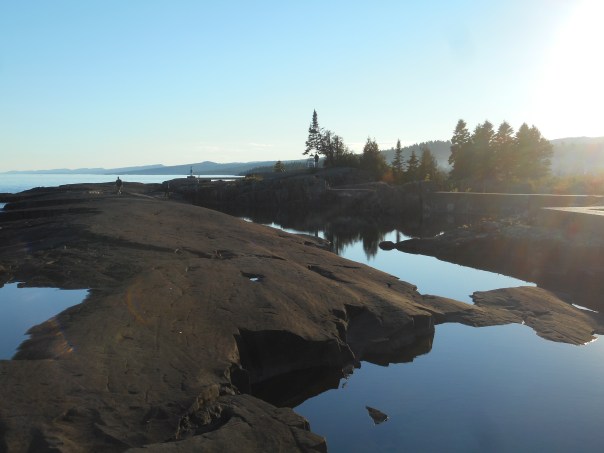
The sun begins to set on the smooth rocks of the Tombolo (or Point) of Grand Marais
Close your eyes. Take a deep breath. Where are you? Do you feel connected to the place you find yourself in this current moment? Do you feel an encompassing sense of belonging here?
There are some places that give you that special feeling. Places that feel qualitatively different to the individual. Places that feel alive and electric, a kind of synchronicity between person and place. Places that are energy-giving. Magical, almost.
I like to refer to these locations as ‘deep places.’ The adjective deep is used to describe the immensity of the feeling the individual has towards the place. It is something felt on a higher level, different from one’s experience of everyday locales. These deep places may be spots you already know, or the feelings may arise the first time you step foot into a new environment. If you’ve ever experienced these magical feelings, then you have discovered a deep place for you.
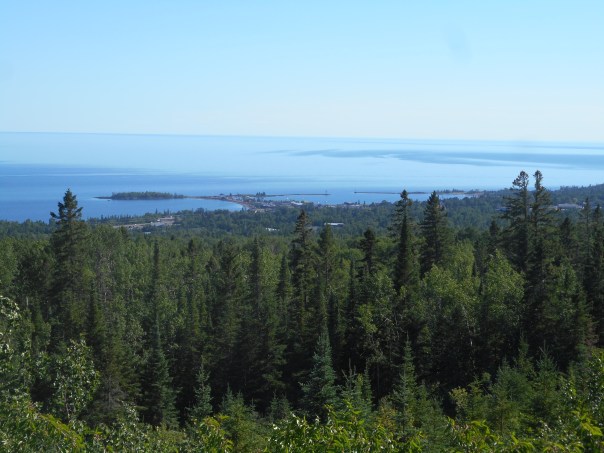
The City of Grand Marais from the mountains lining the North Shore
The North Shore of Minnesota, along the edge of Lake Superior, has been one of those deep places for me. Starting in Duluth and heading northeast towards Thunder Bay, the north shore follows a rocky, rugged, forested line for more than one hundred and fifty miles. Along the coast it is a vast forestland wilderness, punctuated only by small settlements and scattered tourist outposts. It is a place where land meets water, where human meets wild. It is a deep place for me.
My first real venture to the North Shore came in May of 2016, entering Duluth from the south just past sundown, being greeted to the sweeping vistas of the big lake in the fading daylight. The northern drive to Grand Marais that night was illuminated by the blood-red full moon rising to its own reflection on the calm surface of Superior. That night was crisp and cool. The moon was out. The stars were shining brightly. The scent of the boreal forests and the water encompassed my nostrils. It was an entirely magical entrance to the place known as the North Shore.
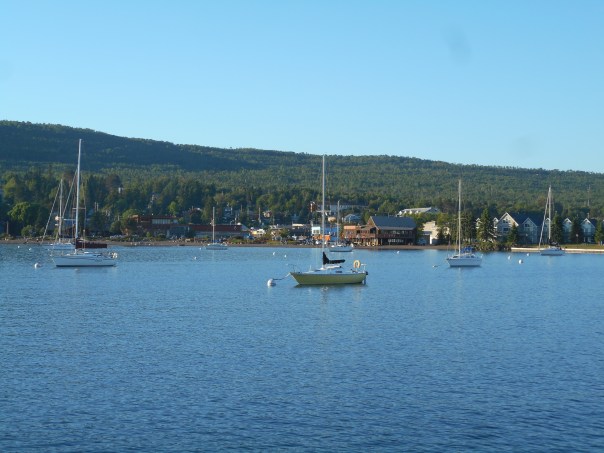
Sailboats finding refuge from Lake Superior in Grand Marais Harbor
Could the magic of my first experience on the North Shore ever be repeated? I have since returned to the North Shore many times, and have found that the magic was not a one-off experience. The feelings I have towards the region have not been diminished through growing familiarity. Every time I return to the North Shore, I am still astonishingly impressed by the astounding physical beauty of the environment. Jutting rusty-color basalt outcroppings, small rivers torrenting their way through deep overlooked canyons, pocket beaches cobbled with a mélange of surf-smoothed rocks. The cultural resources too—lighthouses, cabin complexes, mining history. There is so much to do here—and to keep coming back for more. Every time I would grow claustrophobic from my land-locked residence in inland Minnesota, even a short visit to the shore—to the great lake vistas—would always be the cure I didn’t even realize I needed. My deep place has also served as a restorative space.
The North Shore, for me, is one of those places where I always find more to discover—and upon discovering, find it imperative to come back and revisit again later. Even before I began to explore the region, I had this convincing sentiment that the North Shore would be a special area to me. It is a psychological wonder, how, even upon a first glance at a place, one can feel the initial intimations of inherent belonging and connection to that place. The newly entered deep place is a landscape ever so tantalizingly unknown and discoverable, yet undeniably comfortably welcoming. It’s a place that beckons you to linger on in its space. This sense of fitting into the place is preordained, not earned. You don’t grow to love deep places through familiarity, though they will become increasingly familiar with time. Instead, there is an instinctual, primitive gut feeling that you are part of the place; that you already know and love the area though you have recently arrived.
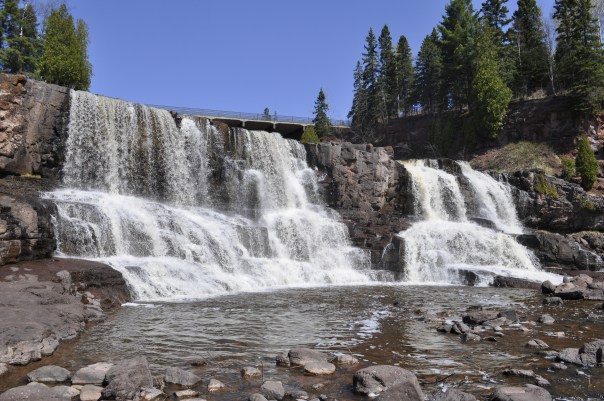
Gooseberry Falls, where water tumbles through basalt canyons from the highlands to Lake Superior
Everyone has, or should have, a deep place of their own. Maybe you know where it is. Maybe you have one but don’t know that you know it yet. Maybe you’ve revisited your place multiple times, or have even come to live there. Maybe you’ve only ever visited once. Even if physical visits are infrequent, even just thinking about those deep places can still conjure those magical feelings inside of you.
It is possible to have multiple deep places too. How many places exist out there in the world where you would feel this distinct connection if only you could visit? Though the North Shore of Minnesota is perhaps my most apparent deep place and the one I’ve revisited the most, I have others places where I have experienced similar sentiments—the Owens Valley of California, or the island of Tasmania, Australia, for example.
The remarkable thing is that while some deep places are shared with others, a deep place isn’t universal. Everyone will find a different space or landscape that speaks to them so clearly. These spaces are simultaneously yours alone and are shared by a community of others. But no matter how many people claim the same deep space, it always feels unique, as if the area were speaking directly to you.
Find your deep place.
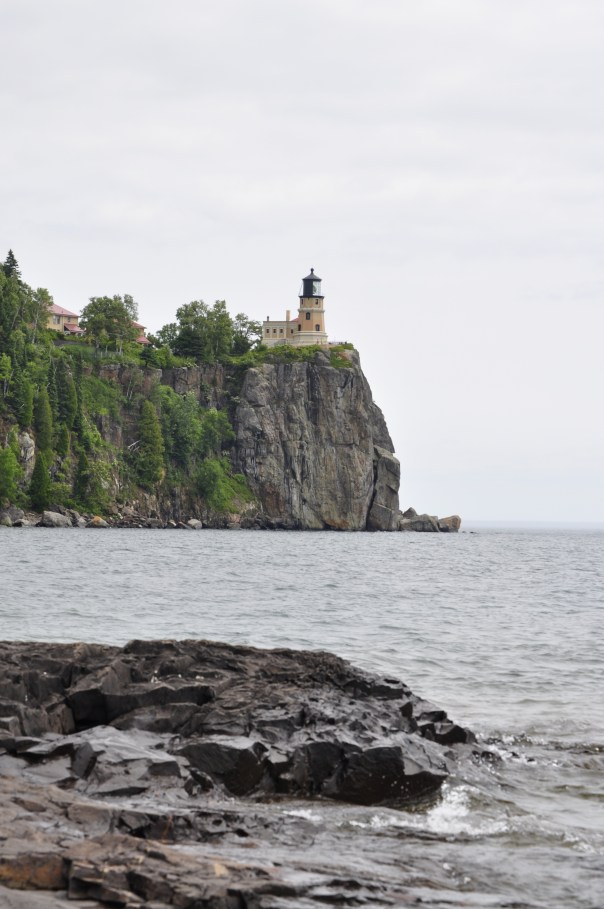
The North Shore’s standout cultural landmark, Split Rock Lighthouse

You Cannot Stay on the Summit Forever
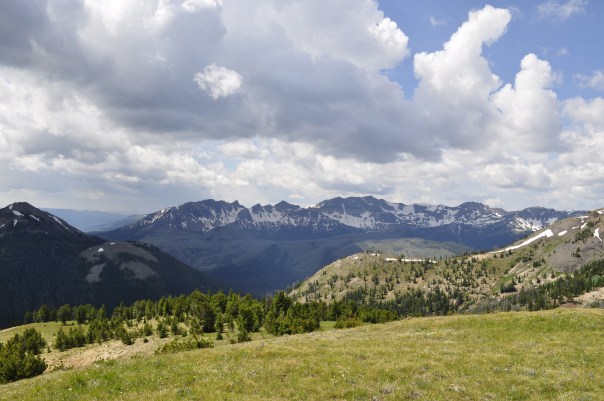
Pinnacle Mountain, Absaroka-Beartooth Wilderness, Montana
“You cannot stay on the summit forever; you have to come down again. So why bother in the first place? Just this: What is above knows what is below, but what is below does not know what is above. One climbs, one sees. One descends, one sees no longer, but one has seen. There is an art of conducting oneself in the lower regions by the memory of what one saw higher up. When one can no longer see, one can at least still know.”
—René Daumal
You cannot stay on the summit forever. You cannot live in the wilderness eternally. So why even venture off into wild places to begin with? Why put forth the effort, go through the hassle, and willingly subject yourself to hardships, privations, and lack of modern amenities? The reason is simple—what is gained from the experience changes you. The wilderness, though it physically surrounds you only for a fleeting moment, influences your character persistently.
This summer has been one of wilderness travel for me. From the canoe country of the Boundary Waters and the Quetico, to the backpackers’ paradise of the Rocky Mountains, I have spent countless hours leading others through wild places. Each trip I led, though some of them were lengthy, had to come back eventually. We couldn’t stay out there forever. Food, shelter, medicine, modern conveniences, human connections, and societal obligations all dictated that we must ultimately return. We live lives incontrovertibly connected to the civilized world. We are now dependent on technology and society to meet our daily needs. Though wild places may sustain us spiritually, mentally, and emotionally, few of us are truly prepared to have the wilderness provide all our physical needs.

The Milky Way above Lake Burntside, near the Boundary Waters Canoe Area
But it is the non-physical lessons we learn in the wilderness that might be the most powerful. Wilderness travel lies in contrast to our otherwise ordinary lives in the front-country. The wilderness is a place to break out of our comfort zones, a setting where we are forced by necessity to be different, more capable human beings. Out in the wild, you survive on your own wits, or with the companionship of traveling partners. You learn to make do with what you have, or you learn to do without. You begin to realize that small things can lead to big consequences—and, instead of procrastinating, you learn to check problems before they become too big to handle. You become more organized in your daily life, more resourceful with what you have on hand, and you become adept at recognizing cause and effect. You become better at planning ahead. You are forced to live in the moment; foul weather can either foil your prior plans or fine weather can just as much beckon you to linger on. You learn to embrace and deal with the uncertainty of changing plans. And the people you travel with—whether you chose them or not, you will learn to entrust your life with those people, and you will take risks and grow close to them too.

Sunset over Rose Lake, Boundary Waters Canoe Area Wilderness
All of these things are lessons we can learn and take away from experiences in the wilderness; because, we cannot take the wilderness itself with us—we can only take the memories of our time spent in the wilds. And all of these lessons transfer quite readily to life in civilization, because, you don’t necessarily even need the wilderness to learn these lessons in the first place. But in venturing out into the wilderness, you learn these lessons quickly, and you learn these lessons more thoroughly. Every time you venture out again into the wilds, you are reminding yourself of what you’ve already learned. Though you cannot bring the summit with you, the knowledge and skill of being the person the wilderness made you out to be is something you can carry with you indefinitely. This is the art of living that Daumal was referring to. But you needed that summit first to get there.
And what better place to learn these important life lessons than the wilderness. In wild lands, where nature lies stark and beautiful, “where the earth and its community of life are untrammeled by man, where man himself is a visitor who does not remain (1).” Beauty in the wilderness is intrinsic, and the feeling of remoteness is simultaneously intimidating and enlivening. Endless summit vistas and labyrinth-like waterways have an inherent value of their own. It is worth visiting these wild places regardless of any life lessons gained there. But critically important is the knowledge of who we can be that we take away from wilderness experiences. It took the summit to get there, and once there we could not stay forever. But we can keep the memory of the summit, and we are better people for having gone.
Happy Summiting.
(1) Wilderness Act of 1964
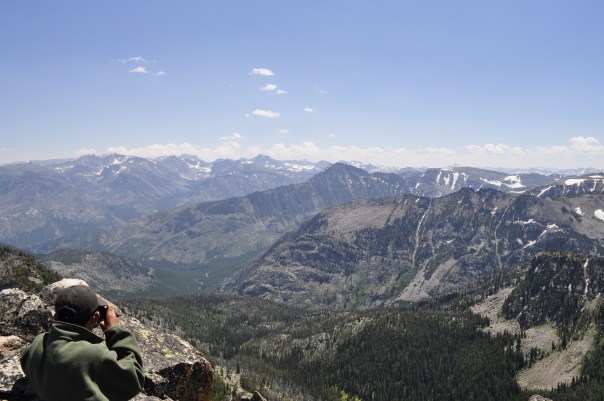
Jordan Mountain, Absaroka-Beartooth Wilderness, Montana

The Non-Bucket Bucket List

Bucket List
√ Make Bucket List
I’ve heard it been phrased once before, quite interestingly, that the more items a person has on their bucket list, the less satisfied that person is with their current life. If that’s the case, then I myself must be quite dissatisfied with my own life, for not only do I have an extensive bucket list, I have also made multiple iterations of a personal bucket list over the years. How deeply dissatisfied I must be to have made so many lists of all the cool things I’ve never done! And all the other people out there—the abundance of bucket lists everywhere must indicate that the mass of people live lives of quiet desperation (Thoreau must have been so satisfied with his life because no record of him making a bucket list exists). But, in a way that line of thinking makes sense. What is a bucket list, after all, but a visual record of all the things you still haven’t accomplished in your life, and perhaps never will? When viewed this way, having a long bucket list indeed is a sad thing.
If you are, in fact, looking at your bucket list and fantasizing over all the things you haven’t yet done or the places where you haven’t been, it may indicate a longing for something different than your current life. Maybe you are actually dissatisfied with your life in the fact that you aren’t going scuba diving every single day or that you haven’t visited every single foreign country. That’s probably a few folks out there. But for the rest of us, not accomplishing a bucket list item doesn’t even break a sweat. The bucket list, as it is used most beneficially, is a tool to help in defining and pursuing goals. It is a creative and fun way of imagining all the possible things you could do in your life, with the added oomph of some motivation and satisfaction from checking off a box.
I hate to think of the bucket list as a measure of how we are performing in our lives, in terms of whether we are satisfied with them or not. Instead, the bucket list is more a grab-bag of fun and adventuresome activities that you’d like to at least try once. At least for me, most items on my bucket list are dreamy and tend to be long-shots at best. Skydiving? (check!). Go diving in a submarine? (uncheck). Why would some activities, such as skydiving, even exist if not for the sole purpose of being checked off bucket lists?
Though I have long been a fan of making lists, the very first ‘bucket list’ I ever made was for a school project in seventh grade. In an elective class, we learned about the man with perhaps the most famous bucket list ever. His name was John Goddard—and he didn’t refer to it as his bucket list either. John Goddard was a man of life, and instead of thinking about all the things he wanted to do before he died, he thought of all the things he wanted to do while still alive to include on his so-called ‘Life List’ (perhaps that’s only a rhetorical difference, but it changes one’s perspective nonetheless). On a rainy day in 1939, at the age of 15, Goddard wrote down his initial Life List of 127 goals. Most of them were very difficult or lofty, encompassing explorations into uncharted lands or a desire to set the record for speed in an airplane. Lofty goals can often fall by the wayside, but young Goddard didn’t just tuck his Life List away and forget about it. The most exceptional thing Goddard did was not to make his list in the first place, but to actively pursue his goals after the fact. With his list in mind, Goddard found a path to accomplishment, attending college to become a traveling anthropologist and joining the US Air Force to fly planes. Throughout his life, Goddard continued to add items to his Life List—and yet he was a man who was not dissatisfied with the life he lived, becoming one of the greatest adventurers of the 20th century. In 2013, Goddard died at the age of 88 having accomplished many, though not all of his initial 127 goals.
The greater purpose of learning about the Goddard list, I believe, is not to marvel at the man who accomplished all this in his lifetime. The greater purpose is to show that not only are far-out goals attainable by average people, but also that it is still very acceptable to not accomplish all of your goals in your lifetime. John Goddard fell short on many things, but he is still highly regarded as a successful person.
Even though I have made a ‘bucket list’ of sorts, I don’t like to think of it as such. The items on my list, for the most part, are not things I’d feel like a failure if I didn’t accomplish before I “kick the bucket.” That’s why I refer to it as my ‘Non-Bucket List.’ Crossing things off the list before I die will be appreciated, but is not the point of the exercise. My list is more about things I would enjoy doing than a to-do list which I am obligated to complete. I would much rather walk away from the goals on my list rather than let them consume me.
Unlike Goddard, I don’t really refer to my list frequently and check off my accomplishments. My latest list was made in a short bout of inspiration. And then, instead of printing it off and following along with my goals, I largely ignored the list, losing it instead to the recesses of my hard drive. Much to my delight when I looked upon my list more recently, I had found that I had in fact unknowingly accomplished a few of my goals! But then there are some goals on my list that can never be checked off, because they are fundamentally immeasurable. I’ll never know if I accomplished them even when I die. Some of my loftiest goals relate to fundamental questions of life. Was I a good person? Did I live a good life? Some goals you can never cross off a list, but you just have to keep striving towards nonetheless.
I’m sharing my own non-bucket list here because it is helpful to see other people’s list when you make your own, just like how John Goddard’s list served as the inspiration for my seventh-grade project long ago.
“The Summer Day”
Who made the world?
Who made the swan, and the black bear?
Who made the grasshopper?
This grasshopper, I mean-
the one who has flung herself out of the grass,
the one who is eating sugar out of my hand,
who is moving her jaws back and forth instead of up and down-
who is gazing around with her enormous and complicated eyes.
Now she lifts her pale forearms and thoroughly washes her face.
Now she snaps her wings open, and floats away.
I don’t know exactly what a prayer is.
I do know how to pay attention, how to fall down
into the grass, how to kneel down in the grass,
how to be idle and blessed, how to stroll through the fields,
which is what I have been doing all day.
Tell me, what else should I have done?
Doesn’t everything die at last, and too soon?
Tell me, what is it you plan to do
with your one wild and precious life?
—Mary Oliver

Beyond the Realm of what the Internet can Prove
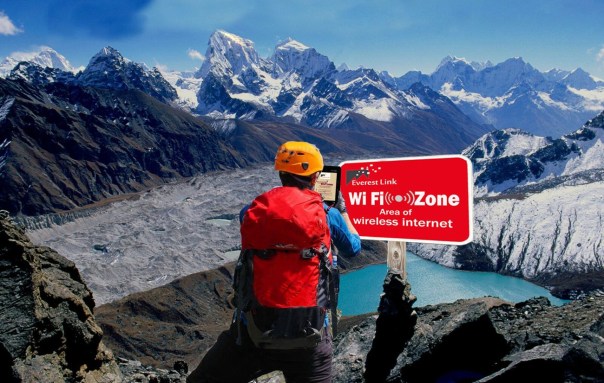
Outdoor trips into the backcountry are special for a multitude of reasons. Some of those reasons are for things that are in the wilderness itself—like pristine vistas and contact with primeval nature. Other reasons to go to the wilderness are for what’s not in the backcountry. In the wilderness, the ubiquitous conveniences of modern life are stripped away, and we enjoy for a time a life more rugged and simplified. One of the most impactful conveniences that goes missing in the backcountry, for instance, is Wi-Fi and cell service for our smartphones and internet devices.
Now, in our everyday modern lives in civilization, we get accustomed to having this technology omnipresent, and internet access is only ever a few swipes and clicks away. This access to instant information has changed the way we live and relate to each other. For example, if we have a pondering or a debate with someone over a fact, we can easily whip out our phones and fact-check via the internet. Swipe, click. Information accessed. Case closed.
But in the backcountry, we don’t have this luxury…or, maybe this curse. Without ready access to the internet, countless intellectual debates of ours remain unanswered while on trail in the wilderness. And without on-screen entertainment to control our minds, we find plenty of time to banter with those around us. Quite naturally, a lot of questions will arise and small arguments will develop as to which certain facts are true or not from such conversational chitchat. On the trail, we find ourselves thrust back into the dark ages of when all we had available for the reference of knowledge was our own mere speculation on the subject.
But the speculation is often the funnest part, even more so than finding out the answer. Such speculation forms much of the conversation building among a group, especially in wilderness travel. Without a definite answer available immediately from the inter-webs, we are free to sit around and banter without fear of the subject being put to rest definitively and prematurely. The point, after all, is not to figure out what is the technical difference between a fruit and a vegetable, if water is wet or not, or if ‘funnest’ is actually a word. The point is to use these meandering conversations to build rapport with your fellows.
If you come across a burning question on your backcountry trip, you’ll just have to delay the satisfaction of finding out the answer until later. Delayed gratification in finding out an answer can really build the anticipation of finally knowing. Or, maybe you’ll just forget the question entirely by the time you emerge back into civilization. And just maybe, when you do find out the answer to that question you’ve been wondering about for so long, you will all of a sudden be flooded with nostalgia for the trip and all the conversations that occurred on it.
But then there is the realm of ponderings beyond what the internet can prove to be true or not. These ponderings arise on wilderness trips, but also in civilized life as well. We as a culture have become so accustomed to having our questions answered so quickly and easily by a quick Google search that we take knowing things with certainty for granted. But on some matters, the internet just has no say whatsoever. It remains silent, no matter how much you Google search. Some parts of life’s mysteries just have to remain unanswerable. This is myth. This is folklore. And this stuff is interesting. While on a wilderness trip, or in everyday life, the speculative conversation may turn towards the legendary side of things. This is where tall-tales really take off. Why doesn’t Camp Widjiwagan, for instance, travel to the Sturgeon Narrows anymore? Are they haunted, as some say, or just patrolled by unwelcoming locals? And is Nye Cabin really haunted? Have spooky things happened in that cabin, caused by the lingering ghost of old-timer Bud Nye? Or is it just your imagination? Either way, the internet remains silent.
As much as you’d search and search, the internet will provide no information on the matter. These fables are folklore only. Unprovable, but still growing more magical and mysterious by the speculative banter and hearsay surrounding them. They are the stuff of myth and legend. And I remain very happy that in some parts of life, there are places where the internet can’t touch.

I’m Allowed to do This?

As an outdoor educator, I get this interaction all the time with school children. A child in my study group will see something very enticing in nature, be it a rock outcropping to climb or the edge of the water to explore, and they’ll look at me imploringly and ask ‘am I allowed to do that?’ They ask permission for they come from a world of rules and expectations enforced by supervisory adults. But in the realm of outdoor education, of course you’re allowed to do this, kid. You don’t need my permission to explore and wonder. The outside world is so full of fun and interesting things to interact with, and it’s my goal to encourage you to explore what’s there of your own volition. Boundaries about what you’re allowed to do or not only come into play when safety is on the line, and quite frankly, you can be very adventurous outdoors while still being safe.
When I am these children’s outdoor instructor, I momentarily become the supervisory adult figure in their eyes (and for a few hours at a time, I become the actual responsible party for their safety and well-being). As that adult figure, I am often viewed by them as the permission granter. But at my last outdoor education job, one of the program’s main objectives was to teach children to explore the natural world on their own accord. To discover their own limits and abilities. To get wet, messy, and uncomfortable. To understand their own power and agency, all in the context of the natural environment. The limitations for such explorations were dictated by maintaining acceptable behavior, both in terms of environmental Leave No Trace standards and the ethics of belonging to a safe learning community. What these kids often don’t understand is the incredibly wide range of things that are acceptable behavior. It’s okay to climb a tree. It’s okay to pick up insects. It’s perfectly acceptable to get your feet wet and clothes muddy.
The worlds of these children are likely structured a lot differently than at camp. Ours is an age of helicopter parenting and risk aversion, and the kids bring this ethos with them to camp. A lot of their lives are already dictated and laid out by permission-granting adults, and ‘no’ is a word quite familiar in their lexicon. If these children see something that intrigues them, they often look to the adult who is present to gain implicit or explicit permission that, yes, indeed, they are allowed to do this. They do not believe strongly in their own agency in decision making—instead, they are accustomed to following along the path of acceptable behaviors as dictated by adults, unlikely to deviate from that path. Hearing ‘no’ is a response they so often receive that many of these children don’t even bother to try asking if they can do something.
My analogy with children, of course, is not one-hundred percent transferable to adult life (children, after all, need a lot more guidance and boundaries) nor is every child the same, but the sentiment of seeking permission is quite relevant. Even though I’m an independent adult and have been for a few years, I still often feel like a child who still needs to seek permission in life. Somehow it still feels as if there is some authority, older and more powerful than me, hovering above watching me, ready to either grant or deny permission to do certain things available in adult life. As an adult who faces adult-size opportunities, I often have to stop and think to myself ‘am I really allowed to do this?’
Growing up, I was an extremely obedient child—not only to what the multiple adult authorities above me dictated, but also to what I felt was expected of me as a child. Upon becoming an adult, I realized that there really is no one left above me to grant permission to do things (save for legal authority, but that’s a different related subject). After age 18, you can sign on the dotted line yourself. You can grant yourself permission to do the things you desire to do. But becoming a legal adult doesn’t mean that all of a sudden you instantly become your own independent person; you are still subject to the ties of relationships with those who have ethical authority over you. Older adults, parents in particular, are still evaluating your actions with a critical eye. Your employer still has expectations for you to uphold as their subordinate. And most importantly of all, you still have to live within the realm of what greater society deems acceptable behavior and within the bounds of legality.
But even given all that…there is so much stuff that you’re still allowed to just up and do without even asking permission. The most compelling—and also frightening—example of this is that I could chose to create a child. Who granted me permission to have that option, seriously? Procreation is such a weighty decision that it really feels like the procreators ought to first write in to a governing board to get permission to reproduce. But oddly enough you can just go ahead and do it anyway. Exploring relationships is similar too. You don’t have to get your parent’s approval anymore to go out or to be back in time for a curfew. You are free to engage in relationships to the depth and level that you desire. Other, much less extreme examples of what you don’t need permission for exist as well. For example, as an adult you get to choose where you live. Again, there is no governing board that reviews applications for which geographical region you wish to reside in, nor do you need permission from a parent or teacher. You can just pack up and move house. You don’t need a conventional salaried job either—and whatever job you have, you don’t need to keep it forever. You are not an indentured servant to your employer; terminating employment agreements is always an option if the match is no longer right. Your free time is yours to explore your own interests as well. Set your own sleep schedule. Read whatever book you want to…or don’t read at all. Vacation somewhere obscure…or stereotypical, if you will. You don’t need people’s permission in order to determine if eccentric pastimes like playing accordion or LARPing are acceptable. Go ahead and do it.
So as an adult there are not specific people who reside above you with the final authority to either grant or deny you permission to do things. The choices are wide, and the choices are yours. But even then, the freedom to choose certain things still doesn’t mean that everything is a good option. I’m allowed to smoke cigarettes, for example, but I care not to do so because of health risks and a dislike of the activity. Even though we are free to choose, a wide swath of our decisions are nevertheless still based upon the general aura of what is acceptable to do in our society. But even then a lot of what society decries as irresponsible is still acceptable or optional behavior. Dumpster diving is still an oft-frowned-upon choice I will pursue. So is dirtbagging—living out of my car for stretches of time while playing in the outdoors. But so long as what you’re doing isn’t morally reprehensible or illegal, then you’ve got a lot of free reign of things you’re allowed to do.
You don’t need permission to do these things anymore.
Although sometimes it still feels like you need to get permission.
Fun with Time-Lapse #2
Second batch of time-lapse videos. Enjoy!
____________________________________________________________________________________________
Sunrise at Norway House Cabin, Camp Widjiwagan, Ely Minnesota. March 2018.
Clouds along the Lake Superior shoreline, Gooseberry Falls State Park, Minnesota. May 2018.
Circumpolar star trails with tree in focus in foreground, stars out of focus. Video fades to white as night turns into dawn. Ely, Minnesota. April 2018.
Northern Lights dancing near Ely, Minnesota. April 2018.
Flowing water in mud puddle from spring meltwater. Ely, Minnesota. March 2018.
Calgary, Alberta skyline transitioning from dawn to morning. April 2018.
Calgary, Alberta city skyline at night. April 2018.
Traffic on Calgary’s Reconciliation Bridge. April 2018.
Another angle of the Reconciliation Bridge crossing the Bow River. April 2018.
 In All Directions