Category Archives: Travel

The Green River Epilogue: The Confluence

The confluence of the Green and the Colorado Rivers. (c) Jean Clark
One-hundred-and-twenty miles downstream of the town of Green River, Utah, past steep sandstone walls and through the winding labyrinth of canyons, the Green River finally reaches its terminus. Its silt-laden waters, wearing an opaque muddy brown-green veneer, run into the deep red hues of the Colorado River. The confluence is seen by few but the intrepid; it lies tucked in a maze of canyon walls, perfectly inaccessible, save for the adventuresome boater.
The confluence of the Green and the Colorado was a goal of mine to reach on my Green River expedition. What more natural ending place than where the river itself ends? After all, I had started the journey over 700 miles upriver, where the headwaters of the mighty Green become navigable. It only seemed appropriate to paddle the river to completion.
I didn’t make it to the confluence, however. I really didn’t expect to either, given the external time constraints that crept up upon the journey as I neared its commencement. Such an ending as the confluence would have made for a tidy, complete story to summarize the trip. It would have been easiest to say to others that I had paddled the entire river. Instead, reality and necessity broke the river into sections, and I found my paddle of the Green to be finished incomplete—65 miles left unpaddled near its rocky headwaters, 57 miles unpaddled through the raging rapids of Dinosaur National Monument, and the last 132 miles of flatwater from the end of Gray Canyon to the confluence.
In retrospect, it’s far too easy to look at those 254 miles that I didn’t paddle, and to think about all of the river I had missed along those untraveled stretches. What experiences were left unknown? It’s easy to let my mind focus in on what I didn’t accomplish during my expedition than to think about all I did accomplish. Twenty-eight days on the river and 463 miles of paddling is no small feat. That’s nearly two-thirds of the navigable river itself. It’s like traveling from Chicago to Pittsburgh with all of my possessions in one 14-foot long boat.
Even though I didn’t paddle down near as much of the river as I had anticipated or had dreamed about, I was, and still am, extremely satisfied with the length and the outcome of the trip. Regardless of the ultimate distance traveled, I had accomplished so many things on the journey. I had taken the opportunity to get out into the wilds and to explore some places unknown to me via reflective self-propelled travel. I had spent nights out in the backcountry alone and with the company of my Dad and my close friend Jon. I witnessed the gradual change in the landscape from the mountainous headwaters of the Wind River Range, through the high desert plains of Wyoming, and finally into the canyon country of Utah. I saw the brilliance of stars. I heard the call of wild animals. I had immersed myself in the instantaneous reality of the elements, testing my endurance through weather both hot and cold, parched dry or rainy, high winds, dead calm, and even a snowstorm. My mental and emotional states were tested to endure the journey just the same as my physical state was tested to endure. And I accomplished all of this in just 463 miles. I didn’t even need all 717.
Despite never making it to the confluence as a natural geographic ending for the expedition, the trip itself, in my perspective, came to its very own well-suited ending. By the end of Desolation and Gray Canyons, I had had my fill of experiences and lessons from the river, and I felt perfectly ready to end the journey. Though I did not get to see the entire river, I walked away with so much of what the river had to offer, even over the shorter course of distance traveled.
Even though I am now off the river, the very water which I paddled on still continues downstream towards the ocean. Much of it has likely passed the confluence already. It’s a way to know that my direct experience with the very substance of the river itself is intricately tied to the greater watershed. The confluence will still be there years to come, just like the rivers have been flowing there for thousands of years. Someday I hope to return to see the confluence for myself.

The Green River Part 4: Ouray, Utah to Green River, Utah
Segment 4 Summary—8 Days, 116 Miles. From Ouray, Utah, to Swasey’s Boat Launch, Green River, Utah.
Overall Summary—28 Days, 463 Miles.


Day 21: In the Same Boat—15 Miles
I picked up my Dad in Salt Lake City and we drove eastward back to the Green River to start a picturesque father-and-son canoe trip together. As far as activities go, my dad is more used to accounting than canoeing, but he was still game to join in on the high adventure of this river section to test himself. Starting on the river again at Ouray, Utah, was not anything spectacular for me. After all, there the river is calm and the land is flat. Nevertheless, my Dad’s camera was constantly out snapping photos of the terrain as the valley began to rise into rolling badland hills, though I was less impressed by it. The river’s flatwater proved to be good testing grounds for my Dad’s canoeing ability as he got used to the life of paddling and as we got accustomed to being paddle partners. Also, the drizzle that started as we began paddling would test how our attitudes and tenacity would hold for the rest of the trip. After making our first camp, we climbed a hill to get a better perspective on the river and the expansive isolation around us. As dusk was falling, the clouds cleared and gave glimpses of the stars. The sky was still a bit hazy, but my dad stood outside endlessly captivated by the stars. The rolling hills, the brilliant stars…they aren’t facets of the landscape where I grew up. But at week three of the trip for me, they had now become such commonplace sights as to render them unremarkable. Seeing the landscape afresh through my Dad’s eyes made me re-appreciate just the type of beauty I’d been traveling through.


Day 22: Arrival—17 Miles
Yesterday’s rainy weather cleared away, and we had a beautiful, sunny day of paddling in store for us. Back to the calm flatwater of the Green for another easy paddling day. The rolling badlands began to rise up into more prominent buttes and cliffs as we approached Sand Wash, the check-in location for the wild and rapidy Desolation and Gray Canyons. Along the paddle today, me and my Dad took on the duty of ‘river patrol,’ as we scooped trash out of the murky brown water (the doing of such which we would later lament as we had to portage all of that newly acquired garbage numerous times). The find of the day was my ‘river coat,’ a sodden, silt-laden jacket that smelled like algae and smeared mud on everything it touched (but would eventually go on to insulate my feet during cold nights). We arrived at Sand Wash by mid-afternoon, greeted by a band of horses and a few old ranch homestead buildings. We got our gear checked out by Ranger Jim, and obtained our river permit along with Jim’s best advice. That night, we stayed in the relative luxury of the Sand Wash campground, enjoying the picnic table, screened shelter, outhouses, and fire-pit. The stars, tonight, are brilliant. It is a rest before the trials of the canyon begin.


Day 23: Enter the Canyon—22 Miles
As my Dad put it today, “this is the type of place you see in magazines.” That certainly was the theme of the day as we entered Desolation Canyon. The walls of red sandstone towered above us, closing us in as we paddled deeper into the wilds. We had seen no one since we waved goodbye to Ranger Jim in the morning. In the evening, we found ourselves basking in the single hour of direct sunlight we had on our tidy little sandbar before the sun dipped behind the canyon walls. It had been a great day of paddling—mostly flatwater, but with our first taste of whitewater too. We ran our first three rapids today—the first two no problem, but the third one left a pond of water in our canoe along with getting us fairly soaked from splashing waves. At night, though, we could dry out. My dad pleasured himself with a nap on the sand as I worked on some photography. Our campsite is tucked between two bends in the river. It feels secluded and private and beautiful. It is the type of place magazine-readers get envious of.


Day 24: Snow Way!—18 Miles
The first flakes started falling as we were packing up camp. ‘How cute,’ I thought to myself as they fell, ‘we can say we got snowed on on our trip!’ By the time the snow started accumulating in our canoe an hour later, though, I wasn’t in such a whimsy. My Dad, nevertheless, proved to be unfazed by the weather, and was all smiles despite being in a canoe in an October snowstorm and subsequently getting splashed by waves on the first rapids we ran that morning. By mid-morning we took a break from the winter canoeing with a short hike to Mushroom Rock, an iconic formation where ancient Fremont Petroglyphs still survive in a gallery. Afterwards, we began to encounter the near-continuous whitewater of Desolation canyon. We ran small rapid after small rapid without being any worse for wear, aside from the constant splashing of cold water. By mid-afternoon, the snow had stopped and the sun eventually broke out, but today the sun provided no real warmth. By late afternoon we reached Steer Ridge Rapid and decided it best to respect this rock-dodging obstacle and make it the first portage of our trip. At the end of the portage we found a large beach to ourselves for camp, and we dried ourselves off with the warmth of a driftwood fire.


Day 25: Dumped—9 Miles
No snow this morning, but even colder temperatures. As I was washing the morning dishes, ice started forming in the wash-water. Soon enough though, more than just my hands would be submerged in cold water. Me and my dad packed up camp as usual, like the old pros we were by now. We got back on the river and started again running rapids. The first few posed no problem, and our confidence started growing—perhaps too much for our own good. On the river, every time your ego grows too much, the river puts you back in check. We got bold enough by our successful runs to start running rapids without scouting. At our approach to Log Cabin Rapid, I deemed it runnable, and we proceeded onward. Our canoe took a few big waves over the bow which reduced our agility such that by the time waves 3 and 4 came crashing over, our canoe was swamped and we were dumped in the river. Adrenaline took over, and me and my Dad safely swam to the riverbanks and began the clean-up process. Fortunately, a Utah DNR fish survey crew was just below the rapid, and helped to gather our scattered gear. After ensuring we were alright, they left us alone and went back to their fishy business. All items were accounted for after capsizing, save for the river guide. With much gratitude to the Utah DNR, they lent us their extra copy. Me and my Dad dried off and reconnoitered ourselves. The rapids, as they say, get tougher further down the canyon. If we are going to make it through in this canoe, it’s going to be a lot tougher than we bargained for. Me and my Dad were on our own to make it out of Desolation Canyon. The Utah DNR is not in the business of giving free rides out. So with no direction to go but downriver, me and my dad packed up and continued on for the day.


Day 26: A River Grudge Match—8 Miles
The roar of whitewater in Desolation Canyon is near constant, as the rapids grow larger and larger. It’s me and my Dad pitted in a grudge match against the river. Though the looming sandstone cliffs are still spectacular, we spend most of the day with our heads down focused on making it through. We portaged five long and tricky rapids, spending more time traveling on foot than by canoe today. Our 8 miles of progress are hard-won. Portage trails for most rapids here are poor to non-existent. By the time we reached a sandbar to camp on, we could breathe a little bit easier. We have been going to work each day to get down the river now; we’ve put in today’s time. One more big rapid before we are out of Desolation Canyon. Now at night, in the midst of the canyon walls and shining stars, we breathe a sigh of relief.


Day 27: It’s No Longer Desolate, but it Still Looks Pretty Gray—14 Miles
The worst, as they say, is behind us. Me and my Dad wake up early to start on another day of hard work. Two successive rapids portaged—Wire Fence and the notorious Three Fords Canyon—and we are out of Desolation Canyon. We leave the red sandstone walls behind us and travel for a few miles of luxurious flatwater before the next canyon begins encroaching upon us. We are now in Gray Canyon. Shorter and less steep than Desolation Canyon, Gray Canyon’s beige sandstone walls erode into fascinating patterns, but abundant rockfalls create a burden of rock piles to travel through. Gray Canyon’s rapids aren’t as large as Desolation, but they are longer and much rockier. The weather is cool and gray, and we portage two more rapids along the rocky banks of Gray Canyon. Our last portage of the day is the extremely long and muddy path around Coal Canyon Rapid. I find two muddy but intact cans of beer on the portage. Though the river usually taketh, sometimes the river giveth instead.


Day 28: Done…Well, Kind of—13 Miles
The rain started yesterday evening and had continued through the night, gradually soaking my well-worn tent and a number of my things inside. I woke up determined not to spend another night out in the cold and wet. I knew we would be getting out today. My Dad, seeing the pace we had been going at, was more skeptical. As we made breakfast and started packing up camp, intermittent rain showers came upon us. We tried to dodge the rain for a while, but we both knew that to make it out we had to brave the rain one last time. Our last big obstacle was the Rattlesnake Canyon Rapid, which we encountered early in the day and during the heaviest rainfall as well. We were both soaked and miserable early on, but had no choice but to keep pressing on downriver. The rapids decreased in difficulty further down the canyon, and the rain lightened up, but still we were working hard for our miles on our last day. My car was parked 25 miles downstream from our last river campsite in the town of Green River. Thirteen miles into the day, and in late afternoon, me and my Dad finally reached Swasey’s Boat Launch, the first real reach of civilization since Ouray. Cold, sodden, and exhausted we pulled out at Swasey’s putting an effective end to our trip. Instead of canoeing the 12 miles into town, we hitched a ride back to my car, traversing the washed-out road that had swallowed some Belgian tourists’ rental sedan. It had been the trip of a lifetime, but I was happy to be done. Showering and cleaning up in a hotel room never felt so good. Me and my Dad celebrated by getting burgers at the local icon Ray’s Tavern. This father and son trip had conquered the adversity of the weather and the rapids of Desolation and Gray Canyons. I was extremely proud of my dad for his tenacity. But we soon had to part ways. I had a job to start in Minnesota, and my Dad had a flight to catch in Denver. We said goodbye to the Green River. It will still be here, waiting, for my return to finish the last 132 miles.

The Green River Part 3: Flaming Gorge Dam to Ouray, Utah
Segment 3A Summary—2 Days, 39 Miles. From the Flaming Gorge Dam Spillway, Utah, to Crook Campground, Colorado.
Segment 3B Summary—3 Days, 72 Miles. From Split Mountain, Dinosaur National Monument, Utah, to Ouray, Utah.
Overall Summary—20 Days, 347 Miles.


Day 16: Dam! Rapids!—10 miles
Back on the actual Green River as opposed to the reservoir now. I put in at the Flaming Gorge Dam Spillway. It is an impressive dam, size-wise, extending more than 450 feet above the valley below. Kind of makes you feel small to be down in the canyon. Just as impressive in size were the rapids below the Dam for the first eight miles of paddling. Lots of sudden drops and rocks. Class I to Class III rapids. Ideal territory for a raft, not really for an open canoe. I ran most of the rapids successfully, only needing to bail in-between sets. The water finally caught up to me and swamped me after I broadsided a rock, whereupon I took my first involuntary swim in the Green. Aside from the loss of my water bottle and bail bucket, I emerged unscathed. After the dip in the river, being in the dark shadows of Red Canyon grew a little bit chilly. Though the weather had turned cool and rainy in the previous few days, it was still a sunny clear day in the canyon. I called it an early day and dried myself and my gear out in the dwindling sunlight.


Day 17: A Float through the Park—29 miles
Started the morning playing the ‘rain, rain, go away game.’ Off-and-on drizzle had moved in overnight, dampening whatever the river had left dry. No sense in waiting around feeling miserable, so I bundled up to brace the cold and rain. I was past the major rapids, but the river still drops as it leaves Red Canyon, creating many long sections of significant riffles that keeps a canoer on his toes. The needed vigilance was a needed distraction from the cold weather. Past the point where Red Creek runs into the Green River, the river makes a distinct transition in appearance. Red Creek, aptly named, flows with a ruddy silt-laden flow into the Green, transforming the clear Green into its historical chocolate-brown hue. Upstream, the Green is a product of the dam and reservoir system which only releases clear, cold water. The clear cold water is ideal for a trout fishery, but is actually nowhere near what the river was like ecologically before it was tamed. As Red Canyon winds down, the Green enters a flat section called Brown’s Park. It was named a ‘park’ in 1869 by John Wesley Powell, who though the cottonwood flats in the midst of the mountains resembled a park. Once in Brown’s Park, the river flattens and widens out, making it a real float through the park. As a testament to how slow the river flow becomes and how silty the water gets, I constantly got stranded on sandbars I couldn’t see in the lower section of the river. With the water an opaque brown, you can never tell the transition from paddling in feet of water to inches of water. Though Brown’s Park is sparsely populated today, back in the wild west of the late-1800’s, Brown’s Park’s isolation made it a notorious robber’s roost. One well-known resident was the general store owner John Jarvie, whose ranch and store I visited along the river. Jarvie lived on the Green for 29 years before he was shot and killed in a robbery.


Day 18: Where Dinosaurs Roamed—21 Miles
Skipping the Class IV whitewater through the storied Gates of Lodore Canyon saw me launch just downriver at Split Mountain in Dinosaur National Monument. Here, geologic action has uplifted hundreds of millions of years of sedimentary rocks into the mélange of colorful mountains seen in Dinosaur, though the Green River only took a few thousand years to erode its current course through the mountains. Though I couldn’t take the river tour of Dinosaur’s 23 layers of sediment, I could still marvel at the mountains as I launched and paddled directly away from them. But no visit to Dinosaur National Monument would be complete without visiting the quarry that started it all, where a jumble of 149-million year-old dinosaur bones are ensconced in relief against the sandstone they were buried in. Dinosaur National Monument has more to offer than just canyons and dinosaurs, and I spent the morning exploring the pictographs of the ancient Fremont People, and the cabins of a few homesteaders in the park. Exploring the Monument was great, but was partly a delay tactic to avoid the inevitable—launching my canoe in the cold, wind, and rain. As far as paddling weather goes, today was not ideal. Personally, given the situation, I found it hard to believe the ranger when she said this area was a desert that receives less than ten inches of rain per year. All ten inches, it seemed, happened to be falling today. Despite my hopes, the rain never let up. As I passed out of the mountains of Dinosaur, and into the agricultural fields of Jensen, Utah, the constant drizzle kept everything saturated. I eventually pitched a wet camp on a wet sandbar and called it a day.


Day 19: Endurance—26 Miles
A cold rainy day prior led into a cold rainy morning. I delayed getting up as long as I could justify it. Not much fun taking down a wet camp and starting to paddle in the rain again. Looking up at the mountains of Dinosaur, I could see snow in the high peaks. The rain eventually stopped in the morning, and I spent all day trying to chase down the hint of blue skies I could see where the river was flowing—to the south and the west. Unfortunately for me, I would never reach those blue skies. The Green in this section of its flowage—though it has much more volume than upriver—meanders lacksidasically through the flat Uintah Basin. Today the river flowed through such large equestrian features like The Horseshoe and The Stirrup. After paddling many river miles through these features, I was only a few miles as the crow flies from where I started. The river also has innumerable sandbars that come up out of nowhere to strand my canoe. Much like my first few days of paddling, the Green is only inches deep in parts. It is a cold day of paddling that barely makes it to 50 degrees. I pitched camp early and had a warm cup of tea as my tent slowly dried out in the cold breeze. Some days of a journey are more about getting through than prospering.


Day 20: An Autumnal Paddle—25 Miles
If two days of cold and rain were the punishment, then today was the much needed reward. Partly cloudy skies greeted me, and would soon be a bright blue dappled by small cumulus. It is cold, but refreshingly so. The breeze is slight and enlivening. The air smells crisp. Overall, a very pleasant day to paddle. Unlike previous days of travel through the steep-walled canyons, today’s landscape had relatively little topographical relief. And, unlike days of paddling through the arid sagebrush steppe, today’s vegetation featured a nearly continuous wall of mature green and yellow cottonwoods lining the riverbanks. Given the broad, shallow nature of the river, and the wooded setting, today felt almost as if I were paddling a river in northern Wisconsin rather than western Utah. I paddled past hundreds of herons, all which soar off into flight where they see me. They honk loudly and circle the skies above. On the riverbanks, dozens of horses roam free as they wander and graze. The air is crisp. It is a lovely autumn day paddle.

The Green River Part 2: La Barge to Flaming Gorge Dam
Segment Summary—10 Days, 169 Miles. From La Barge, Wyoming, to the Flaming Gorge Dam, Utah.
Overall Summary—15 Days, 236 Miles.


Day 6: A Mousy Interlude—6 Miles
Much to my mortification upon returning to my vehicle after segment one, a mouse had taken up residence in my car and was happily helping himself to my downriver food provisions (as well as relieving himself on my sheets!). A crazed mouse-hunt on my end ensued, culminating in a 90-mile one-way drive to the town of Green River, Wyoming to buy a mousetrap (apparently, as I was told, the only mousetrap in La Barge had been sold less than an hour before my foray). In my single-minded fury, I loaded my car with six traps, baited them with the little mousy’s favorite Hershey’s Peanuts & Pretzels candy bar, and left it up to fate to see who would get the last laugh in this war (read on to see who won in the end). Nevertheless, with the mouse ordeal weighing on my mind, I was happy to put back on the river if nothing but for the pure distraction from the ordeal. It was late and extremely windy in La Barge when I shoved off (I had to chase down some gear blowing away as I loaded up my canoe!), but I forged on anyway. The stress of the mouse drama melted away as I canoed along the muted pink and orange hues of the buttes along La Barge. There wasn’t much time left for paddling, but I made it to a pleasant cow pasture in time to catch the full moonrise be mostly obscured by clouds (but they were really the first clouds of the trip). I was happy to be back on the river in the midst of a perfect autumn in Wyoming.


Day 7: Favorable Winds and a Long Portage—17 Miles
A few miles of river paddling in the cool of morning before the big task for the day arrived—paddling the Fontenelle Reservoir and portaging the dam. I passed by a couple of historic sites on the river—one being Names Hill, where Oregon Trail pioneers who had just crossed the Green inscribed their names in the soft limestone cliffs (most notably the mountain man Jim Bridger)—and the other being a stockpile of rusted-out vintage cars by the riverside. Okay, so maybe only one is actually a state historical site, but the cars were cool nonetheless. The river soon after entered the 13-mile long Fontenelle Reservoir, and I was faced with a change from river paddling to lake paddling. The Fontenelle Reservoir is small as far as the Colorado River Basin Project’s reservoirs are concerned, but the low rolling sagebrush hills of the Wyoming landscape created a lake that is broad and wide. By noon the winds had picked up tremendously on the reservoir, sweeping, as they so often do, over the arid plains of the sagebrush steppe. Fortunately, most of the reservoir is oriented to the east, and I got more of a tailwind than I perhaps bargained for—finishing the last six miles of reservoir paddling in less than an hour and a half—in the midst of 1 to 2 foot swells splashing over the gunnels as well. After my self-congratulatory swim in the reservoir, I began the longest portage of the trip—1.8 miles from take-out to put-in. And I had to do it alone, in three trips. Though I arrived at the dam by mid-afternoon, I didn’t finish portaging until I was under the light of a nearly-full harvest moon. That moon would be my consolation prize for an exhausting portage.


Day 8: A Ribbon of Green in the High Desert—The Seedskadee—18 Miles
If the day before was unduly strenuous, then today was a cakewalk. I put in below the Fontenelle Dam and let the river do most of the work for me. In contrast to the Green upriver of the reservoir, I was finally paddling in feet of water. It seems like the Green has finally upgraded itself to bona fide river status. The vertical drop in the river seemed to lessen and the river seemed to mellow out through this section too. It was a fairly calm and peaceful paddle, as the Green entered the Seedskadee National Wildlife Refuge soon after the dam. The Seedskadee, (the Shoshone word for the river, meaning ‘River of the Sage Grouse’) is a thin ribbon of oasis in an otherwise arid land. Here, the river meanders through relatively flat, wet grassy marshes that foster ideal habitat for birds and other wildlife. The only significant topographical relief in this stretch are the occasional low bluffs abutting a few bends in the river where the cliff swallows build their nests. It is a wildlife paradise at the watering hole. I see deer, antelope, elk, moose, coyotes, skunks, pelicans, cranes, swans, eagles, and more birds than I could possibly name.


Day 9: Birder’s Paradise—28 Miles
Back for more paddling in the Seedskadee today. At 28 miles traveled, today was easily the longest mileage day of the trip—yet with a flowing current it went by imperceptibly easily. The Seedskadee is so flat that it is not landscape scenery; instead, today I tried my hand at wildlife photography. I saw more pelicans than I could shake a stick at. Also more of every type of avian fauna—ducks, swans, pelicans, cranes, eagles, vultures, hawks, swallows, and some more of the Wildlife Refuge’s over 200 species of birds (but, even though the Seedskadee is named for the Sage Grouse, I have yet to see one from the river). Aside from the ample fishermen I passed today (there seems to be an army of fishermen around every large bend here), humans are notably absent in this stretch. It is not remote at all—dirt roads parallel the river closely on both sides—but the river is tucked away nicely and feels a world removed from civilization. Humans once tried to settle here. I stopped by a few ramshackle homesteads long-since abandoned. Even with land on the river, it is near-impossibly demanding to eke out a human existence in such a dry landscape.


Day 10: Paddling through Metropolis—25 Miles
Woke up in my cottonwood-cow pasture campsite to an unexpectedly mild morning—the mornings have been getting noticeably warmer as I’ve been dropping in elevation. Off to an early start on the river, and what do I see within a minute but a bull moose swimming across the river. It was a great start to what would be a great day. The Green meandered its way ever so slowly towards the city of Green River, Wyoming. At a population of over 12,000 people, Green River is the largest metropolis on the Green. But you wouldn’t be able to tell approaching it by river. Aside from a building here or there, the river is still undeveloped. Here, the river meanders cut through a lot of bluffs to expose platy limestone on the undercuts. This is all limestone material laid down by an inland sea 50 million years ago. And, as a factor that initially sparked my interest in spending time on the Green, the limestone is full of fish fossils. I stopped frequently to poke around for the iconic Knightia eocaena fish fossils of Sweetwater County. For fifty-million years of deposition, you would think there’d have been more fish who died in the sea. But sadly, for all my amateur paleontology, the fossils remained elusive (though I love the hunt!). I crossed a major mark of civilization today—the Interstate 80 Bridge, and was immediately ushered into the town of Green River. The original transcontinental railway passes through town, and this was the initial launching point of Major John Wesley Powell’s 1869 exploratory expedition down the river. The town of Green River exists in a fantastic landscape, tucked between massive red-orange cliffs and buttes—most iconically Tollgate Rock and the Palisades. Upon stopping in Green River for a tourist jaunt, I learned some more about another trip down the Green that left a few weeks ahead of me (read about their anthropological voyage here). I got some whitewater practice in by running the three small dams through the city limits, and gawked at the awkward glances I got from bystanders pondering that wacko in the canoe. I left Green River’s city limits to enter the Flaming Gorge National Recreation Area. And the stars and Milky Way were absolutely amazing at night!


Day 11: A Monumental Landscape…—16 Miles
Today was a transition back into more lake paddling as the Green flowed into the Flaming Gorge Reservoir. Leaving Green River, there are many high buttes, small mountains, and rock outcroppings. It is a monumental landscape. Though fully on the reservoir today, it still very much looked like a river. The current is gone now, and the riverine reservoir has widened so much that paddling anywhere seems to take ages. The morning was still, and it got incredibly hot today (unseasonably hot, is what I’d learn later). Nearing exhaustion from the heat and the stillness, I took what would be the first (of many) dips in the reservoir. The cold water quickly revived me. Though I wasn’t a fan of the dull stillness, I was even less of a fan of the afternoon wind that whipped up and effaced me whichever direction I turned. Though it felt like I didn’t actually paddle anywhere, I still put in 16 miles today.


Day 12: …with Monumental Distance—15 Miles
More lake paddling today. And equally as still as the day before, though this time with some decent cloud cover to break up the heat. Today’s section of the Flaming Gorge Reservoir took me through a wide-open expanse of lake. The Uinta mountains lay far off to the south in the distance, but here it is markedly flat and arid. You keep paddling here, but the distances across the water are so vast you feel like you’re paddling in place for hours. Mind games ensue…


Day 13: Windbound—8 Miles
Days of paddling through calm weather finally caught up to me. In three hours of calm paddling, I made 8 miles before the southerly breeze picked up out of nowhere and soundly blew me back to shore. For the first time on the trip, I had to call it a day early because of the weather. Turbid swells crashed upon my beach for the rest of the afternoon and into the evening. I passed the time by reading about John Wesley Powell’s 1869 expedition down this stretch of the Green. I was envious when I learned that just downriver of this point the untamed Green was so swift that the expedition once made twelve miles in an hour. Now that same river is flooded under 400 feet of water, and I’m lucky to even make it twelve miles in a day.


Day 14: Above the Shadow of John Wesley Powell—18 Miles
A welcome start to October. New month, new state—Utah. I awoke early and was on the water well before sunrise to cover the last expanses of open reservoir before the afternoon winds picked up. Turns out I didn’t need to—it was calm and pleasant all day long. As I paddled south in the brightening morning, the Uinta Range, which had been beckoning me for days now, grew ever so much closer. I crossed the Wyoming-Utah border on the water. The change from Wyoming to Utah is drastic, and almost unbelievably immediate. Whereas Wyoming is flat, dry, sagebrush and limestone country, across the border in Utah it is a bright white and red sandstone bedrock, uplifted and contorted by tectonic forces, and dotted with the dark green of Juniper trees. The Green River enters the Uinta mountains almost in a secret passageway. As you paddle closer, you could almost convince yourself that you’re headed to a dead end—and then at the last moment, a passage opens up and you get your first glimpse of the shining red rocks of the namesake Flaming Gorge itself. That moment alone is enough to make up for days of inane paddling on the upper reservoir. As you paddle deeper into the gorge, you’ll pass through the bright white sandstone of Horseshoe Canyon. The deeper in you travel in the gorge, the more spectacular it keeps getting. I camp for the night at the Kingfisher Island Boat Camp. I am the only one in the campground, and I haven’t seen anyone face-to-face since my stop in Green River, though over the past few days I saw the occasional motorboat from a distance. The campsite overlooks a wide red amphitheater of the Flaming Gorge. It is easily the best public campground I have ever stayed at. I can only imagine the flabbergasted awe the Powell expedition must have had felt upon running these canyons, especially when the canyons were 500 feet deeper.


Day 15: The Mountains are Gorges—18 Miles
Crawled out of my tent to be greeted by a moon halo. It was a harbinger of the spectacles to come today. Another calm morning, and I enjoyed the pristine reflections of Kingfisher Canyon. Soon the river-like reservoir entered Red Canyon—steep, rocky, forested and colored a deep red. One more final dip in the cool, rejuvenating waters of the Flaming Gorge Reservoir. The further I paddled, the more in awe of the landscape I became. But it was time enough to call this segment of the river a wrap. Storm clouds began rolling in by early afternoon and the October skies turned ominous. I made it to my take-out at Cedar Springs Marina a few hours before the rains started. A happy ending to a ten-day stretch of river that really couldn’t have gone any better. Except there was one unhappy ending to tell—my mouse pal. Upon entering my car, I smelled the tell-tale sign that I was the victor of the war. But he did mock my success even in death by being nearly melded with the plastic in my trunk. But you take the good with the bad.

The Green River Part 1: Headwaters to La Barge
Segment Summary—5 Days, 67 Miles. From Huston Boat Launch to La Barge, Wyoming, with an additional 7 miles downstream of Green River Lakes.
Overall Summary—5 Days, 67 Miles.


Day 1: A Rocky Start and Shifting Plans—7 Miles
After a cold frosty morning, me and my Segment 1 canoeing buddy Jon have a bit of fun in the background of the Wind River Range as we launch at Green River Lakes in the Bridger-Teton National Forest of Wyoming. Easy paddling on the lake quickly turns into stretches of the Green River being only inches deep and the accompanying drag of our loaded canoe over the rocks. After six miles of alternate paddling and walking, the river dropped suddenly into a long channel of rapids. Low water in the fall made the rapids nearly impassable. After a mile of pulling the canoe through the rapids, the canoe swamps with water and me and Jon reevaluate our starting point. And, with it raining down ash all day from the nearby Roosevelt fire, we thought better of being in the forest.


Day 2: Barely Scraping Along—12 Miles
After watching the blaze from the Roosevelt fire seem eerily close at night from our camp at Warren Bridge, me and Jon venture downriver looking for a suitable, ideally rock-free launch site. We launch the canoe at Huston Boat Access 70 miles downstream of where we left off the day before. The water was only 4 to 6 inches deep along most of the cobbled bed, and in a loaded canoe, this meant a lot of getting stuck on the bottom. We meandered down the river, took a good afternoon fishing break at Sommer’s Bridge, and then camped in a patch of cottonwoods along the bank. Though the Green River flows through primarily private land along this stretch, there are few signs of humans or development. The little river channel seems quite isolated. Me and Jon spot ample bald eagles and a few moose along the banks.


Day 3: Meandering Along—14 Miles
Finally waking up on the river! And, being Wyoming in the fall, it is chilly in the morning (below freezing at night), but warms up quite nicely with the sun. The river keeps things interesting for us. No time to nap and float along. Me and Jon keep navigating the twists and turns in the little river and we are kept on our toes by the small drops in the river every few hundred feet. The Green drops in elevation gradually, but substantially, keeping a steady flow and constant drops. Less dragging on the river bottom today. Me and Jon see more cows than people on the river.


Day 4: Going Deeper—18 Miles
The Green nearly doubles in size after the New Fork River joins the flow, but unfortunately all the extra water contributes more to the width than to the depth. More cattle lands, moose, eagles, and lack of people along the river. And, in comparison to other days, less continually dragging along the bottom—the river’s getting deeper, if ever so slightly. In the landscape above the river, red eroded buttes start to rise from the landscape. Compared to our earlier days of warm, easy paddling, today had a cold headwind.


Day 5: And We’re Out—16 Miles
The last day on the river for Jon. We wake up to frozen water bottles and our campsite surrounded by four moose on the beach. A hearty breakfast of eggs and potatoes fuels us all the way back to our car shuttle in La Barge. By now we are paddling pros, and the river is swifter and deeper. Jon still has to make good on his promise of a trout dinner—we head back up river to where the fishing was better. And Jon delivers a spectacular trout dinner during the sunset to finish off the first segment of the trip.

Experiences of a Lifetime


Snapshots from a few ‘Experiences of a Lifetime’ I’ve already had, as determined by others.
Here I find myself about to embark on what many people would describe as an ‘experience of a lifetime.’
And, true, canoeing 700-miles down a wild, western river is an experience. Perhaps an experience of a lifetime for many.
But by my estimates, in my one lifetime, I’ve already had at least five ‘experiences of a lifetime’ as determined by other folks. Most of those experiences have been trips I’ve taken. Some of them have even been paying jobs.
There is a typical conversation I’ll have with strangers who ask what I’m up to. This conversation goes like this:
Stranger: “What kind of trip are you doing?”
Me: “I’m canoeing the length of the Green River, through Wyoming, Colorado, and Utah. It’ll be about 700 miles and take 35 days.”
Stranger: “Wow…that sounds like an experience of a lifetime.”
When people learn about another person’s epic trip, it does seem to warrant a response of an appropriate scale. But often confounded about relevant things to say, these people will frequently fall back upon the old ‘experiences of a lifetime’ cliché. They mean well in saying it, though, as a way to be simultaneously wowed and encouraging.
But every time I get the old ‘experience of a lifetime’ line, I think privately to myself ‘but I don’t want this to the experience of my lifetime!’ After all, I just want this trip to be an experience, not the experience.
When I think about past trips that I have been on, it would be disappointing for me to look forward and to know that I have already had my singular experience of a lifetime. And, if I’ve already had my one experience, then what more do I have to look forward to in life? None of my future endeavors could ever be as good. All I would be able to do is look back at my experience of a lifetime instead of looking forward to more adventures to come.
Fortunately enough, I have found it possible to have more than one ‘experience of a lifetime.’ And I’ve even got more in the works. Why do we so often limit ourselves to the thinking that we can only have a few adventures in life? Why not be able to make it a lifestyle? Why not collect ‘experiences of a lifetime?’
So that’s what I’m up to right now. Making a few experiences of a lifetime for myself…first by canoeing the Green River in September and October, and then by working as a dogsled musher in northern Minnesota afterward in the winter (and although mushing will be a way to pay the bills, people would still often consider that an ‘experience of a lifetime’ as well).
So I’m happy to have you join along on one of my (hopefully many) experiences of a lifetime, a scenic adventure paddle down the magnificent Green River. And I’m happy to live vicariously through your experiences of a lifetime too. Who says you can only have just one? And by sharing our adventures, we can experience so many more journeys—some in person, some vicariously.
I will (ideally) post pictures and updates of the journey as I progress along the river. But, as you know, digital technology and wilderness are often not found in the same place.
Bon Voyage!

All packed and ready to go on another adventure where the road ends. Might even come back with some more stickers to showcase on the ‘experiences of a lifetime’ hatchback.

Deep Places
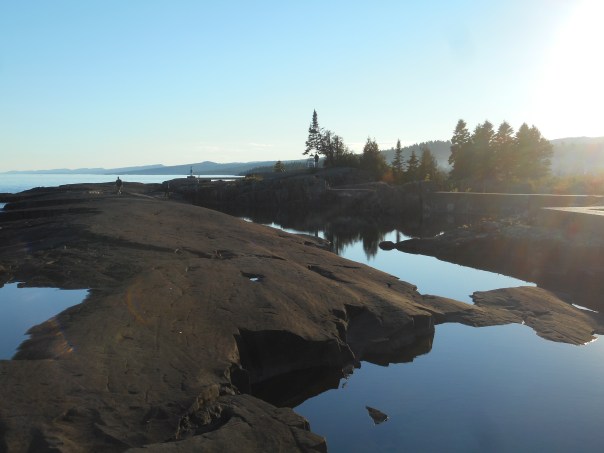
The sun begins to set on the smooth rocks of the Tombolo (or Point) of Grand Marais
Close your eyes. Take a deep breath. Where are you? Do you feel connected to the place you find yourself in this current moment? Do you feel an encompassing sense of belonging here?
There are some places that give you that special feeling. Places that feel qualitatively different to the individual. Places that feel alive and electric, a kind of synchronicity between person and place. Places that are energy-giving. Magical, almost.
I like to refer to these locations as ‘deep places.’ The adjective deep is used to describe the immensity of the feeling the individual has towards the place. It is something felt on a higher level, different from one’s experience of everyday locales. These deep places may be spots you already know, or the feelings may arise the first time you step foot into a new environment. If you’ve ever experienced these magical feelings, then you have discovered a deep place for you.
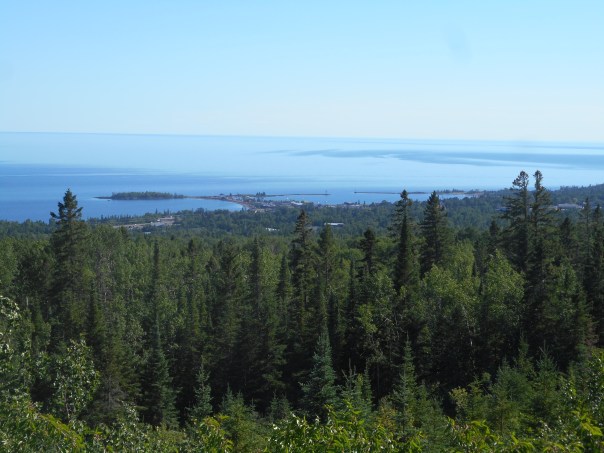
The City of Grand Marais from the mountains lining the North Shore
The North Shore of Minnesota, along the edge of Lake Superior, has been one of those deep places for me. Starting in Duluth and heading northeast towards Thunder Bay, the north shore follows a rocky, rugged, forested line for more than one hundred and fifty miles. Along the coast it is a vast forestland wilderness, punctuated only by small settlements and scattered tourist outposts. It is a place where land meets water, where human meets wild. It is a deep place for me.
My first real venture to the North Shore came in May of 2016, entering Duluth from the south just past sundown, being greeted to the sweeping vistas of the big lake in the fading daylight. The northern drive to Grand Marais that night was illuminated by the blood-red full moon rising to its own reflection on the calm surface of Superior. That night was crisp and cool. The moon was out. The stars were shining brightly. The scent of the boreal forests and the water encompassed my nostrils. It was an entirely magical entrance to the place known as the North Shore.
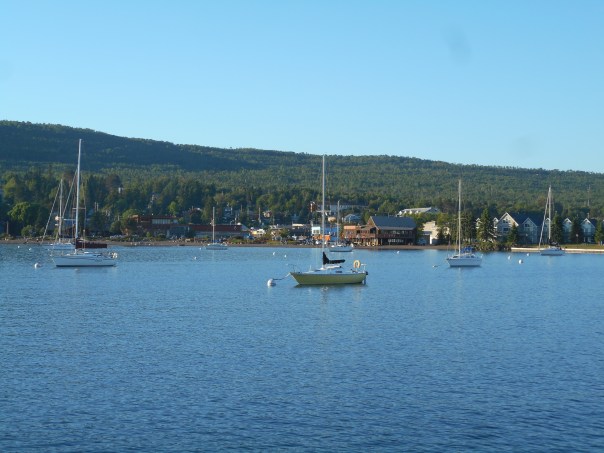
Sailboats finding refuge from Lake Superior in Grand Marais Harbor
Could the magic of my first experience on the North Shore ever be repeated? I have since returned to the North Shore many times, and have found that the magic was not a one-off experience. The feelings I have towards the region have not been diminished through growing familiarity. Every time I return to the North Shore, I am still astonishingly impressed by the astounding physical beauty of the environment. Jutting rusty-color basalt outcroppings, small rivers torrenting their way through deep overlooked canyons, pocket beaches cobbled with a mélange of surf-smoothed rocks. The cultural resources too—lighthouses, cabin complexes, mining history. There is so much to do here—and to keep coming back for more. Every time I would grow claustrophobic from my land-locked residence in inland Minnesota, even a short visit to the shore—to the great lake vistas—would always be the cure I didn’t even realize I needed. My deep place has also served as a restorative space.
The North Shore, for me, is one of those places where I always find more to discover—and upon discovering, find it imperative to come back and revisit again later. Even before I began to explore the region, I had this convincing sentiment that the North Shore would be a special area to me. It is a psychological wonder, how, even upon a first glance at a place, one can feel the initial intimations of inherent belonging and connection to that place. The newly entered deep place is a landscape ever so tantalizingly unknown and discoverable, yet undeniably comfortably welcoming. It’s a place that beckons you to linger on in its space. This sense of fitting into the place is preordained, not earned. You don’t grow to love deep places through familiarity, though they will become increasingly familiar with time. Instead, there is an instinctual, primitive gut feeling that you are part of the place; that you already know and love the area though you have recently arrived.
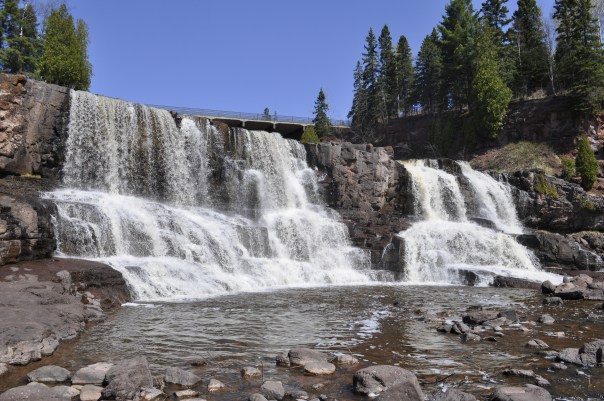
Gooseberry Falls, where water tumbles through basalt canyons from the highlands to Lake Superior
Everyone has, or should have, a deep place of their own. Maybe you know where it is. Maybe you have one but don’t know that you know it yet. Maybe you’ve revisited your place multiple times, or have even come to live there. Maybe you’ve only ever visited once. Even if physical visits are infrequent, even just thinking about those deep places can still conjure those magical feelings inside of you.
It is possible to have multiple deep places too. How many places exist out there in the world where you would feel this distinct connection if only you could visit? Though the North Shore of Minnesota is perhaps my most apparent deep place and the one I’ve revisited the most, I have others places where I have experienced similar sentiments—the Owens Valley of California, or the island of Tasmania, Australia, for example.
The remarkable thing is that while some deep places are shared with others, a deep place isn’t universal. Everyone will find a different space or landscape that speaks to them so clearly. These spaces are simultaneously yours alone and are shared by a community of others. But no matter how many people claim the same deep space, it always feels unique, as if the area were speaking directly to you.
Find your deep place.
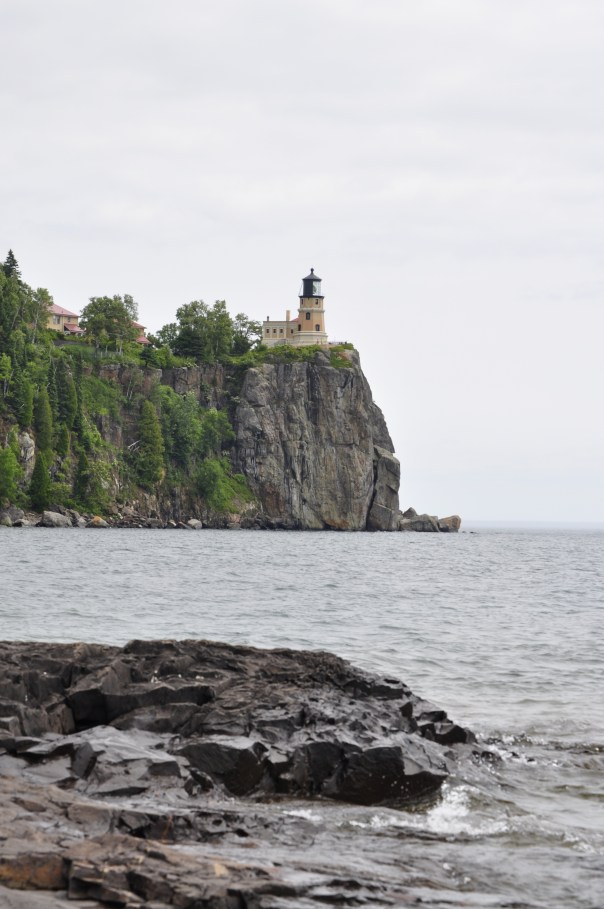
The North Shore’s standout cultural landmark, Split Rock Lighthouse

You Cannot Stay on the Summit Forever
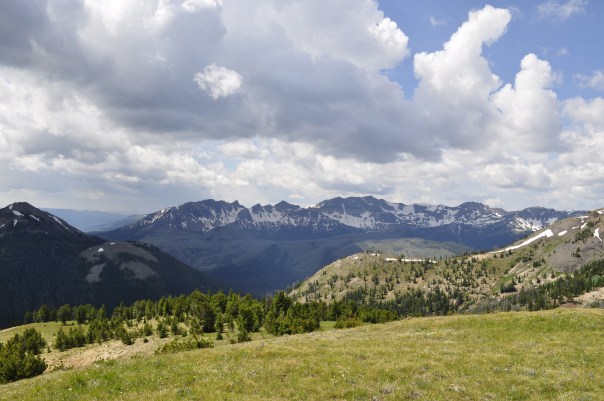
Pinnacle Mountain, Absaroka-Beartooth Wilderness, Montana
“You cannot stay on the summit forever; you have to come down again. So why bother in the first place? Just this: What is above knows what is below, but what is below does not know what is above. One climbs, one sees. One descends, one sees no longer, but one has seen. There is an art of conducting oneself in the lower regions by the memory of what one saw higher up. When one can no longer see, one can at least still know.”
—René Daumal
You cannot stay on the summit forever. You cannot live in the wilderness eternally. So why even venture off into wild places to begin with? Why put forth the effort, go through the hassle, and willingly subject yourself to hardships, privations, and lack of modern amenities? The reason is simple—what is gained from the experience changes you. The wilderness, though it physically surrounds you only for a fleeting moment, influences your character persistently.
This summer has been one of wilderness travel for me. From the canoe country of the Boundary Waters and the Quetico, to the backpackers’ paradise of the Rocky Mountains, I have spent countless hours leading others through wild places. Each trip I led, though some of them were lengthy, had to come back eventually. We couldn’t stay out there forever. Food, shelter, medicine, modern conveniences, human connections, and societal obligations all dictated that we must ultimately return. We live lives incontrovertibly connected to the civilized world. We are now dependent on technology and society to meet our daily needs. Though wild places may sustain us spiritually, mentally, and emotionally, few of us are truly prepared to have the wilderness provide all our physical needs.

The Milky Way above Lake Burntside, near the Boundary Waters Canoe Area
But it is the non-physical lessons we learn in the wilderness that might be the most powerful. Wilderness travel lies in contrast to our otherwise ordinary lives in the front-country. The wilderness is a place to break out of our comfort zones, a setting where we are forced by necessity to be different, more capable human beings. Out in the wild, you survive on your own wits, or with the companionship of traveling partners. You learn to make do with what you have, or you learn to do without. You begin to realize that small things can lead to big consequences—and, instead of procrastinating, you learn to check problems before they become too big to handle. You become more organized in your daily life, more resourceful with what you have on hand, and you become adept at recognizing cause and effect. You become better at planning ahead. You are forced to live in the moment; foul weather can either foil your prior plans or fine weather can just as much beckon you to linger on. You learn to embrace and deal with the uncertainty of changing plans. And the people you travel with—whether you chose them or not, you will learn to entrust your life with those people, and you will take risks and grow close to them too.

Sunset over Rose Lake, Boundary Waters Canoe Area Wilderness
All of these things are lessons we can learn and take away from experiences in the wilderness; because, we cannot take the wilderness itself with us—we can only take the memories of our time spent in the wilds. And all of these lessons transfer quite readily to life in civilization, because, you don’t necessarily even need the wilderness to learn these lessons in the first place. But in venturing out into the wilderness, you learn these lessons quickly, and you learn these lessons more thoroughly. Every time you venture out again into the wilds, you are reminding yourself of what you’ve already learned. Though you cannot bring the summit with you, the knowledge and skill of being the person the wilderness made you out to be is something you can carry with you indefinitely. This is the art of living that Daumal was referring to. But you needed that summit first to get there.
And what better place to learn these important life lessons than the wilderness. In wild lands, where nature lies stark and beautiful, “where the earth and its community of life are untrammeled by man, where man himself is a visitor who does not remain (1).” Beauty in the wilderness is intrinsic, and the feeling of remoteness is simultaneously intimidating and enlivening. Endless summit vistas and labyrinth-like waterways have an inherent value of their own. It is worth visiting these wild places regardless of any life lessons gained there. But critically important is the knowledge of who we can be that we take away from wilderness experiences. It took the summit to get there, and once there we could not stay forever. But we can keep the memory of the summit, and we are better people for having gone.
Happy Summiting.
(1) Wilderness Act of 1964
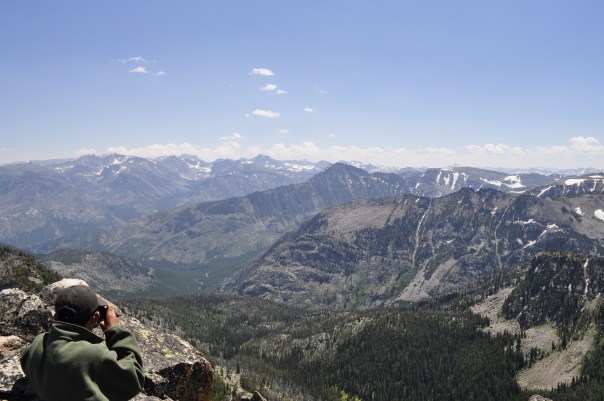
Jordan Mountain, Absaroka-Beartooth Wilderness, Montana

Travel Fast, Travel Far

“If you want to go fast, go alone. If you want to go far, go together” —Traditional Proverb
It used to be that when I read this old adage, I would favor and emphasize the going fast part of it. Though it may appear otherwise, the proverb doesn’t really offer up going fast and going far as two equal options to be chosen from; in the context it is most often used, there is an open bias towards uplifting as correct the latter as opposed to the former. But the choice is included in the proverb nonetheless, and fair being fair, one could, like me, focus on the benefits of going fast alone versus going far with others.
Most often I think of this proverb in its relation to travel. More specifically, recreational travel. My travel history is one of mostly solo ventures. I used to prefer it this way. I valued the independence of making my own choices. I valued the efficiency of being the only person to coordinate. I didn’t like having other people around to be forced to compromise with, as that might have infringed upon my personal travel desires. In that old perspective, traveling with other people either slowed me down unnecessarily, or forced me to participate in things which I didn’t really care about.
Even though I did favor the ‘fast’ side of the adage, I was never really a fast traveler on my own accord. At least in regards to speed. On my own personal trips, I usually, and predictably, fell further and further behind schedule. I like to take my time, though out of thoroughness and not out of leisure. Thus, I realized that I am a bit slower taking in the places I travel to, but I prefer the relaxed pace nonetheless. When traveling alone, I had the freedom to take all the time in the world to visit a place and not feel pressured to leave earlier because the people I was with got bored and wanted to move on (very true for visiting museums with me). Maybe the proverb should be changed to “if you want to go thoroughly, go alone.”
As a result of these preferences, I took many long trips by myself attempting to see it all, and to see it all thoroughly. I wanted the freedom and independence of travel to be able to follow my own whims instead of making compromises with the desires of other people. My little solo travels gradually got longer and longer until they culminated in my six months spent dirtbagging down under. Australia was a solo venture, and even though in Australian backpacking culture solo travelers frequently coalesce together, the longest time I ever traveled with someone was four days. And I was glad to be rid of him by the time we parted.
But during that time in Australia, my outlook on long solo travels began to change. On the whole, because I was traveling primarily by myself, I don’t think I got as much out of the entire Australian experience as I could, or even should, have. Sure, I did end up seeing more places than the average Aussie backpacker. But in reality, that additional travel looked similar to this: drive alone to a cool place on the map; get out of the van; walk around said cool place; think about all the cool stuff you could be doing in said cool place; do nothing because you have no one to do cool stuff with; repeat. In addition, I just eventually reached a mental space where I began to feel a little bored of keeping myself company all the time.
I began to realize that my preferred style of travel—solo—may have been leaving me short of the deeper gains of journeying. The going ‘far’ part. Reflecting on the most memorable trips I’ve ever taken, I realize that all of them were with people. And on my solo travels, encounters with other people—you know, those really-inefficient, freedom-compromising, dissimilar-interest kind of other people—were usually the most memorable moments.
But it is still hard to deny the benefits of traveling alone—speed and efficiency. I mean, much of my solo travels have been done simply because making solo travel plans is so quick and easy. On solo travels, you only have to consult with yourself. And you don’t have to see if your schedules align with other peoples’, or check in about travel styles or activity preferences. For solo travel you don’t have to wait to find other people to join you either. Seriously, I feel like half the stuff I’ve done in my life I wouldn’t have gotten to do if I had been waiting for people to join me. So, in some respects I have done a great amount of solo traveling and exploring simply because it is so efficient. But, the most memorable trips have always been with people when the inefficiencies and mishaps abound.
Traveling with others, as I’ve found, is a much richer experience. Since other people are just different from you, naturally, they will bring you to unexpected places and force you to do things that you wouldn’t have otherwise chosen for yourself. And, surprisingly, you will appreciate it. For the diversity. For the different perspective. For the opportunity to try something new. Because, traveling with other people is a surefire way to get exposed to a lot more cool stuff than you would have found on your own. Not to mention, you’ll have those memories and experiences to process and reflect on together.
With my increasing value on group travel, I’ve got a whole slew of upcoming adventures planned, all with people. A 300-mile bike trip along Lake Superior’s North Shore with a friend from college. A 700-mile canoe trip on the Green River with a spattering of friends and family along the way. And not to mention a whole summer of guiding canoe and backpack trips for summer campers.
When I think about my change in perspective concerning the different modes of travel, what often comes to mind is the scene near the culmination of the film Into the Wild, where Christopher McCandless sits emaciated and alone in his bus in the Alaskan bush, reflecting on his solo venture of surviving in the Alaskan wilds while coming to the sad realization that happiness is only real when shared, and that he will (SPOILER ALERT!) slowly starve to death by himself in an abandoned bus. It’s a true story with a heartbreaking ending about an idealistic young man who valued extreme independence in adventure a little too highly. And all at once but much too late young McCandless realized that real happiness lay with sharing the journey with others. Fortunately I’m not as extreme as McCandless. Some lessons I can learn second-hand.
So perhaps we should change the proverb. “If you want to see a lot of stuff thoroughly, travel alone. If you want to create a memorable and fulfilling experience, travel together.” But, that doesn’t quite roll off the tongue as easily.

Barns Across the Continent
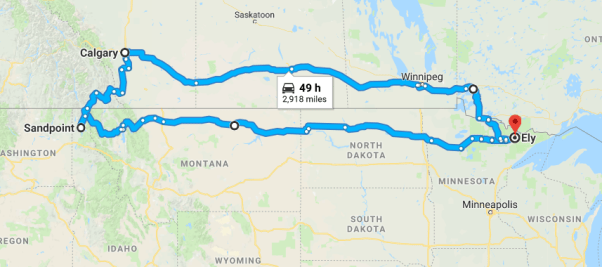
On a recent spring break journey, I drove 3,200 miles across the top the US and Canada—and all I did was take pictures of barns! But the rural country landscape does fascinate me, and I find it particularly compelling to photograph. As I drove across the land, the aesthetics of the structures changed with the landscape. Here is a photographic escapade of the rural journey and what I saw: barns, grain elevators, abandoned homesteads, and more.


And here was the route:
 In All Directions